Jack Fleming: The Irishman Who Built SF's Municipal Golf
If you have ever teed it up on a San Francisco municipal course, you have played Jack Fleming's work — whether you knew his name or not. The short course tucked inside TPC Harding Park is called the Fleming 9 for him. The par-3 layout in Golden Gate Park is his design. So is Gleneagles at McLaren Park. And for 31 years, every green, tee and bunker the city owned — Harding, Lincoln Park, Sharp Park — was his to build, rebuild and keep alive.
Fleming is the least famous figure in San Francisco's golf story, and arguably the most important. Ken Venturi, Johnny Miller, Bob Rosburg, Tony Lema, Harvie Ward and George Archer learned or sharpened their games in this city and around the Bay, much of it on public ground. Somebody had to make that ground worth learning on. For most of the mid-twentieth century, that somebody was a greenskeeper from County Galway who had apprenticed under arguably the greatest golf architect who ever lived.
From Tuam to Manchester, over a game of darts
John “Jack” Fleming was born in 1896 in Tuam, County Galway, Ireland. He left home at eighteen for Dublin, put himself through night-school coursework in landscaping and civil engineering, and eventually took work as a timekeeper and paymaster on a municipal project in Manchester, England.
It was there, the story goes, that he met Dr. Alister MacKenzie — at a pub, over a game of darts, while MacKenzie was designing a golf course on the site where Fleming was working. MacKenzie hired the young Irishman into his firm, where Fleming rose from clerical worker to junior design associate and construction foreman, working on MacKenzie projects around Europe, mostly in the British Isles.
MacKenzie would go on to design Cypress Point, Augusta National and Royal Melbourne. Fleming would go on to become his man on the ground in California — and then San Francisco's.
The MacKenzie years: Cypress Point, Pasatiempo, Sharp Park
In 1926, MacKenzie's firm sent Fleming to California to supervise construction of the Meadow Club in Fairfax, MacKenzie's first American design. Fleming arrived on a two-year visa, but the work kept coming — enough to keep him in America for good and, in time, to make him a citizen.
Working alongside MacKenzie's American partner Robert Hunter, Fleming helped build a remarkable run of Golden Age California courses: Cypress Point on the Monterey Peninsula, Pasatiempo in Santa Cruz, the Valley Club of Montecito, Green Hills in Millbrae — and, closest to home for San Francisco golfers, Sharp Park in Pacifica.
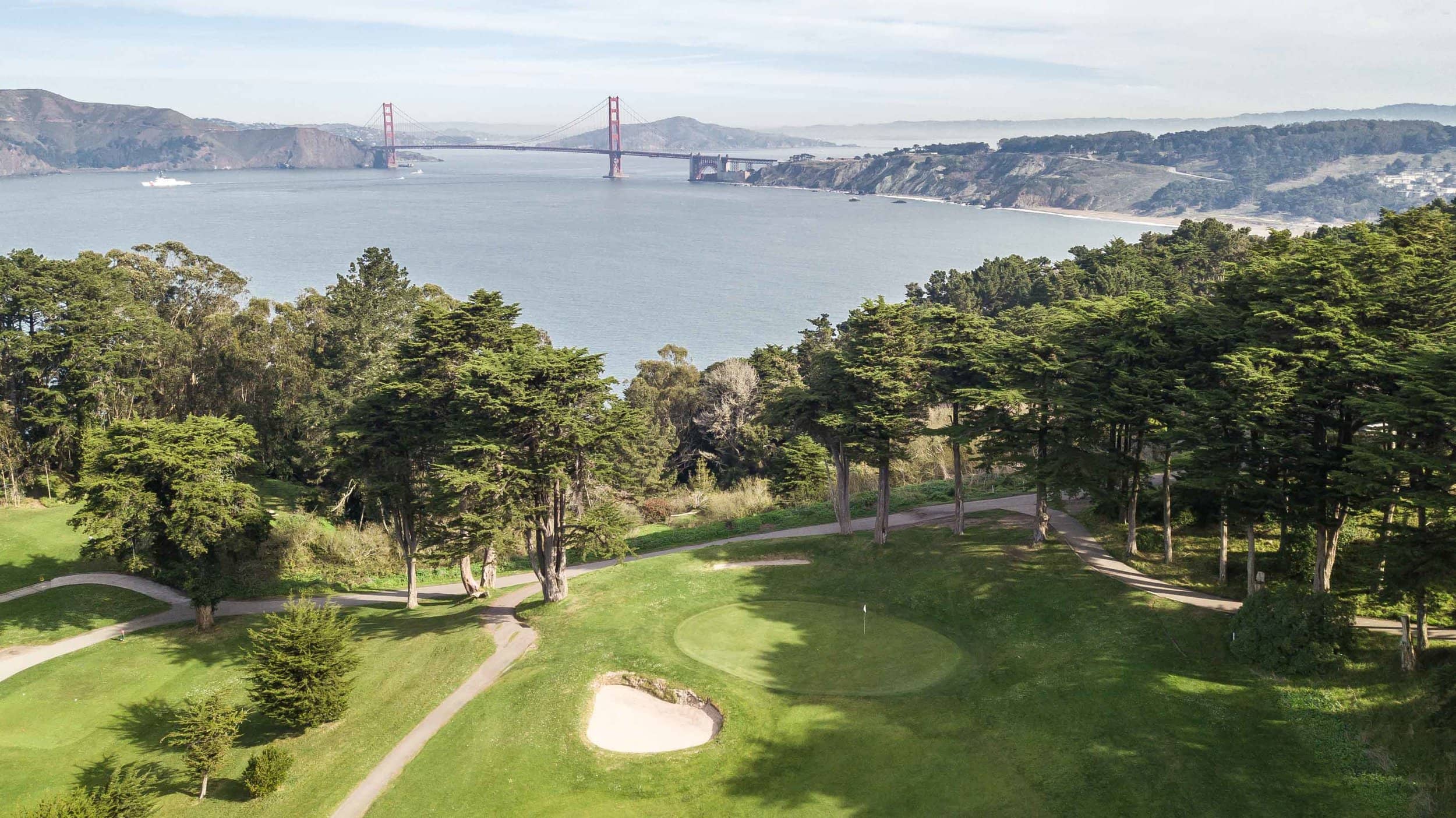
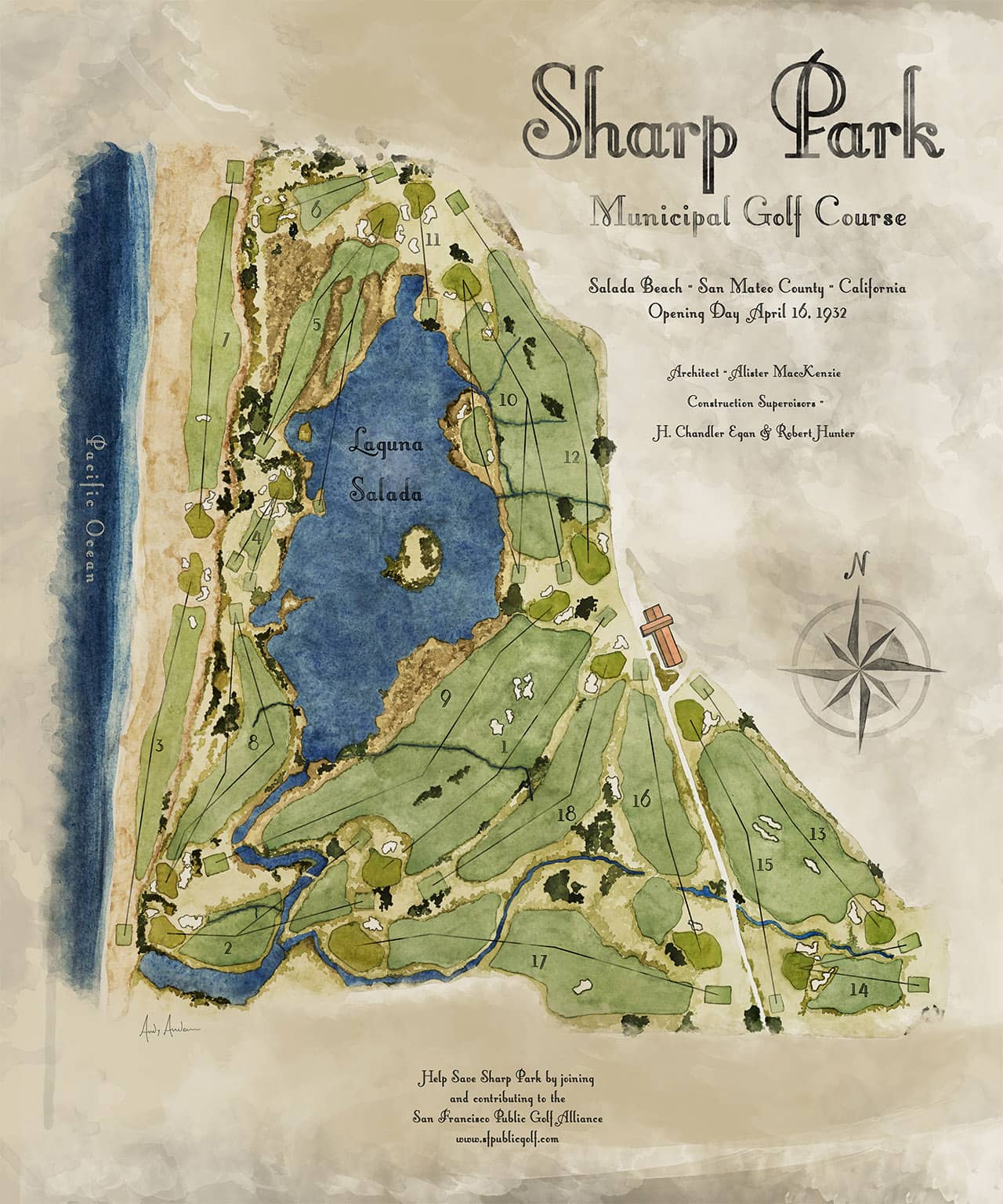
Sharp Park was MacKenzie's great public gift, a seaside municipal course built for the City and County of San Francisco. MacKenzie finished his plans in 1929 and left construction supervision to his partner H. Chandler Egan, who was joined by Robert Hunter Jr. and by Fleming, fresh from a stint as construction foreman at Cypress Point. The course opened on April 16, 1932, playing 6,173 yards to a par of 71, with dredged Laguna Salada as its freshwater centerpiece.
Fleming didn't just help build Sharp Park. He would spend the next three decades keeping it.
McLaren's hire: 31 years as keeper of the city's courses
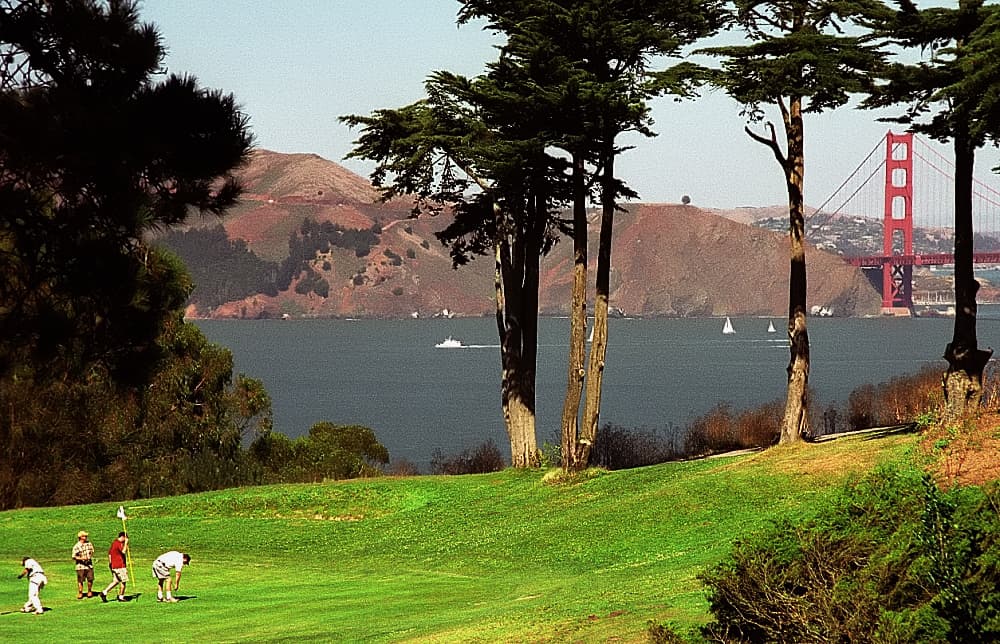
In 1932, John McLaren — the legendary superintendent of Golden Gate Park, the “father” of the park itself — offered Fleming the head greenskeeping job for San Francisco's municipal golf courses. Fleming took it and held the post for 31 years, overseeing the city's public golf grounds: brand-new Sharp Park, Lincoln Park above Land's End, and Harding Park on the shores of Lake Merced.
The portfolio he inherited was already historic. Lincoln Park had hosted golf since 1902, making it one of the oldest public golf grounds in the West. Harding Park had opened on July 18, 1925, a Willie Watson and Sam Whiting design named for President Warren G. Harding, the golf-loving president who had died in office while visiting San Francisco two years earlier.
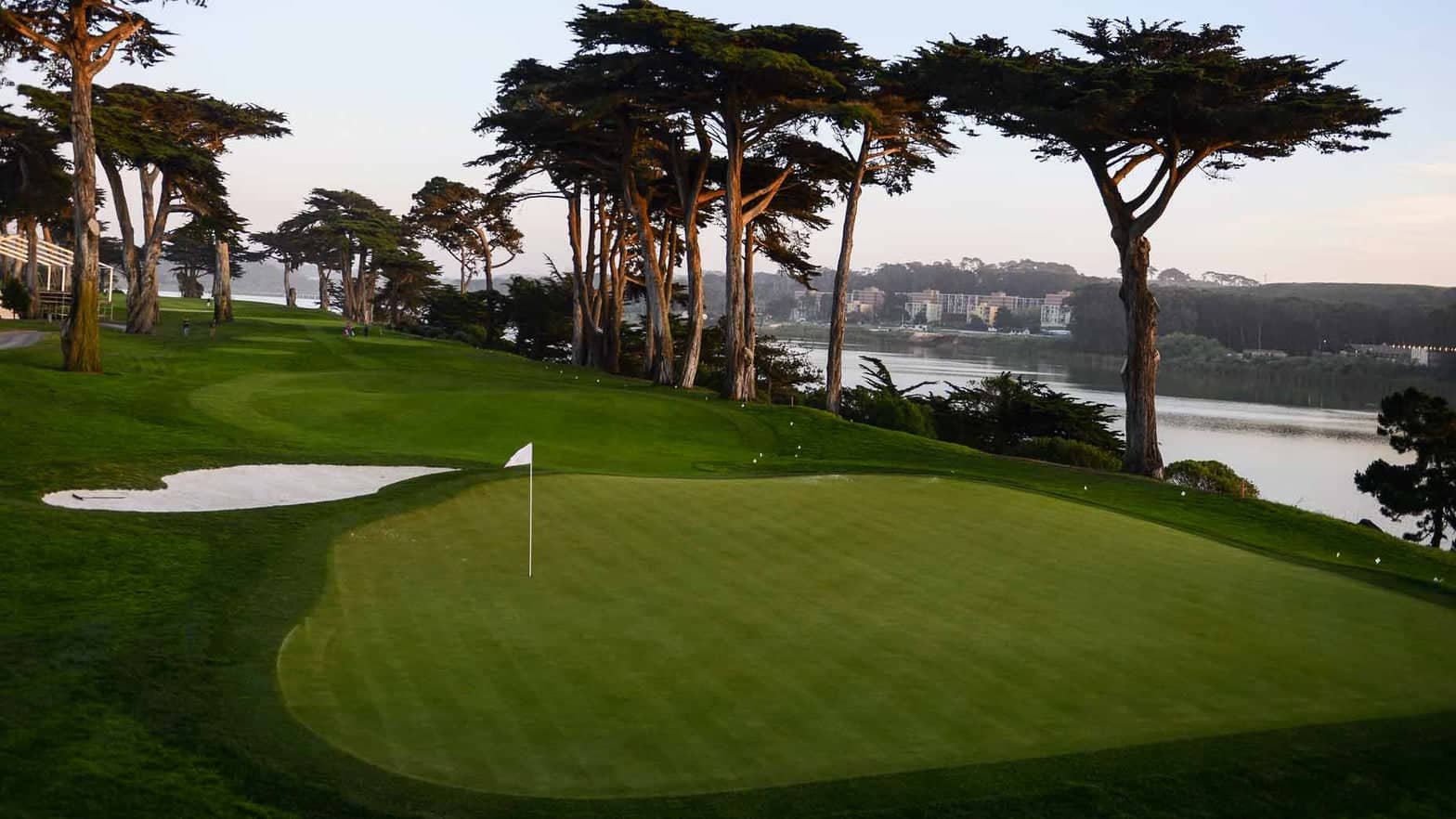
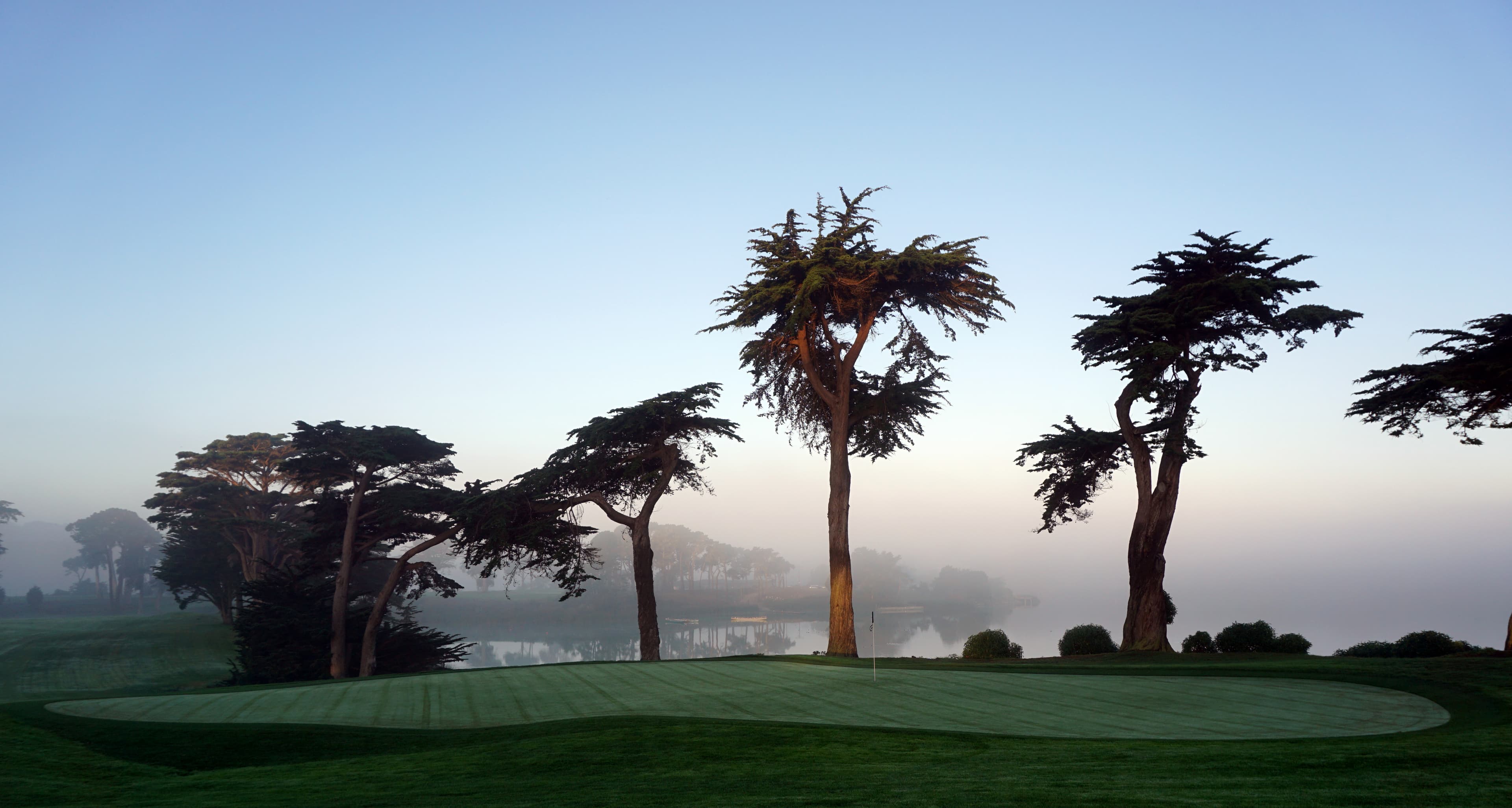
Fleming immediately began improving it. In 1934 he carried out a remodel of Harding Park — new greens, new tees, reworked bunkering, and plantings of the cypress trees that today define the course's character. When the 2020 PGA Championship was played at Harding under those same cypresses, the players were, in a real sense, walking through Fleming's work.
At Sharp Park, the ocean forced his hand. In 1941, after storms battered MacKenzie's original beachfront holes, Fleming — by then San Francisco's supervisor of golf — oversaw major alterations: the lost strand holes were replaced behind a new sea wall, and four new holes were built in the canyon east of Highway 1. Fourteen of Sharp Park's eighteen holes still follow MacKenzie's original routing today, and it is Fleming's stewardship that carried them through.
An architect in his own right
MacKenzie died in 1934, and in the decades that followed Fleming quietly became Northern California's most prolific public-golf architect. Between 1950 and 1967 he designed and built 36 courses, most of them in Northern California and roughly half of them nine-holers — honest, affordable golf for a booming postwar public. The Northern California Golf Association credits him with creating, remodeling or restoring some 60 California courses in all.
Two of his designs are still part of San Francisco's municipal rotation:
Golden Gate Park Golf Course (1951)
Fleming's nine-hole par-3 course near Ocean Beach opened in 1951, routed cleverly around a central dune that shapes most of its holes. Working in the park McLaren built, Fleming produced what remains one of the most charming short courses in California — and, for generations of city kids, a first taste of the game.
Gleneagles at McLaren Park (1962)
On the city's southeast side, Fleming built Gleneagles in 1962 — a full-length nine lined with cypress and eucalyptus, named in a nod to Scotland and routed over seriously rugged ground. Golf World later named it among the top 20 nine-hole courses in America. It is the closest thing San Francisco has to a hidden links, built by a man who had helped construct Cypress Point 36 years earlier.
His design philosophy was plain and durable — and he credited it to his mentor as much as to himself. “Dr. MacKenzie and I both believed that golf courses should be designed with two things in mind,” Fleming said. “First, that every shot should be laid out so that the golfer must use his head and think. Second, the architect should make use of the terrain upon which the course is built.” You can feel both principles on the dune holes in Golden Gate Park and the tumbling fairways at Gleneagles.
The Fleming 9: a name on the ground he kept
In 1961, a nine-hole executive course was added inside the perimeter of Harding Park and named for the city's longtime golf caretaker: the Fleming 9. A par-30 with six par 3s and three par 4s, it has served ever since as Harding's accessible little sibling — and today it is home to First Tee San Francisco, the youth program that introduces the next generation of city golfers to the game.
It is hard to imagine a more fitting monument. The kids learning golf on the Fleming 9 are doing exactly what Ken Venturi did at Harding in the 1940s: learning the game on public ground that somebody cared enough to keep great. When Venturi won his fourteenth and final PGA Tour title at the 1966 Lucky International at Harding Park — the course where he had learned the game, and where his parents Fred and Ethyl ran the pro shop for years — the turf under his feet had been Fleming's responsibility for three decades.
Legacy: a family trade and a Hall of Fame call
Fleming's son John worked alongside his father for eight years before becoming golf course superintendent at The Olympic Club — extending the family's care of San Francisco golf from the public side of Lake Merced to the private side.
Jack Fleming died in San Francisco in the mid-1980s, around the age of 90 — accounts differ on the exact year, with some sources giving 1986 and others 1987. Recognition came slowly, as it tends to for greenskeepers: in 2023, the Northern California Golf Association inducted him into its Hall of Fame, placing the Irish immigrant caretaker alongside the champions his courses produced.
That is the right way to remember him. San Francisco's golden generation — the Venturis and Wards, the Rosburgs and Lemas, the Millers and Archers — came out of a golf scene whose municipal courses were unusually good for their era. They were unusually good because for 31 years the man keeping them had learned the trade from Alister MacKenzie himself — over darts in a Manchester pub, as the story goes — and never stopped believing that public golfers deserved ground worth thinking their way around.
You can browse Jack Fleming's course portfolio in our architect directory — then go play the Fleming 9, Golden Gate Park or Gleneagles, and walk through his work yourself.