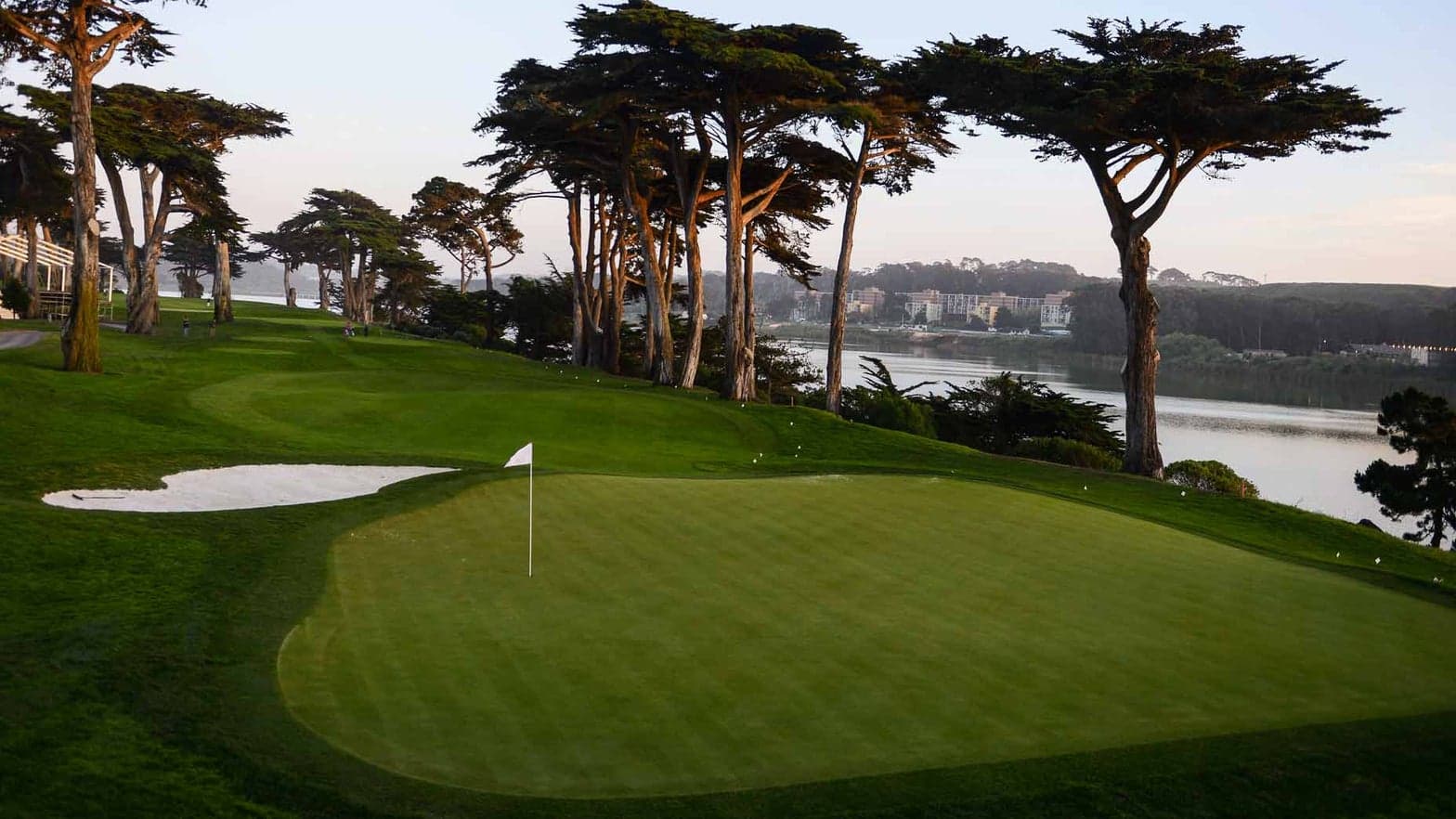
Sandy Tatum: The Man Who Saved Harding Park

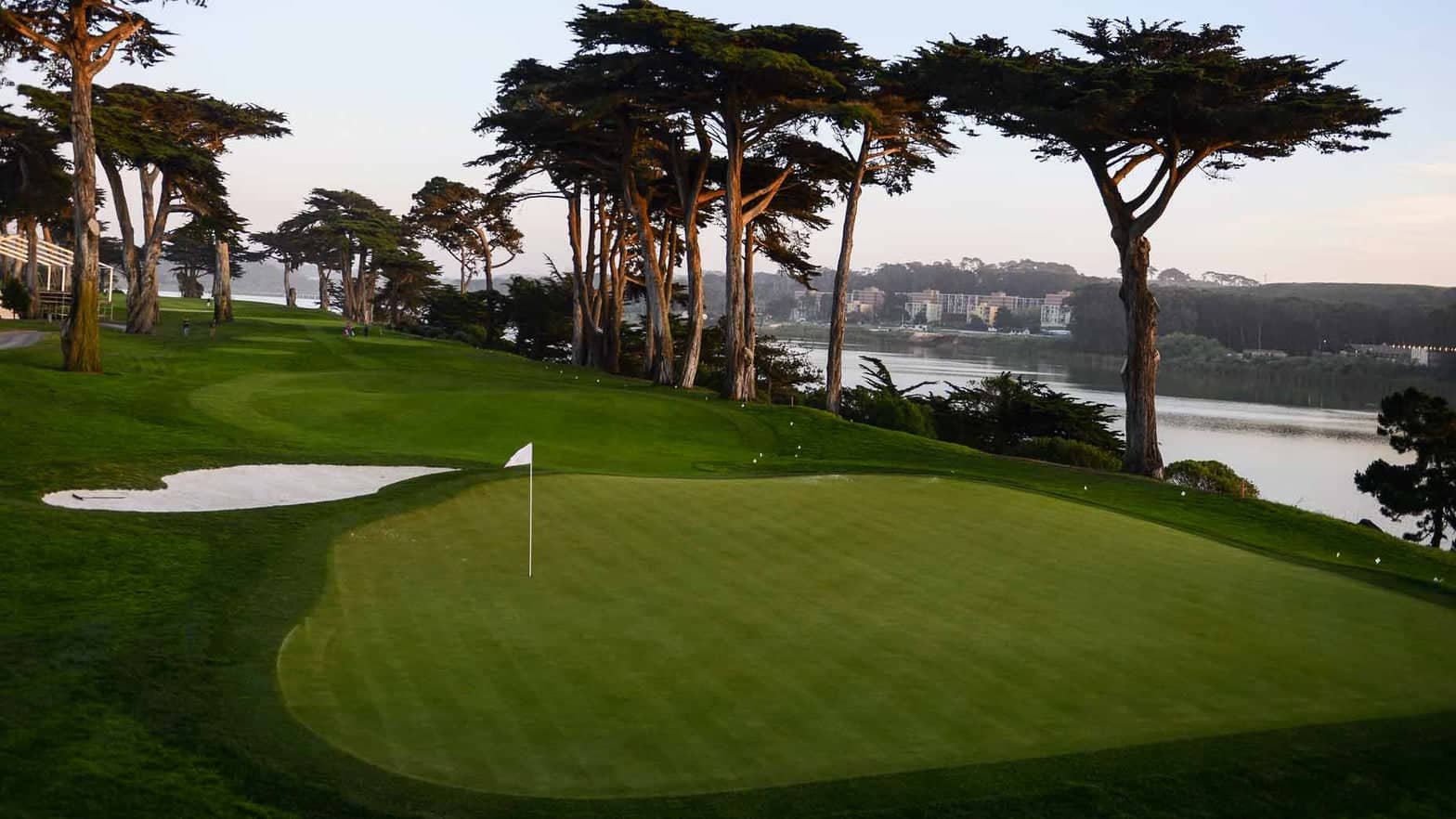
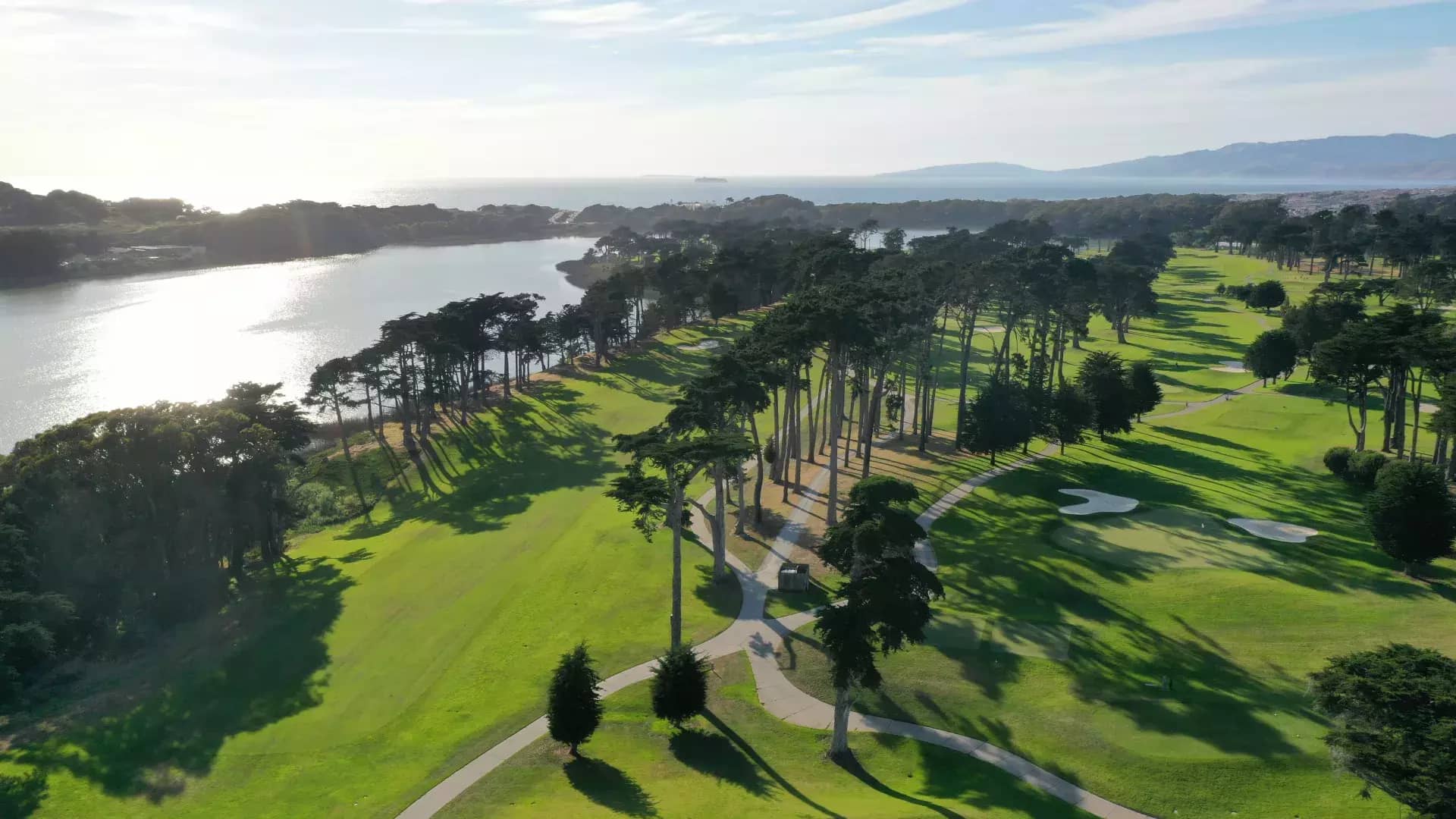
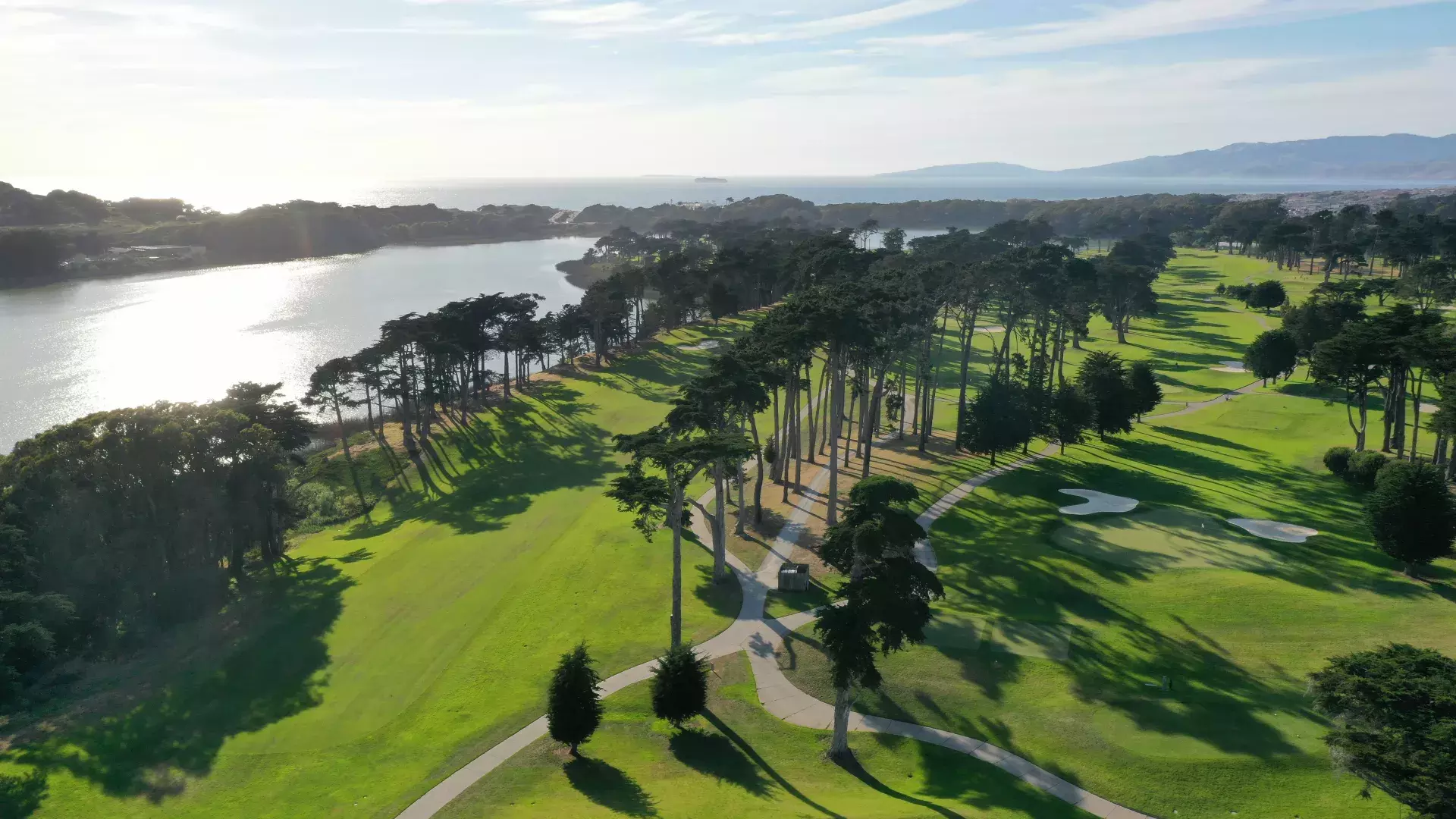
In June 1998, the U.S. Open came to the Olympic Club's Lake Course on the southwestern edge of San Francisco. Across the road, on the shores of the same lake, sat Harding Park — one of the country's first great municipal courses, predating public icons like Bethpage Black and Torrey Pines, and designed by the same two men who built Olympic's Lake Course. That week, Harding Park's fairways were not hosting golf. They were being used as a parking lot for the championship next door.

San Francisco golf historian Bo Links called it "the ultimate indignity." No one took the episode more personally than a 77-year-old lawyer, former USGA president and lifelong evangelist for public golf named Frank D. "Sandy" Tatum Jr. Within a few years, Tatum would lead the campaign that turned a crumbling muni back into a major championship venue. If you have ever wondered who saved Harding Park, the answer starts with him.

A Golfing Life Almost Too Good to Invent

Tatum was not a San Franciscan by birth. Born July 7, 1920, he was raised in Los Angeles on the fairways of the Wilshire and Bel-Air country clubs. But nearly everything that followed bound him to the Bay Area.

At Stanford, Tatum played on golf teams that won back-to-back NCAA championships in 1941 and 1942, taking the individual national title himself in 1942. He went to Oxford as a Rhodes Scholar — the first American to play golf for Oxford — then returned to Stanford for a law degree in 1950 and built a long career as an attorney with Cooley in Palo Alto.

His playing pedigree never left him. Tatum won club championships at three of Northern California's most storied clubs — Cypress Point, San Francisco Golf Club and the Olympic Club, which he had first joined in the early 1940s as a young serviceman paying $1.80 a month in dues. The Olympic Club inducted him into its Hall of Fame in 2008, and the NCGA followed with its own Hall of Fame in 2011.

"We're Not Trying to Embarrass the Best Players in the World"

Tatum's national reputation was made inside the United States Golf Association. He served on the USGA Executive Committee from 1972 to 1980, chaired the Championship Committee from 1974 to 1977, and served as USGA president in 1978 and 1979.

It was as championship chairman in 1974 that he entered golf lore. His brutally difficult U.S. Open setup at Winged Foot — remembered ever since as the "Massacre at Winged Foot" — drew howls from the game's stars, and Tatum answered with one of the most quoted lines in golf administration: "We're not trying to embarrass the best players in the world; we're trying to identify them."

His fingerprints were on the venues, too. Tatum played an important role in persuading the USGA to bring the U.S. Open to the Olympic Club in 1955 and to Pebble Beach in 1972 — the first Open ever played there. Later, he teamed with his close friend and fellow Stanford golfer Tom Watson and architect Robert Trent Jones Jr. to design The Links at Spanish Bay on the Monterey Peninsula.

But the project that defined his final act was a battered public course by Lake Merced.

Why Harding Park Mattered

Harding Park opened on July 18, 1925, designed by Willie Watson and Sam Whiting — the same duo behind the Olympic Club's Lake Course next door — and named for President Warren G. Harding, an avid golfer who had died in San Francisco two years earlier.

For half a century it was the beating heart of San Francisco's municipal golf scene. It became the home of the San Francisco City Championship, billed as the oldest uninterrupted golf championship in the world, whose past champions include Ken Venturi, George Archer and Juli Inkster. Venturi's ties ran deepest of all: his father Fred managed the Harding Park pro shop, Ken won the City three times (1950, 1953 and 1956), and his 1956 final against Harvie Ward drew an estimated 10,000 spectators and front-page headlines — a story we tell in full in Ken Venturi: From Harding Park to the 1964 U.S. Open.

The pros came too. The Lucky International Open ran at Harding through the 1960s, and its roll of champions was thick with major winners — Gary Player, Gene Littler, Jack Burke Jr., Billy Casper, George Archer and, fittingly, Venturi, whose 1966 Lucky International victory at Harding was the final win of his PGA Tour career.

Tatum understood exactly what that history meant. Harding Park was proof of the thesis he spent his life arguing: that great golf — and great golfers — could come out of a public course where anyone could put down a green fee.

TPC Harding Park

San Francisco, CA

Golf.com
Golf.com
Learn more

From Crown Jewel to Parking Lot

By the 1980s and 1990s, decades of deferred maintenance had ground Harding Park down. Conditions deteriorated so badly that the course's state was described as a public disgrace, and the low point arrived in 1998, when the once-great municipal layout was pressed into service as a parking lot for the U.S. Open being played at the Olympic Club.

For Tatum — a man who had helped bring that very championship to Olympic decades earlier, and who lived by the creed that public golfers deserved great golf — the indignity was intolerable. Convinced Harding could return to its glory, the former USGA president began working the problem the way only he could: as a lawyer, an administrator and one of the best-connected men in American golf.

The Campaign to Save Harding Park

Tatum rallied everyone: local business leaders, San Francisco Mayor Willie Brown, the San Francisco Recreation and Park Department, the USGA, financier Charles Schwab and PGA Tour commissioner Tim Finchem. By 2001 he had formed an alliance with the PGA Tour that made the renovation possible — and brought The First Tee youth program to Harding Park as part of the deal.

Work began in the spring of 2002. The $16 million restoration — led on the ground by Chris Gray, then head of the PGA Tour's Design Services unit — took 15 months. The course was rebuilt and stretched from 6,743 yards to nearly 7,200; the adjoining nine-hole Fleming course was included in the project; and a permanent home was carved out for First Tee — San Francisco. Harding Park officially reopened on August 22, 2003, and that same year the city honored Tatum with a plaque at the first tee.

He was 83 years old when the gates reopened. He had spent his ninth decade saving a muni.

The Payoff: Majors Return to a Muni

What followed vindicated everything Tatum had argued. Just two years after reopening — and a mere seven years after serving as a parking lot — Harding Park hosted the 2005 WGC-American Express Championship, its first PGA Tour event since the Lucky International's final edition in 1969. The Presidents Cup came in 2009. The course joined the PGA Tour's TPC network in November 2010 as its 32nd club, hosted the Charles Schwab Cup Championship in 2010, 2011 and 2013, and in 2020 staged its first men's major, the PGA Championship.

A city-owned course that anyone can play — and that marked 100 years in 2025 — had been restored to the front rank of American public golf. No single act did more to re-anchor San Francisco's claim as a great golf city, a story we trace across the whole history of golf in San Francisco.

The Legacy: A Clubhouse, a Statue and The First Tee

Tatum died on June 22, 2017, at the age of 96. His name is now literally built into Harding Park: the clubhouse is the Sandy Tatum Clubhouse, named — reportedly at the stipulation of donor Charles Schwab — for the man who made the restoration happen.

In late July 2020, days before the PGA Championship, a seven-foot bronze statue of Tatum by sculptor Zenos Frudakis was installed at Harding Park and dedicated that August, reportedly funded by Charles Schwab as part of a larger grant to San Francisco's First Tee chapter. The composition shows Tatum flanked by two young golfers on a staircase representing The First Tee's nine core values — a fitting monument for the man who founded and chaired First Tee — San Francisco and championed the Youth on Course program through the NCGA. Even the statue's journey was eventful: the truck carrying it overturned in Hannibal, Missouri, and the bronze was repaired at a Berkeley foundry and installed just in time.

Tatum told his own story in his 2002 book A Love Affair with the Game, with a foreword by Tom Watson, who wrote: "Knowing Sandy as I do, I can honestly admit I have never met a golfer who has been so thoroughly possessed with the game."

That possession is why Harding Park exists in its current form. Plenty of men have run the USGA; only one of them spent his eighties fighting city hall, wooing billionaires and staring down skeptics so that a municipal tee time could share turf with a major championship. When the pros walk off Harding's 18th green beneath the cypress trees, they pass his statue on the way in. San Francisco golfers pass it every day — which is exactly how Sandy Tatum would have wanted it.

Sources & Further Reading

TPC Harding Park

San Francisco, CA

Golf.com
Golf.com
Learn more