The Most Influential Figures in Bay Area Golf
In June 1998, Sports Illustrated ran a Jaime Diaz feature with a subtitle that still stops San Francisco golfers mid-swing: “Not so long ago, San Francisco was the center of the golf universe.” It wasn’t nostalgia inflation. For a stretch of the mid-twentieth century, the fog belt around Lake Merced — a couple of municipal courses, one private club, and the caddie yards in between — produced champions at a rate no American city has matched since.
Here is the short version of the case. Between 1959 and 1969, players who learned the game in the Bay Area’s public-golf ecosystem won all four of professional golf’s major championships: Bob Rosburg took the 1959 PGA Championship, Ken Venturi the 1964 U.S. Open, Tony Lema the 1964 Open Championship at St Andrews, and George Archer the 1969 Masters. One region, one decade, a career Grand Slam assembled collectively — largely out of muni fairways and caddie pens.
Then there’s the second act, which may matter even more. When that generation stopped winning, it started talking. Venturi spent 35 years at CBS Sports, most of them as the network’s lead golf analyst. Johnny Miller sat in NBC’s booth for nearly three decades. Rosburg invented the on-course reporter role at ABC. Art Spander chronicled all of them from the press tent. For half a century, when America turned on golf, it heard San Francisco.
These are the ten figures who shaped Bay Area golf — the players, the builders, and the voices. Each gets a full profile in our history of golf in San Francisco series; this is the roster.
The Champions the Munis Produced
Ken Venturi
No figure is more synonymous with San Francisco golf than Venturi. Born in the city on May 15, 1931, he learned the game at Harding Park, where his fingerprints are still all over the record book — he holds the course record of 59, won the San Francisco City Championship three times, and closed out his playing career by winning the 1966 Lucky International Open on the same fairways he grew up on.
As an amateur he led the 1956 Masters through three rounds and finished one shot behind Jack Burke Jr. — still one of the closest amateur calls in Masters history. His defining moment came at the 1964 U.S. Open at Congressional, where he nearly collapsed in near-100-degree heat during the 36-hole final day and won anyway, a performance that remains shorthand for grit in championship golf. He then moved to the CBS tower, where he spent 35 years as a commentator and lead analyst — one of the longest runs in sports broadcasting — before retiring in 2002. He was inducted into the World Golf Hall of Fame in 2013, days before his death.
Johnny Miller
Miller is the purest San Francisco product on this list. Born in the city on April 29, 1947, he started caddying at the San Francisco Golf Club at age 12, was invited to join the Olympic Club as a Junior Golf Section member in 1963, and won the 1964 U.S. Junior Amateur while still a teenager.
His hometown gave him his debut on the national stage: when the 1966 U.S. Open came to the Olympic Club’s Lake Course, the 19-year-old qualified and finished tied for eighth, low amateur by three shots, on a course he knew cold. Seven years later at Oakmont he shot the most famous round in championship golf — a final-round 63 to win the 1973 U.S. Open, at the time the lowest round ever recorded in a major. He added the 1976 Open Championship among 25 PGA Tour wins, entered the World Golf Hall of Fame in 1998, and spent 1990 to 2019 as NBC’s famously blunt lead analyst.
Tony Lema
The East Bay’s contribution to the Grand Slam decade was its most stylish. Born in Oakland on February 25, 1934, Lema learned golf at Lake Chabot, the city’s municipal course, under the eye of legendary Oakland teacher Lucius Bateman. The nickname came in October 1962, when he promised sportswriters champagne if he won the next day’s Orange County Open — he did, he poured, and “Champagne Tony” stuck.
At the 1964 Open Championship, Lema arrived at St Andrews having never seen the Old Course and played just nine practice holes. He won by five strokes over Jack Nicklaus. Two years later he and his wife Betty died in a plane crash en route to an exhibition; he was 32. His profile in this series carries the full story of golf’s great unfinished career.
Bob Rosburg
Rosburg’s San Francisco origin story is the best bar bet in golf: at age 12, in 1938, he beat Ty Cobb — yes, that Ty Cobb, then in his 50s — 7 and 6 in the first flight of the Olympic Club’s club championship. Born in the city on October 21, 1926, and raised on the Olympic Club’s fairways before Stanford, he won the 1959 PGA Championship by a stroke and finished runner-up at the U.S. Open in both 1959 and 1969.
His second career changed how golf sounds. At ABC Sports, Rosburg pioneered the practice of roving the fairways and reporting live from ground level — every on-course commentator working today is doing the job “Rossie” invented, and he did it for more than 30 years.
The Amateurs and the Outliers
Harvie Ward
Ward is San Francisco’s great adopted son. Born in Tarboro, North Carolina, on December 8, 1925, he moved west to sell cars for Eddie Lowery — the former Francis Ouimet caddie turned San Francisco car dealer, who famously gave dealership jobs to top amateur golfers — and reigned as the best amateur in the world: British Amateur champion in 1952, back-to-back U.S. Amateur champion in 1955 and 1956.
His rivalry with Venturi turned the San Francisco City Championship — played since 1916 and billed as the oldest consecutively played championship in golf — into a civic spectacle: their 1956 final, which Venturi won 5 and 4, reportedly drew more than 10,000 fans to Harding Park. And in January 1956, a wager between Lowery and oilman George Coleman produced “The Match”: Ward and Venturi, amateurs, against Ben Hogan and Byron Nelson at Cypress Point — the four-ball immortalized in Mark Frost’s bestseller.
George Archer
Archer was born in San Francisco on October 1, 1939, raised in San Mateo, and built his game the Peninsula way — caddying at the Peninsula Golf and Country Club. A summer job at the Lucky Hereford Ranch in Gilroy earned the 6-foot-5 Archer his “Golfing Cowboy” tag and, more importantly, a sponsor in ranch owner Eugene Selvage.
At the 1969 Masters he won by a single stroke over Billy Casper, George Knudson and Tom Weiskopf — still the only Masters green jacket won by a San Francisco native. One of the greatest putters the game has produced (his 94 putts over four rounds in 1980 stood as the PGA Tour record for decades), Archer won 13 times on Tour while guarding an extraordinary secret: he could barely read or write, a lifelong learning impairment his family revealed only after his death in 2005.
Juli Inkster
The Bay Area’s greatest women’s golfer learned the game on an Alister MacKenzie masterpiece. Born in Santa Cruz on June 24, 1960, Inkster grew up at Pasatiempo Golf Club — the same course Jack Fleming helped build (see below) — and won three consecutive U.S. Women’s Amateur titles from 1980 to 1982, a feat no one has matched since.
Her professional career ran deep into a fourth decade: seven LPGA major championships and induction into the Hall of Fame in 2000, all while remaining rooted in the South Bay. She is the bridge between the region’s golden-age story and its modern one.
The Builders
Jack Fleming
Every San Francisco muni golfer has played Jack Fleming’s work, whether they know his name or not. A Galway-born Irishman, Fleming met Alister MacKenzie in 1919 and worked in his construction crews until the architect’s death in 1934, coming to California in 1926 and helping build Cypress Point, Pasatiempo and Sharp Park alongside MacKenzie associate Robert Hunter.
In 1932 he joined San Francisco’s parks department, where he spent decades as the caretaker-architect of the city’s public golf. At Harding Park he converted the practice fairways into the nine-hole course that now bears his name — the Fleming 9, where generations of San Franciscans (several names on this list included) hit their first real golf shots.
Sandy Tatum
Frank “Sandy” Tatum won the 1942 NCAA individual championship at Stanford and rose to the USGA presidency in 1978–79, but his monument is municipal. By the 1990s Harding Park — opened in 1925 — had decayed into a shaggy afterthought. Tatum spent years rallying the city, the PGA Tour and local business behind a full restoration, completed in 2003, that returned the course to championship condition.
The bet paid off in full: Harding Park went on to host a WGC event in 2005, the Presidents Cup in 2009 and the 2020 PGA Championship, and Tatum’s First Tee chapter put the course’s junior mission on permanent footing. When he died in 2017 at 96, he was remembered as the man who saved Harding Park. No exaggeration required.
The Voice
Art Spander
Every era needs its witness. Spander became the San Francisco Examiner’s full-time lead sports columnist in the fall of 1979 and turned the Bay Area golf beat into a five-decade body of work: he is the only person to win a Golf Writers Association of America first-place award in each of five separate decades, has covered 120 major championships by his own count, and has worked 41 AT&T Pebble Beach Pro-Ams. The PGA of America gave him its Lifetime Achievement Award in Journalism in 2009, two years after Augusta National honored him with the Masters Major Achievement Award. If San Francisco’s most durable export to golf is its voices, Spander is the proof in print.
Where to Walk in Their Footsteps
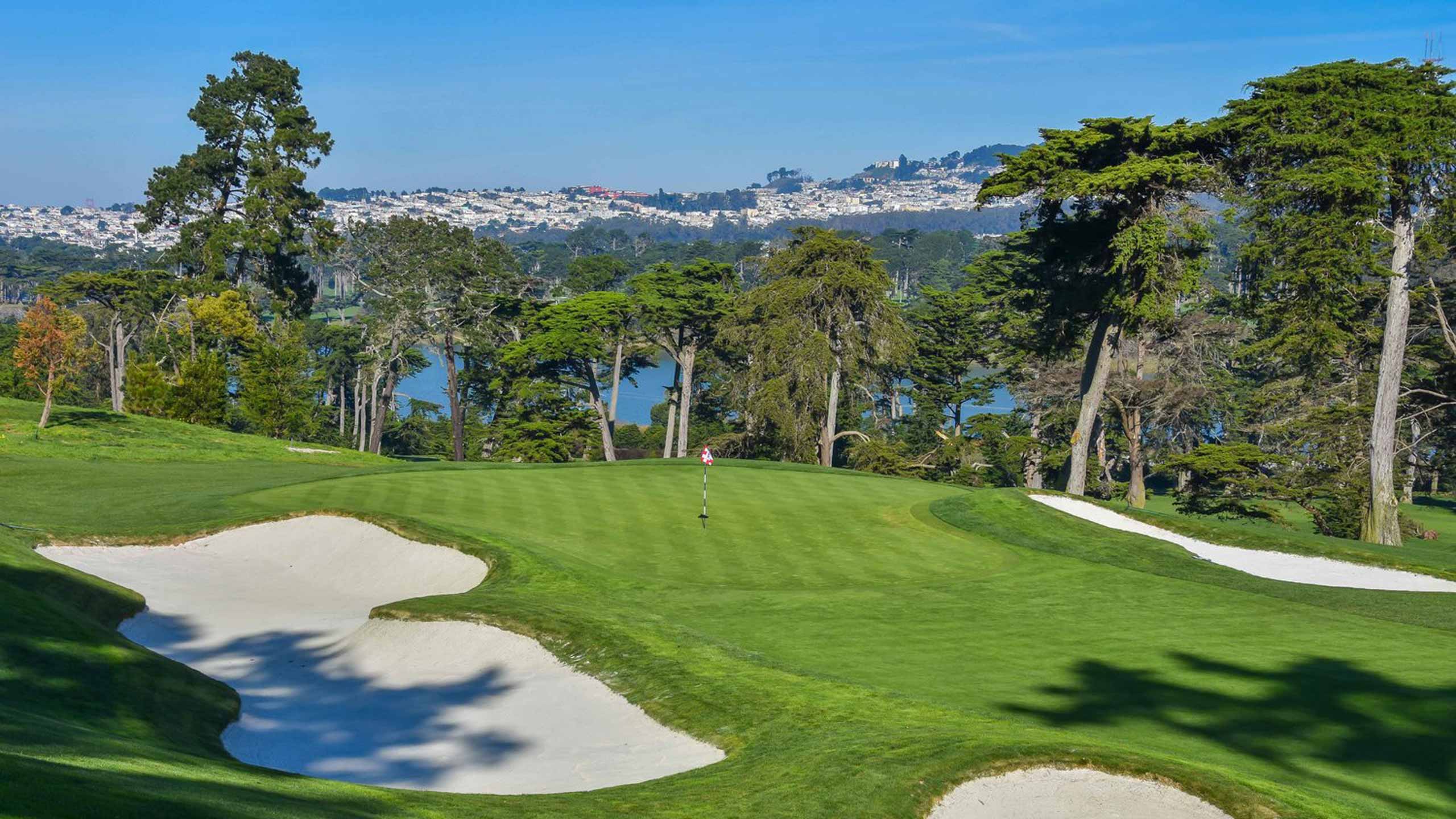
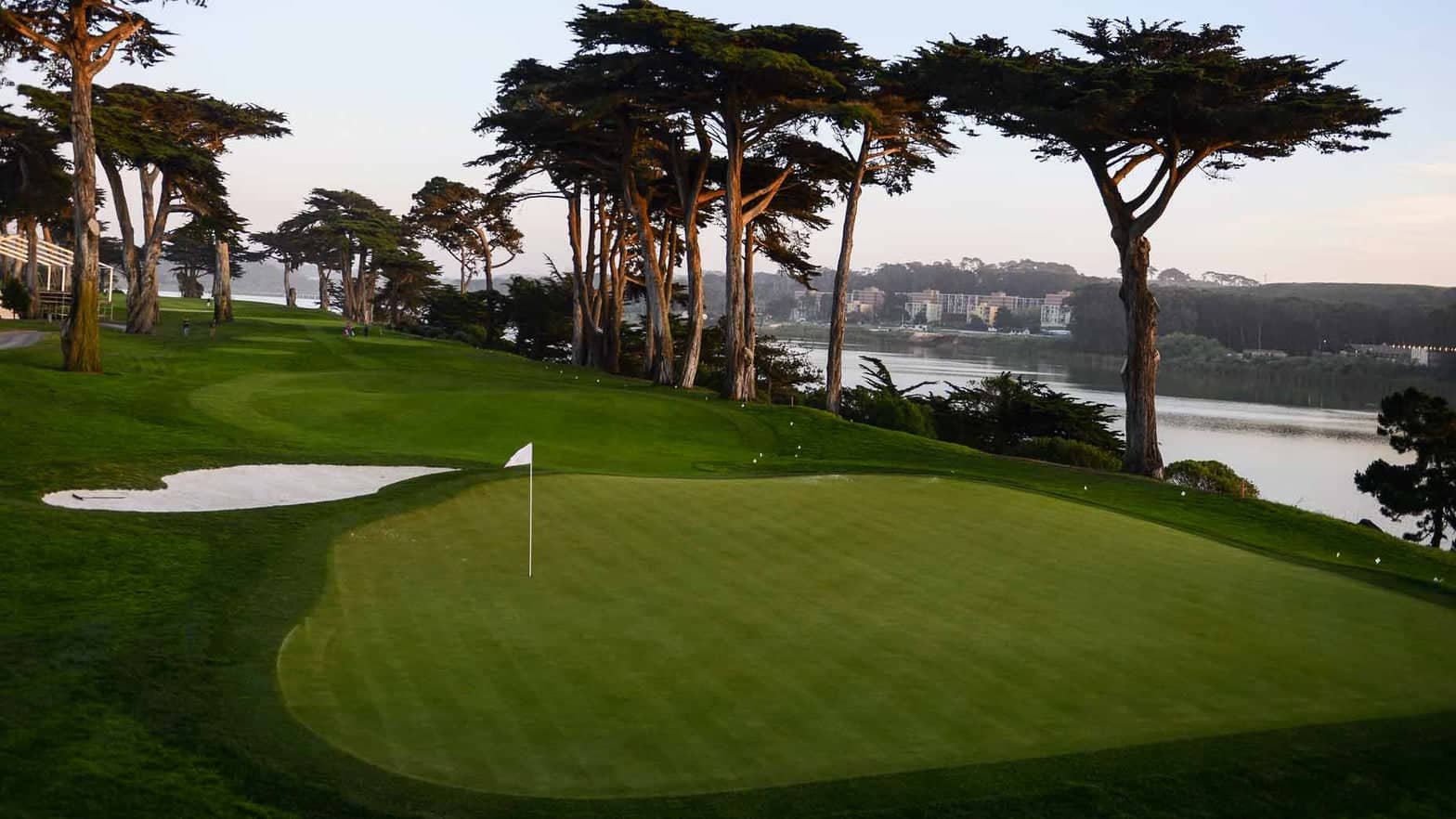
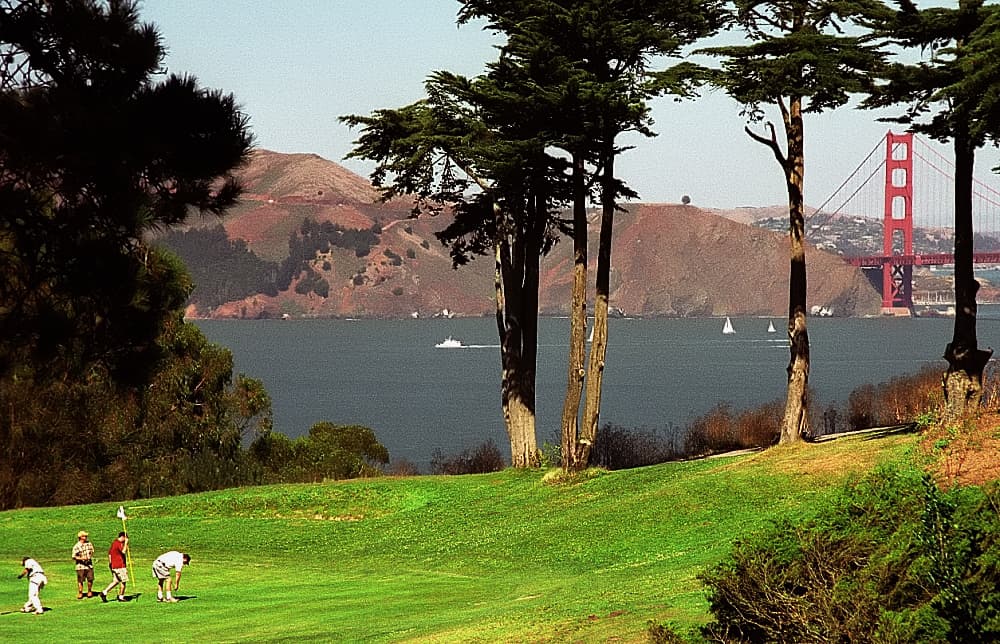
The remarkable thing about this roster is how much of its geography is still open to the public. You can play Venturi’s and Miller’s proving ground at TPC Harding Park, loop the Fleming 9 named for the Irishman who built it, and tee it up on Fleming and MacKenzie’s Sharp Park or the city views at Lincoln Park. The Olympic Club — a private athletic club that took over the struggling Lakeside Golf Club in 1918 — remains the region’s championship cathedral, where Jack Fleck stunned Ben Hogan in a 1955 U.S. Open playoff and Billy Casper erased Arnold Palmer’s seven-shot lead in 1966.
For the full story of how a foggy corner of one city came to dominate a global game — and then narrate it — start with our complete history of golf in San Francisco.