Ken Venturi: From Harding Park to the 1964 U.S. Open
In January 1966, Ken Venturi won the Lucky International Open at Harding Park, the San Francisco municipal course where he had hit his first shots as a boy, by a single stroke. His hands, ravaged by carpal tunnel syndrome, had been operated on just months earlier, and his parents — who ran the Harding Park pro shop for years — were in the gallery. It was the 14th and final PGA Tour victory of his career, and it came at the one course on earth where the story could properly end.
No figure embodies San Francisco municipal golf like Venturi. Other champions came out of the city's public courses — and we cover them across the history of golf in San Francisco — but Venturi is the one whose whole arc, from first swing to final trophy to last public act, runs through the city's fairways.
A Harding Park Childhood
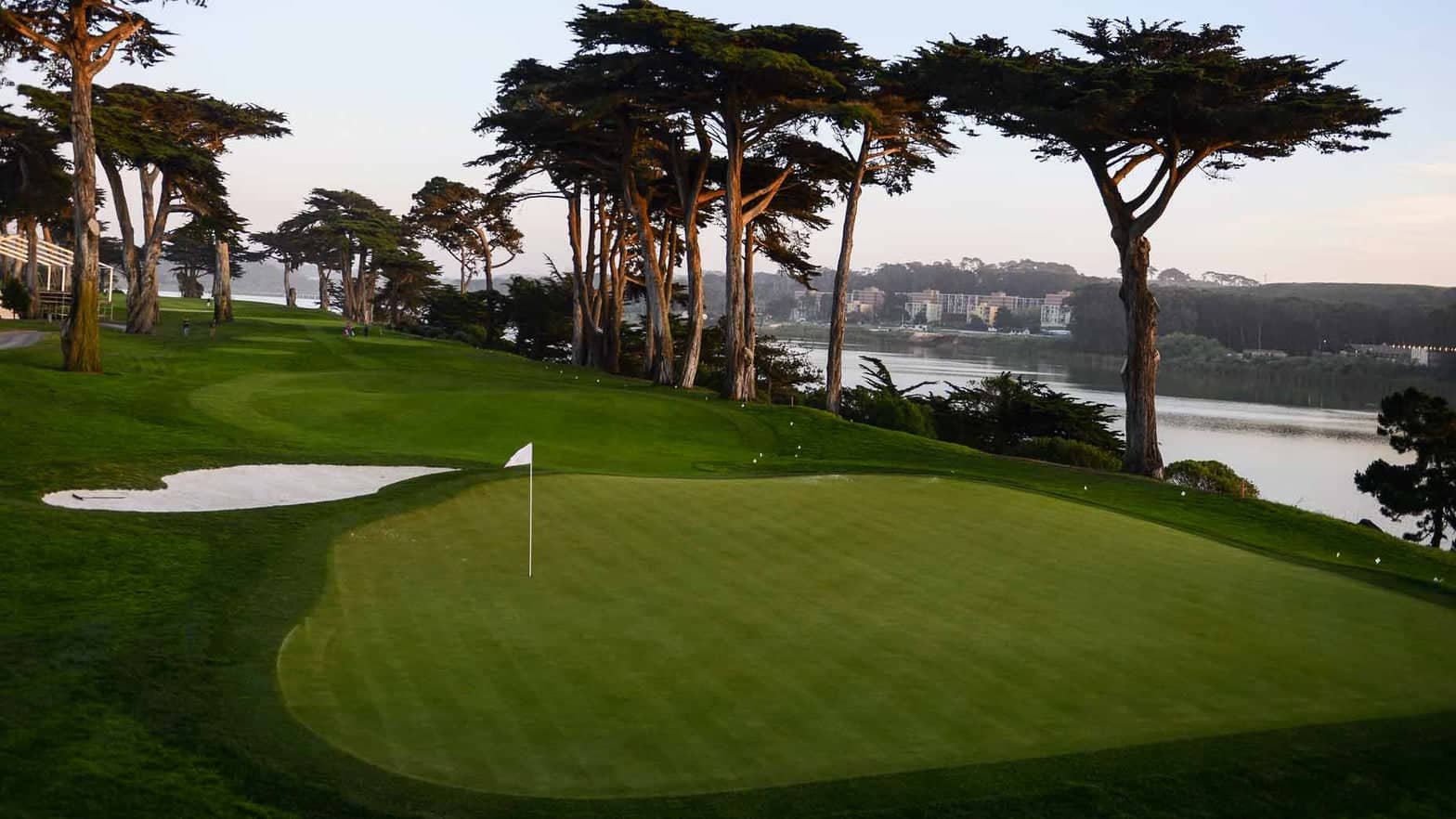
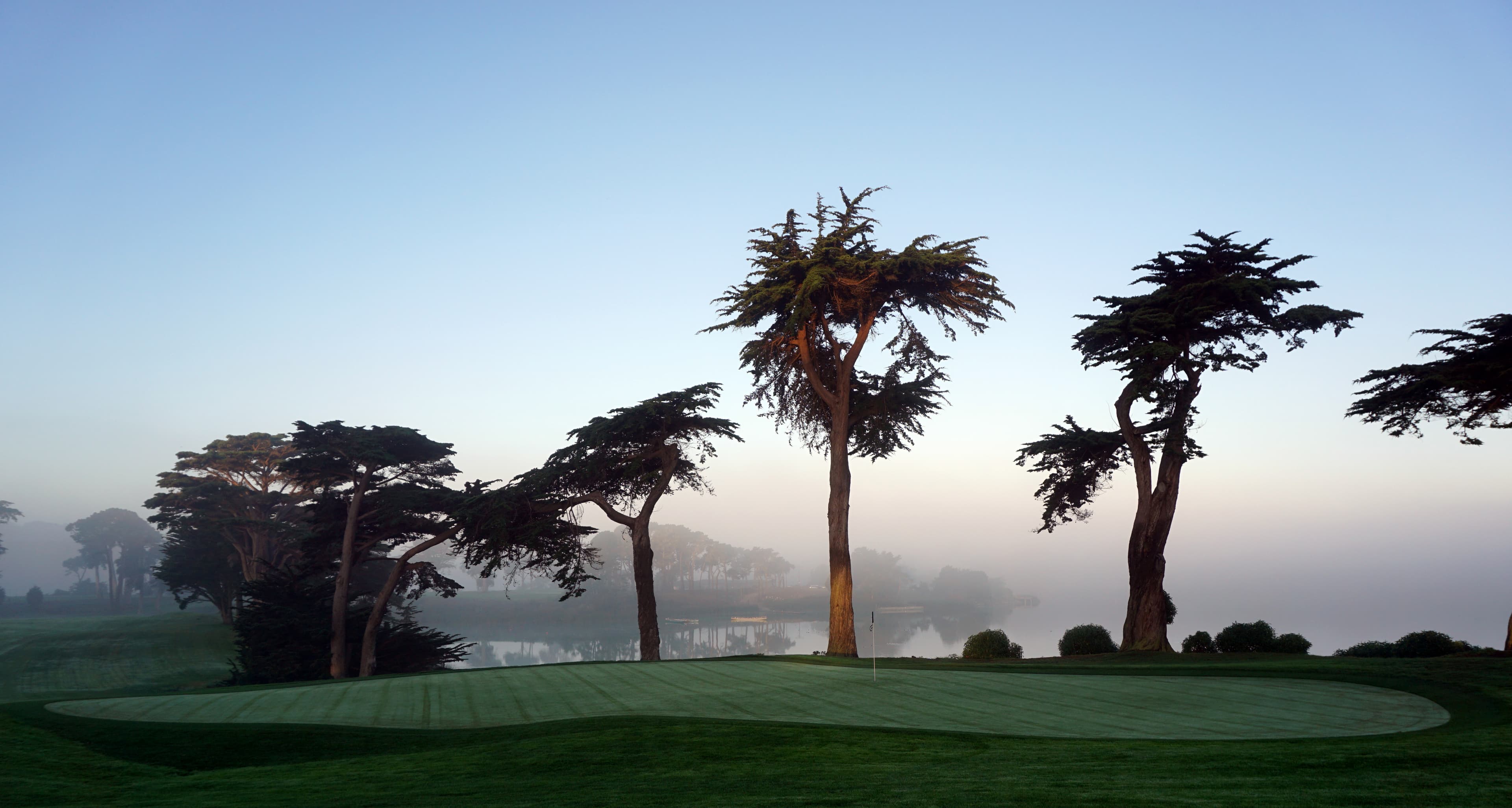
Kenneth Paul Venturi was born in San Francisco on May 15, 1931, and he learned the game at Harding Park, the municipal course beside Lake Merced that had opened in July 1925 — designed by Willie Watson and Sam Whiting, the same pair behind the Olympic Club's Lake Course across the street. His parents, Fred and Ethyl, would go on to run the Harding Park pro shop for years; Fred was still behind the counter there the day his son won the U.S. Open.
Golf found Venturi through hardship. As a boy he suffered from a severe stammer; at 13, a teacher told his mother that he was an "incurable stammerer." Venturi's response became one of golf's origin stories: he took up golf precisely because, as he put it, it was "the loneliest sport I know." He could spend hours on the course alone, talking himself through shots, working on his speech and his swing at the same time.
He developed his game at Harding Park and other Bay Area public courses, attended nearby Lincoln High School, and won San Francisco's prep golf championship in both 1948 and 1949 before playing collegiately at San José State. He added California State Amateur titles at Pebble Beach in 1951 and 1956.
King of the City Championship
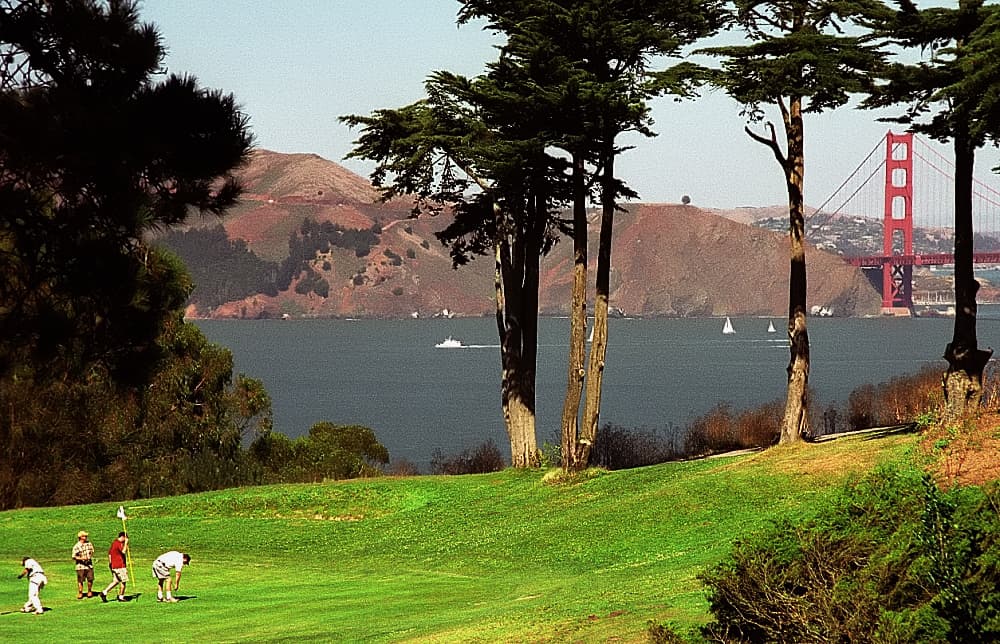
To understand what Venturi meant to San Francisco, you have to understand the San Francisco City Championship. Inaugurated in 1916 at Lincoln Park, the city's older municipal course above Land's End, and expanded to Harding Park after that course opened in 1925, "The City" is the oldest municipal golf championship in the country — and in the 1950s it was front-page news.
Venturi won it three times: in 1950 as a teenager, again in 1953, and — after two years of Army service — once more in 1956. That 1956 final is the stuff of legend. His opponent was Harvie Ward, the reigning U.S. Amateur champion, defending City champion, and Venturi's friend and fellow car salesman at Eddie Lowery's San Francisco dealership. A gallery estimated at more than 10,000 ringed Harding Park's fairways, and the match made the front page of every daily newspaper in San Francisco. Venturi reportedly greeted Ward on the first tee with a line that still echoes in City lore: "Harvie, I've come to take my City back." He won, 5 and 4.
The Match at Cypress Point
Two months earlier, in January 1956, Lowery's boasting about his two amateur employees had produced one of golf's most storied private games. After Lowery wagered that Venturi and Ward could beat any two players in the world, a four-ball was arranged at Cypress Point: the two San Francisco amateurs against Ben Hogan and Byron Nelson. Hogan shot a course-record 63 and the professionals escaped, one up — a match later immortalized in Mark Frost's book The Match. That a pair of City Championship contenders could push Hogan and Nelson to the final hole said everything about the standard of golf coming out of San Francisco in the 1950s.
Heartbreak at Augusta
Venturi arrived at the 1956 Masters still an amateur — and nearly made history. He opened with a 66, led after each of the first three rounds, and stood four shots clear entering Sunday. Then came one of the game's famous collapses: a final-round 80, including a 42 on the back nine, in brutal windblown conditions. Jack Burke Jr. rallied from eight back to win at 289; Venturi finished one stroke behind. No amateur had ever won the Masters, and none has since.
He remained an amateur through the rest of that season — adding his second California State Amateur title later in 1956 — before turning professional at the end of the year. Mentored by Byron Nelson, he quickly became one of the tour's best players, and Augusta kept tormenting him: he tied for fourth in 1958, two strokes behind Arnold Palmer, and finished runner-up by a single stroke in 1960, when Palmer birdied the last two holes. But by 1963, mysterious struggles with his game and his health had sent his career into free fall. By June 1964 he was a former star reduced to sectional qualifying for the U.S. Open.
The Furnace at Congressional: The 1964 U.S. Open
What happened at Congressional Country Club on June 20, 1964 remains one of the most dramatic single days in championship golf. The U.S. Open then concluded with 36 holes on Saturday, and Washington was suffering through savage heat — temperatures above 100 degrees with stifling humidity.
Venturi shot a morning-round 66 to climb within two of leader Tommy Jacobs, but by the final holes of that round he was visibly wobbling from heat exhaustion and dehydration. In the locker room between rounds, a physician, Dr. John Everett, advised him to withdraw, warning that continuing could be fatal. Venturi drank tea, took salt tablets, and walked back out.
The afternoon round became a death march witnessed live on national television. Everett walked with him carrying iced tea and cold towels; USGA executive director Joe Dey strode alongside; Venturi, gaunt and expressionless, kept hitting fairways and greens. He closed with an even-par 70 for a 278 total, four strokes clear of Jacobs. When the final putt dropped he raised his arms and said the words that became his epitaph: "My God, I've won the U.S. Open." He was too depleted to read his own scorecard; Dey checked it and told him where to sign. He had lost eight pounds in a single day — and won $17,000 and the national championship. It was the last U.S. Open ever played with a 36-hole final day.
The comeback made Venturi a national story far beyond golf. He was named PGA Player of the Year and Sports Illustrated's Sportsman of the Year for 1964, and he made the 1965 U.S. Ryder Cup team.
One Last Win, at Home
The reprieve was short. Carpal tunnel syndrome in both wrists — likely the hidden cause of his mid-career slump — worsened after 1964, robbing his hands of feeling and forcing surgery in the summer of 1965.
Which is what made January 1966 so perfect. At the Lucky International Open, played at Harding Park, Venturi shot 273 to win by one over Frank Beard — his first victory since the Open, and, it turned out, his last on tour. He did it on the course where he'd learned the game, with Fred and Ethyl Venturi watching from the gallery. San Francisco golf has produced few moments more complete.
Thirty-Five Years as the Voice of Golf
When his hands finally forced him off the tour, Venturi — the boy once written off as an incurable stammerer — talked golf for a living. He joined CBS Sports as its lead golf analyst in 1968 and held the chair for 35 years, retiring in 2002 as the longest-tenured lead analyst in the network's history.
He wasn't alone. San Francisco's municipal golf scene sent an entire generation into the broadcast booth — Johnny Miller to NBC, Bob Rosburg to ABC — a story we tell in full in San Francisco: The Voice of American Golf. And the playing generation Venturi led was just as remarkable: between them, Venturi, Ward, Rosburg, and Oakland's Tony Lema — who won the 1964 Open Championship at St Andrews weeks after Venturi's Congressional triumph — accounted for victories across every one of golf's major championships.
Defender of the City's Public Links
Venturi never stopped advocating for the public courses that made him. He served as Honorary Chairman of the San Francisco Public Golf Alliance, lending his name to the fight for the city's municipal courses. When Harding Park's restoration — the project championed by Sandy Tatum that returned the course to championship condition and brought the 2005 WGC-American Express Championship, the 2009 Presidents Cup, and the 2020 PGA Championship to the city — raised fears that the city's other munis would be neglected, Venturi wrote in a 2009 letter: "The glorious restoration of Harding must not be at the expense of Sharp or Lincoln." He urged San Francisco's golfers to defend their public courses "with your time, your money and your passion." His final visit to Sharp Park came just months before his death.
Legacy
Venturi was elected to the World Golf Hall of Fame and inducted on May 6, 2013. Hospitalized for two months with a spinal infection, pneumonia, and an intestinal infection, he was too ill to attend; his sons accepted on his behalf. He died in Rancho Mirage, California on May 17, 2013 — eleven days after his induction and two days after his 82nd birthday.
Ken Venturi: San Francisco fast facts
Born: May 15, 1931, San Francisco
Home course: Harding Park (his parents later ran the pro shop)
High school: Lincoln High School, SF (prep champion 1948, 1949)
SF City Championships: 1950, 1953, 1956
Major title: 1964 U.S. Open, Congressional
PGA Tour wins: 14 — the last at Harding Park, 1966
Broadcasting: CBS lead golf analyst, 1968–2002
Honors: World Golf Hall of Fame, 2013
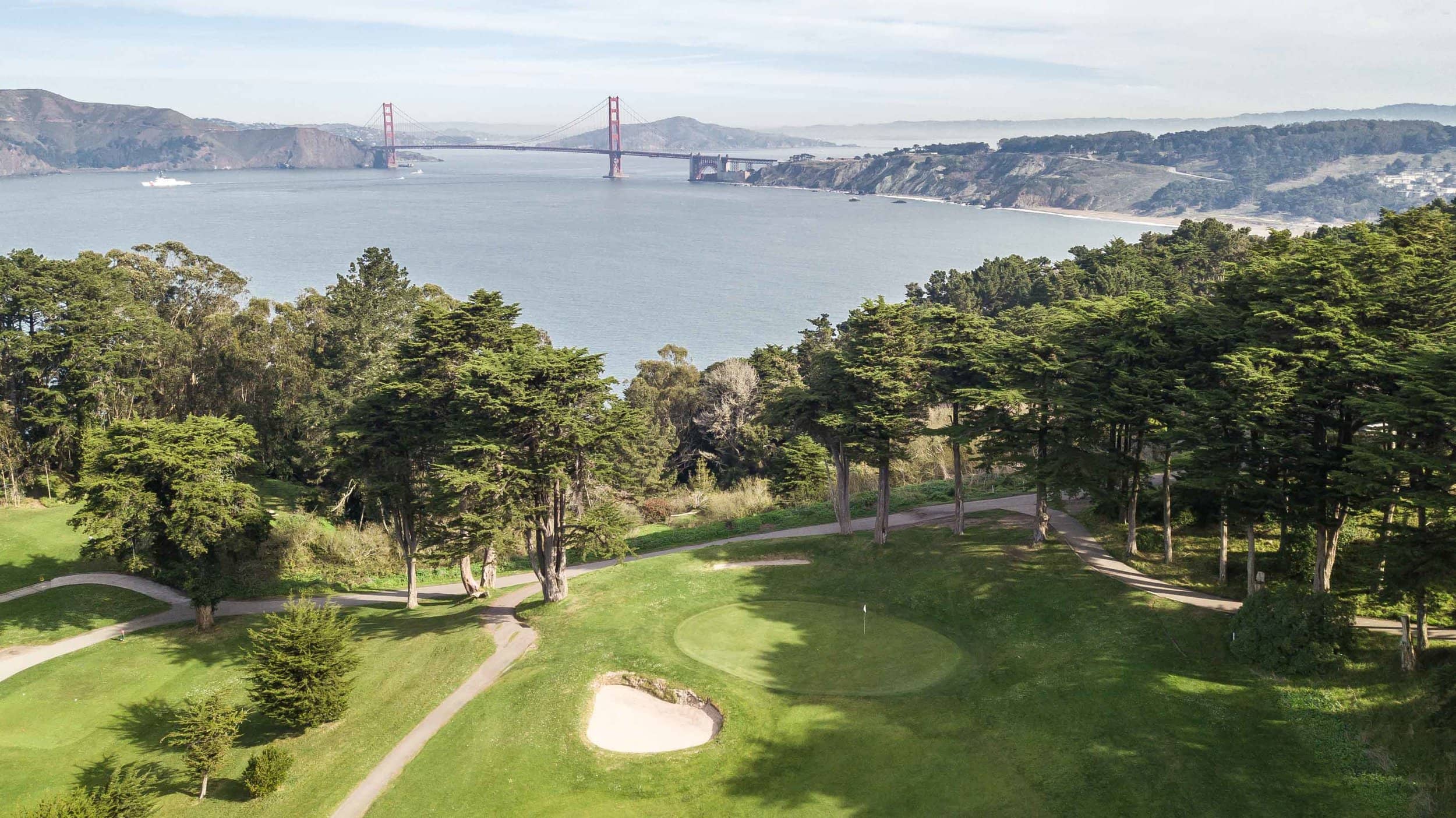
Today a round at TPC Harding Park is a walk through Venturi's life — the fairways he learned on, the City Championship stage he owned, and the finishing holes where he won for the last time. For the full story of the city that made him, start with The History of Golf in San Francisco.