Harvie Ward: San Francisco's Adopted Amateur Great
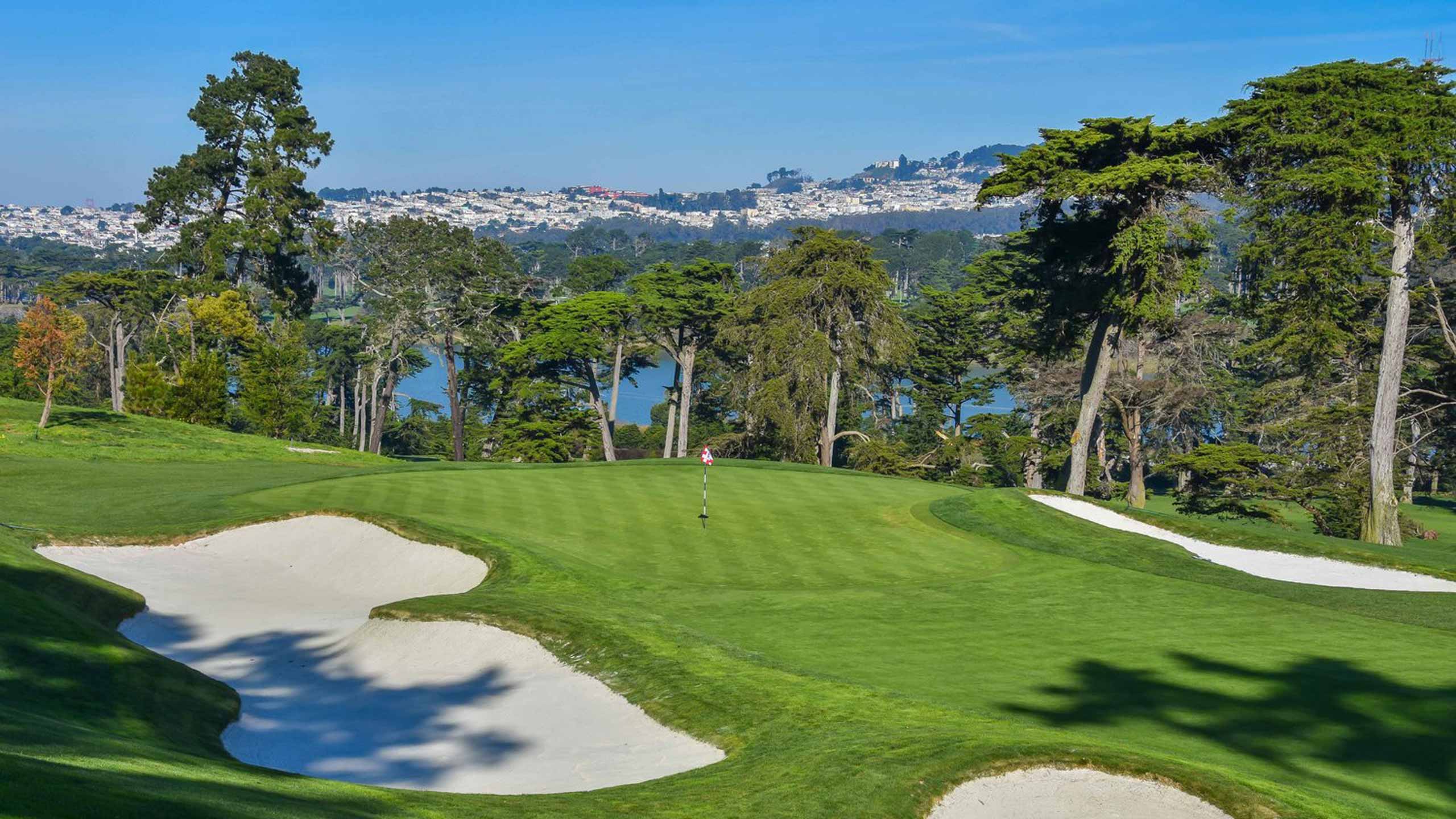
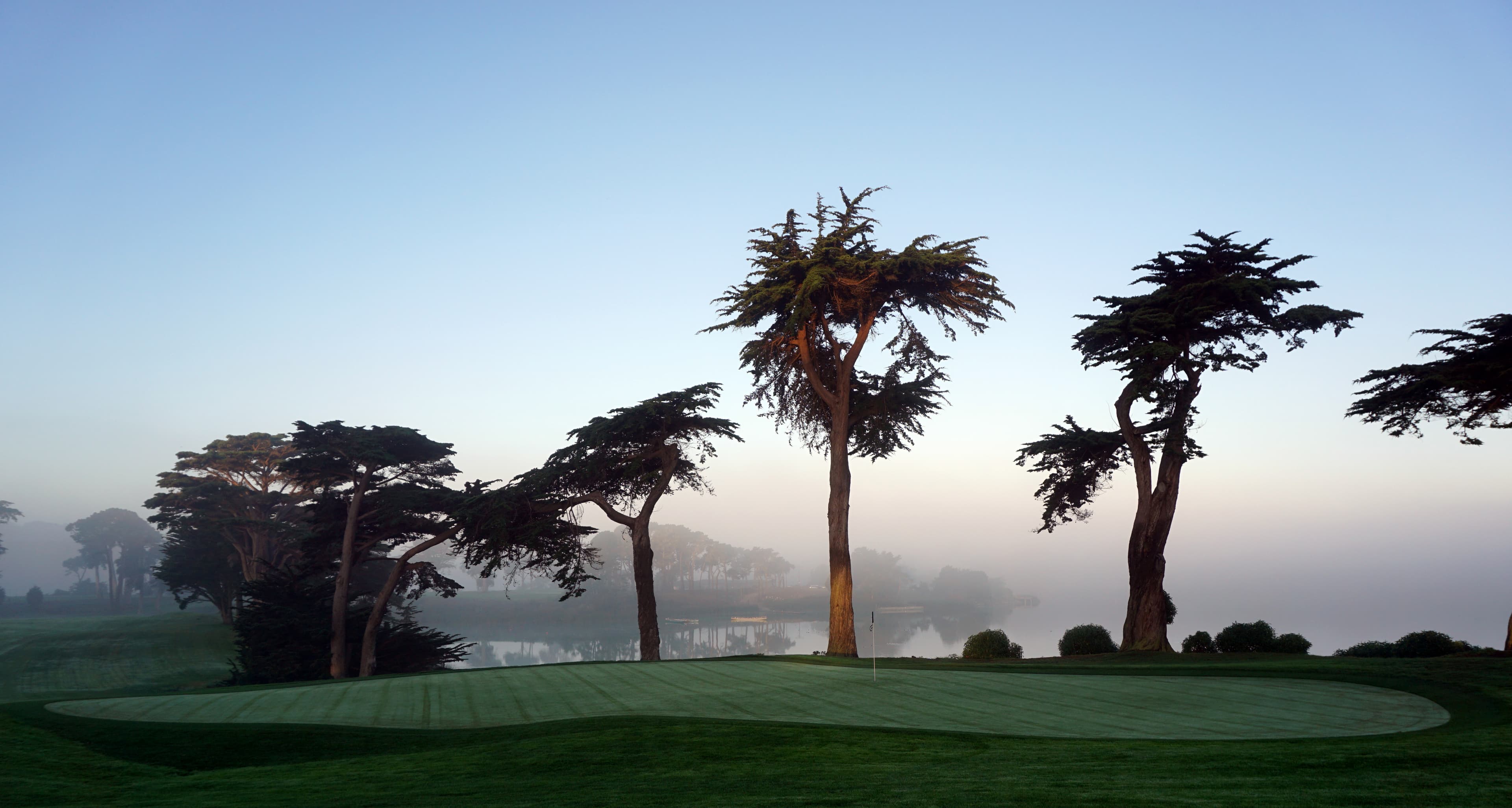
On the third weekend of June 1955, the biggest story in golf was unfolding on the Lake Course at the Olympic Club, hard against Lake Merced in San Francisco's foggy southwest corner. Everyone remembers how that U.S. Open ended — an unknown municipal-course pro named Jack Fleck catching Ben Hogan, then beating him in an 18-hole playoff, 69 to 72, in one of the greatest upsets the game has ever produced. Almost nobody remembers who was tied for the lead at the halfway mark.
It was a San Francisco car salesman. Harvie Ward — a drawling, endlessly charming North Carolinian who sold Lincolns by day and beat the best amateurs in the world on weekends — stood at 144 after 36 holes, sharing first place at his adopted hometown's national championship. He would fade on the weekend, but his tie for seventh made him low amateur of the 1955 U.S. Open, and it fixed his name permanently to the Olympic Club and to the most glamorous era San Francisco golf has ever known.
Ward wasn't born here. He came west for a job — a car-sales offer from one of golf's great characters — and proceeded to have the best golfing years of his life as a San Franciscan. That's what makes his story a San Francisco story.
A Tar Heel Comes West
Edward Harvie Ward Jr. was born December 8, 1925, in Tarboro, North Carolina, the son of a small-town pharmacist. At the University of North Carolina he won the 1949 NCAA individual championship, and he had already announced himself the year before by winning the 1948 North and South Amateur at Pinehurst — beating a young Arnold Palmer along the way.
The résumé went international fast. In 1952, in his first attempt, Ward won the British Amateur at Prestwick, dispatching Joe Carr 5 and 4 in the semifinals and routing fellow American Frank Stranahan 6 and 5 in the final. The Canadian Amateur followed in 1954. When the U.S. Amateur titles came later, Ward would become one of only two men — Dick Chapman was the other — to win the American, British, and Canadian Amateurs, and the only player ever to hold all three plus an NCAA title.
What brought him to San Francisco was a five-foot-tall force of nature named Eddie Lowery. Lowery had entered golf lore at age ten, caddying for Francis Ouimet at the 1913 U.S. Open; by the 1950s he owned Van Etta Motors in San Francisco — reported at the time to be the largest Lincoln-Mercury dealership in the country — and he sat on the USGA's Executive Committee. Lowery collected great amateurs the way other rich men collected paintings. He talked Ward into quitting his stockbroker's job in Atlanta and coming west with his wife, Suzanne, to sell cars — alongside another Van Etta "salesman," a fiery young San Franciscan named Ken Venturi.
Ward, by every account, was a natural at the showroom as well as the golf course. As one profile put it: "He seemed to like everybody, and everybody liked him."
The Olympic Club Summer of 1955
The 1955 season is the reason "Harvie Ward" and "Olympic Club" belong in the same sentence. When the U.S. Open came to the Lake Course that June — the club's first Open, on a Willie Watson design the Olympic Club had grown out of its 1918 purchase of the old Lakeside Golf Club — Ward was playing what amounted to a home game, and he played like it.
He opened 74-70, and his 144 total had him tied for the lead with Tommy Bolt at the halfway point of the national championship. An amateur, sharing first at a U.S. Open, on the course a few miles from where he sold cars. The Lake Course's brutal final 36 holes pushed him back — he closed 76-76 for a 296 total — but that was still good for a tie for seventh and low-amateur honors at the Open that ended in the Fleck–Hogan playoff.
Ward's week at Olympic was no fluke of local knowledge. Two months later he won the 1955 U.S. Amateur at the Country Club of Virginia, crushing Bill Hyndman 9 and 8 in one of the most lopsided finals in the championship's history. In 1956 he did it again, beating Chuck Kocsis 5 and 4 to go back-to-back. Add three Walker Cup teams (1953, 1955, 1959) and a perfect 6–0 record in his matches, plus low-amateur honors at three Masters and a solo fourth at Augusta in 1957 — one off the lead after three rounds — and the verdict of the era was unanimous: Harvie Ward was the finest amateur golfer in the world, and he was San Francisco's.
Harvie and Ken: The City's Greatest Rivalry
Mid-1950s San Francisco was one of the liveliest golf towns in America — a city whose municipal courses and match-play culture were producing champions at a remarkable rate. Bob Rosburg, another Olympic Club product, was already on tour; a kid named Johnny Miller was growing up across town; Tony Lema was learning the game over in Oakland. And at the top of the amateur pyramid stood two Van Etta Motors car salesmen — Ward and Venturi — who, by the lore of the era, filled their spare hours with money games at the Bay Area's great clubs.
The stage for the Ward–Venturi rivalry was the San Francisco City Championship at Harding Park, the city's storied municipal match-play championship. Ward won The City in 1955, while Venturi was away serving overseas with the Army. When Venturi came home, the 1956 final gave San Francisco the sporting event of its year: the reigning U.S. Amateur champion against the favorite son, on a public course, for a municipal title. An estimated 10,000 fans swarmed Harding Park's fairways and watched Venturi beat his friend 5 and 4.
Think about that pairing for a moment: a man who would win two U.S. Amateurs and the man who would win the 1964 U.S. Open, settling a city championship at a muni. No other American city has ever staged anything quite like it.
The Match at Cypress Point
Ward's San Francisco years produced one more piece of golf mythology. Early in 1956, around Bing Crosby's pro-am on the Monterey Peninsula, Eddie Lowery boasted to fellow millionaire George Coleman that his two amateurs could beat any two players alive. Coleman took the bet and showed up with Ben Hogan and Byron Nelson.
The four-ball they played at Cypress Point has become the most storied private match in golf history, later reconstructed in Mark Frost's 2007 bestseller The Match: The Day the Game of Golf Changed Forever. Accounts of the day differ on the details, but by Frost's telling, Hogan shot 63, Venturi 65, and Nelson and Ward 67s, with the professionals edging the amateurs 1 up — Hogan refusing, as the story goes, "to be tied by a couple of damn amateurs." Nobody who was there ever claimed to have seen better golf.
The Fall: 1957
Then, almost overnight, it ended. In 1957 California prosecuted Eddie Lowery over his taxes, and grand-jury testimony revealed that Lowery had been deducting Ward's tournament travel expenses as business costs at Van Etta Motors. Under the USGA's strict amateur code, a player could accept such support only from family. Ward insisted — and virtually everyone believed — that he had no knowledge of how Lowery booked the money. It didn't matter.
At a hearing in June 1957 the USGA suspended his amateur status for one year, stripping the two-time defending champion of the chance to win a third straight U.S. Amateur. "If I wasn't the amateur champion at the time," Ward said later, "it would have gone right by the boards." He described sitting "numb with disbelief" as the ruling came down. USGA executive director Joe Dey's public comment — that a young man who couldn't afford tournament golf was "better off not living beyond his depth" — landed on a car salesman making an honest wage, and it stung for the rest of Ward's life.
He was reinstated in 1958, but the spell was broken. His results slid, and after 1962 he essentially walked away from national competition. "Basically, I said, 'To hell with it,'" he admitted years later. "I sort of said that I'd show those guys by not playing anymore. Kind of silly, I guess."
After San Francisco: The Teacher
The decades that followed were hard — business ventures, heavy drinking, five marriages — before golf gave Harvie Ward a second act. He turned professional in 1974, and a job as director of golf at Foxfire, near Pinehurst, revealed his true gift: teaching. Jack Nicklaus later hired him as director of golf at Grand Cypress in Florida, where his most famous pupil was a young Payne Stewart, and in 1990 the PGA of America honored him as a Teacher of the Year. In 1989 he settled back in Pinehurst with his fifth wife, Joanne, teaching at Pine Needles — where a boy named Webb Simpson, who would one day win his own U.S. Open at the Olympic Club, took lessons from him.
Diagnosed with cancer in 2003, Ward made a farewell tour of the courses he loved best — and it says everything that the itinerary ran through Cypress Point and the San Francisco Golf Club, the scenes of his Bay Area prime. He died in Pinehurst on September 4, 2004, at 78.
The Adopted Son
San Francisco's golden golf generation was mostly homegrown — Venturi, Rosburg, and later Miller were born here; Lema came from just across the Bay. Harvie Ward is the one The City adopted, and who adopted it back. For one dazzling stretch in the mid-1950s, the best amateur in the world clocked in at a San Francisco car dealership, shared the halfway lead of a U.S. Open at the Olympic Club, and drew 10,000 San Franciscans to a muni to watch him play match play. The trophies say North Carolina produced him. The legend belongs to San Francisco.