Bob Rosburg: Native Son, PGA Champion, ABC's Voice

Every city's golf history has a figure who was simply there for all of it. In San Francisco, that figure is Bob Rosburg. He was born in the city in 1926, grew up on the fairways of the Olympic Club above Lake Merced, beat Ty Cobb in a match there when he was twelve, won a major championship, and then — in his second act — changed the way every golf tournament on television sounds. When you hear a reporter crouched in the rough whispering about a player's lie, you are hearing Rosburg's invention.

Of all the champions San Francisco produced in the mid-century — Ken Venturi, Harvie Ward, Tony Lema, Johnny Miller, George Archer — Rosburg is the one whose story starts and ends closest to home. This is that story.

A Boyhood at the Olympic Club

Robert Reginald Rosburg was born in San Francisco on October 21, 1926, and he may be the most precocious golfer the city ever raised. At age four he was already enough of a curiosity to appear in a 1930 newsreel, swinging a cut-down club, and to be featured in Ripley's Believe It or Not. At seven, he made a hole-in-one at the Stanford University golf course. By the time he was a junior member at the Olympic Club, he was a genuine player — and that set up one of the great stories in Bay Area golf (Wikipedia).

Beating Ty Cobb, age twelve

In 1938, the Olympic Club staged its inaugural golf tournament, and Ty Cobb — the retired Detroit Tigers legend, then a Bay Area resident and Olympic Club member — played his way to a final against a twelve-year-old junior member named Bob Rosburg. Rosburg didn't just win; he won 7 and 6. By Rosburg's own telling decades later, recorded by Cobb biographer Howard Rosenberg, Cobb “was an 8 or 9 handicap, something like that” who ran into a kid having a good day — and for all his famous temper, the ballplayer “was very nice to me” afterward.

Cobb's fellow members were less kind. They razzed the famously combustible ballplayer so mercilessly — how does a great athlete lose to a kid? — that, again per Rosburg, Cobb resigned his Olympic Club membership, returning only a couple of times to play as a member-guest before shifting his golf down the Peninsula. The aftermath rests on Rosburg's own recollection, told long after the fact — but the essentials are on the record: at twelve years old, he beat Ty Cobb, 7 and 6.

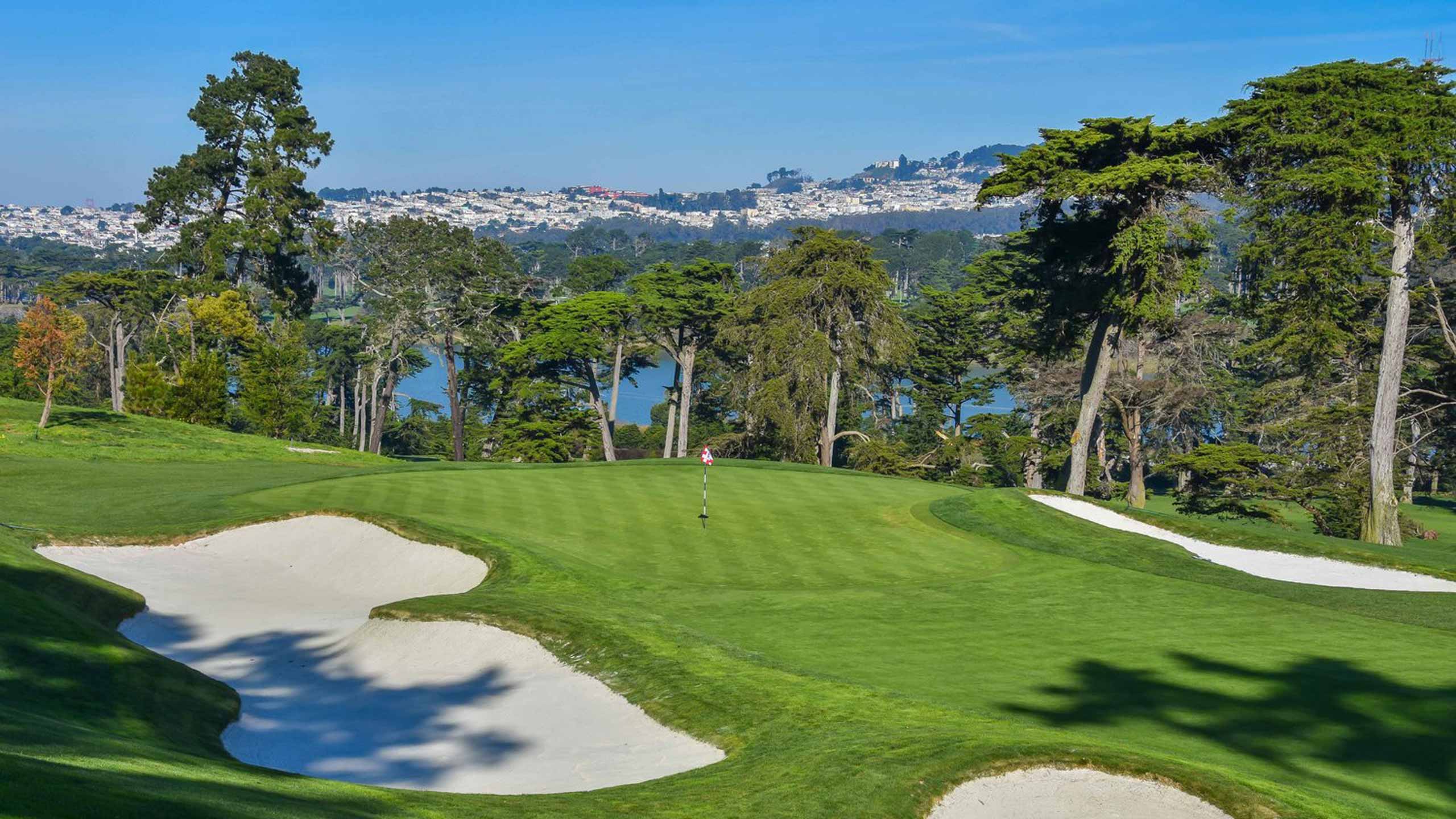
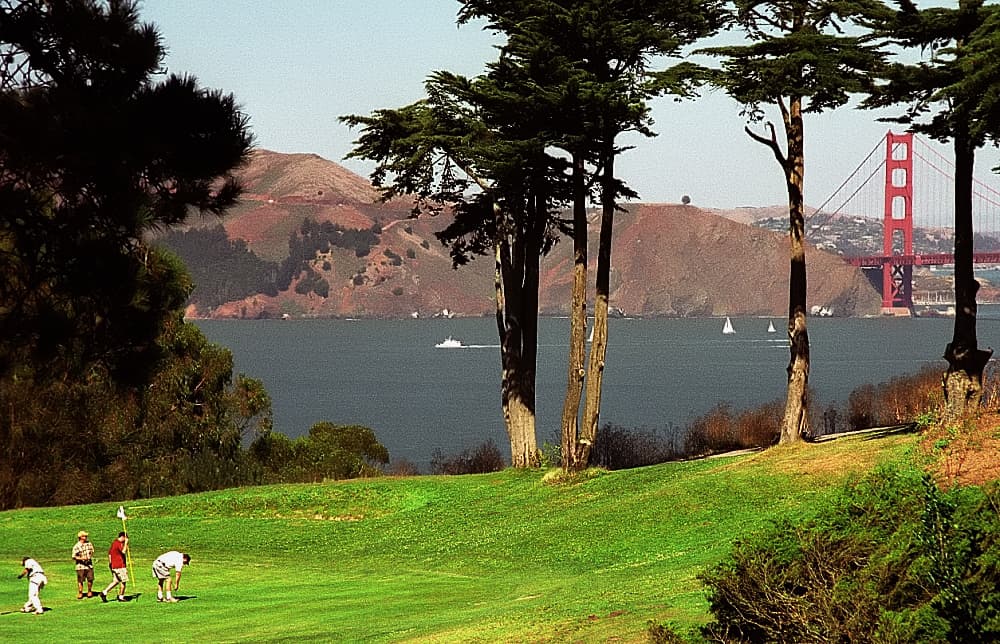
The Olympic Club would remain Rosburg's home ground, and it sits at the center of his generation's San Francisco. The club's Lake Course would later host U.S. Opens in 1955 and 1966, and the city's best young players — Rosburg, Venturi, Ward — moved constantly between its cypress-lined fairways and the municipal courses at Harding Park and Lincoln Park, testing themselves in the San Francisco City Championship, the storied muni event where Rosburg, like Venturi, Archer and Miller after him, started his competitive career.

Stanford, Baseball, and the Long Road to the Tour

Rosburg was good enough at two sports that golf nearly lost him. At Stanford he lettered in both baseball and golf, played on the 1946 NCAA championship golf team, and drew a spring-training invitation from the Brooklyn Dodgers before finishing his degree at the end of the decade (Stanford Athletics). The baseball never fully left him: for his entire golf career, Rosburg gripped the club with all ten fingers, like a bat — a baseball grip almost no other tour professional used, attached to a swing nobody ever called pretty.

His amateur record was strong but star-crossed. He reached the final of the California State Amateur three times — 1943, 1944 and 1948 — and lost all three. He had already teed it up against the pros as a teenager, playing his first PGA Tour event at the 1944 Los Angeles Open at age seventeen. After Stanford he spent a few years selling cars and insurance before committing to golf, turning professional in 1953 and joining the tour in 1954. He won almost immediately, taking the 1954 Miami Open, then added the Motor City Open and the San Diego Open in 1956.

What carried him was not the swing but everything within fifty yards of the hole. Rosburg's short game became legend among his peers. He chipped with mid-irons, practiced almost never, and putted like a man collecting a debt — in one round at the 1959 Pensacola Open he needed just 19 putts. His fellow San Franciscan Ken Venturi put it plainly: “He had one of the premier short games ever. He was as good as it got around the greens.” In 1958 the numbers caught up with the reputation, and Rosburg won the Vardon Trophy for the tour's lowest scoring average at 70.11.

1959: Heartbreak at Winged Foot, Glory in Minneapolis

Rosburg's defining summer came in 1959, and it began with a wound. At the U.S. Open at Winged Foot, he chased Billy Casper deep into the final round, pulled even on the back nine, and came to the 72nd hole needing a birdie to force a playoff. He didn't get it, and Casper won by one.

Seven weeks later, at the PGA Championship at the Minneapolis Golf Club, Rosburg started the final round six shots behind and in a tie for seventh. Then he played one of the great closing rounds in the championship's history: 30 on the front nine — a tournament record — and a final-round 66 while third-round leader Jerry Barber shot 73. Rosburg won by a single stroke over Barber and Doug Sanders, and his six-shot final-round comeback stood as a PGA Championship record until 1978 (Golf Compendium). In pure Rosburg fashion, he later claimed he won it without hitting a practice ball all week beyond a few chips and putts.

The year brought the full honors of a career season: runner-up at the U.S. Open, PGA champion, seventh on the money list, and a place on the 1959 U.S. Ryder Cup team (Wikipedia). The kid from the Olympic Club was a major champion.

One leg of San Francisco's grand slam

Rosburg's Wanamaker Trophy matters beyond his own biography. It has become a set piece of the city's golf history — retold by the USGA and the hometown papers alike, especially when the U.S. Open returned to the Olympic Club in 1998 — that San Francisco's mid-century golfers collectively won the grand slam. Venturi took the 1964 U.S. Open; Miller won the U.S. Open and the Open Championship; Archer won the 1969 Masters; and Rosburg's 1959 PGA completed the set. Add Tony Lema's 1964 Open Championship at St Andrews and Harvie Ward's back-to-back U.S. Amateurs, and no American city of the era can match the trophy case its public and private courses filled. Rosburg was the first of that muni-and-Olympic-Club generation to win a professional major.

The Three-Footer at Champions

Golf gave Rosburg one more chance at a U.S. Open, and it broke his heart again. At the 1969 championship at Champions Golf Club in Houston, the 42-year-old saved par from the sand at the 17th to stay tied with Orville Moody, then drove into the rough at the last and found a greenside bunker once more. His recovery ran to three feet. He missed the par putt that would have forced a Monday playoff, finishing one back of Moody in a tie for second — his second U.S. Open runner-up finish by a single stroke.

There was still one flourish left in the clubs. In 1972, at 45, Rosburg won the Bob Hope Desert Classic by one shot over a young Lanny Wadkins — his sixth and final PGA Tour title, eighteen years after his first. He semi-retired from tournament golf after that season, with six tour wins and eleven top-tens in major championships to his name.

“He's Got No Chance”: Inventing the On-Course Reporter

Most champions' stories end when the wins stop. Rosburg's second career turned out to be more influential than his first. ABC Sports hired him in the mid-1970s with an unusual brief: instead of putting the former PGA champion in a tower behind a green, the network sent him out onto the course to walk with the leaders and describe what the cameras couldn't see — the lie, the stance, the branch in the window. For more than three decades, “Rossie” did exactly that, and he is widely credited as golf's first on-course reporter; The New York Times called him the first broadcaster to work entirely from the fairways (Golf Compendium).

It is difficult to overstate how completely that idea won. Every network, every tour, every major now staffs on-course reporters; the role Rosburg pioneered is simply part of how golf is televised. He gave the job its signature line, too. Asked by anchor Jim McKay whether a player in trouble could recover, Rosburg would deliver his verdict with the certainty of a man who had missed those putts himself: “He's got no chance.” The phrase became golf-broadcast shorthand, affectionately quoted to this day. Along the way he helped bring Judy Rankin to ABC, where she became the first woman to work full-time as an on-course commentator at men's events, and by the time he stepped away he was one of the longest-serving voices in televised golf.

Rosburg's microphone years also complete a remarkable San Francisco pattern. The city that produced the mid-century's champions then supplied the sport's narrators: Venturi spent 35 years as CBS's lead golf analyst, Johnny Miller became the voice of golf at NBC, and Bay Area columnist Art Spander chronicled the game in print for five decades. Rosburg at ABC was the third leg of that broadcast triangle — San Francisco's voices, on every channel.

The Native Son's Legacy

Bob Rosburg died on May 14, 2009, in the Palm Springs area at age 82, after a fall (Variety). The obituaries led with the broadcasting, as they should have — thirty-plus years of “Rossie” reached far more people than the 1959 PGA ever did. He was inducted into the Stanford Athletic Hall of Fame, and his family's roots in the game continued after him.

But for San Francisco, the résumé reads in a particular order. He was the four-year-old in the newsreel, the twelve-year-old who beat Ty Cobb at the Olympic Club, the Stanford kid who chose golf over the Dodgers, the City Championship competitor who became the first of his generation of San Franciscans to win a professional major — and finally the voice from the fairway telling the whole country, with native-son certainty, exactly what kind of chance a golfer had.

Bob Rosburg at a glance

  • Born: October 21, 1926, San Francisco, CA

  • Died: May 14, 2009, Palm Springs area, CA (age 82)

  • Home club: The Olympic Club, San Francisco

  • College: Stanford (1946 NCAA champion golf team; baseball letterman)

  • Turned pro: 1953

  • PGA Tour wins: 6, including the 1959 PGA Championship

  • Major: 1959 PGA Championship, Minneapolis Golf Club

  • Near misses: U.S. Open runner-up 1959 and 1969, each by one stroke

  • Honors: 1958 Vardon Trophy; 1959 U.S. Ryder Cup team

  • Broadcasting: ABC Sports, mid-1970s to mid-2000s; golf's pioneering on-course reporter

This profile is part of our series on the history of golf in San Francisco — the city whose municipal courses and clubs produced Ken Venturi, Harvie Ward, Tony Lema, Johnny Miller, George Archer, Juli Inkster and the voices who narrated the game for half a century.

Sources & Further Reading

The Olympic Club - Lake Course

San Francisco, CA

golf
golf
Learn more