RANKEDBest Of

The Oldest Golf Courses in the Bay Area

The oldest golf courses in the San Francisco Bay Area — including a course founded in 1893 and the oldest course in continuous operation west of the Mississippi.

ByGreg
Published Updated 2 min read
golfdigest
Credit · golfdigest

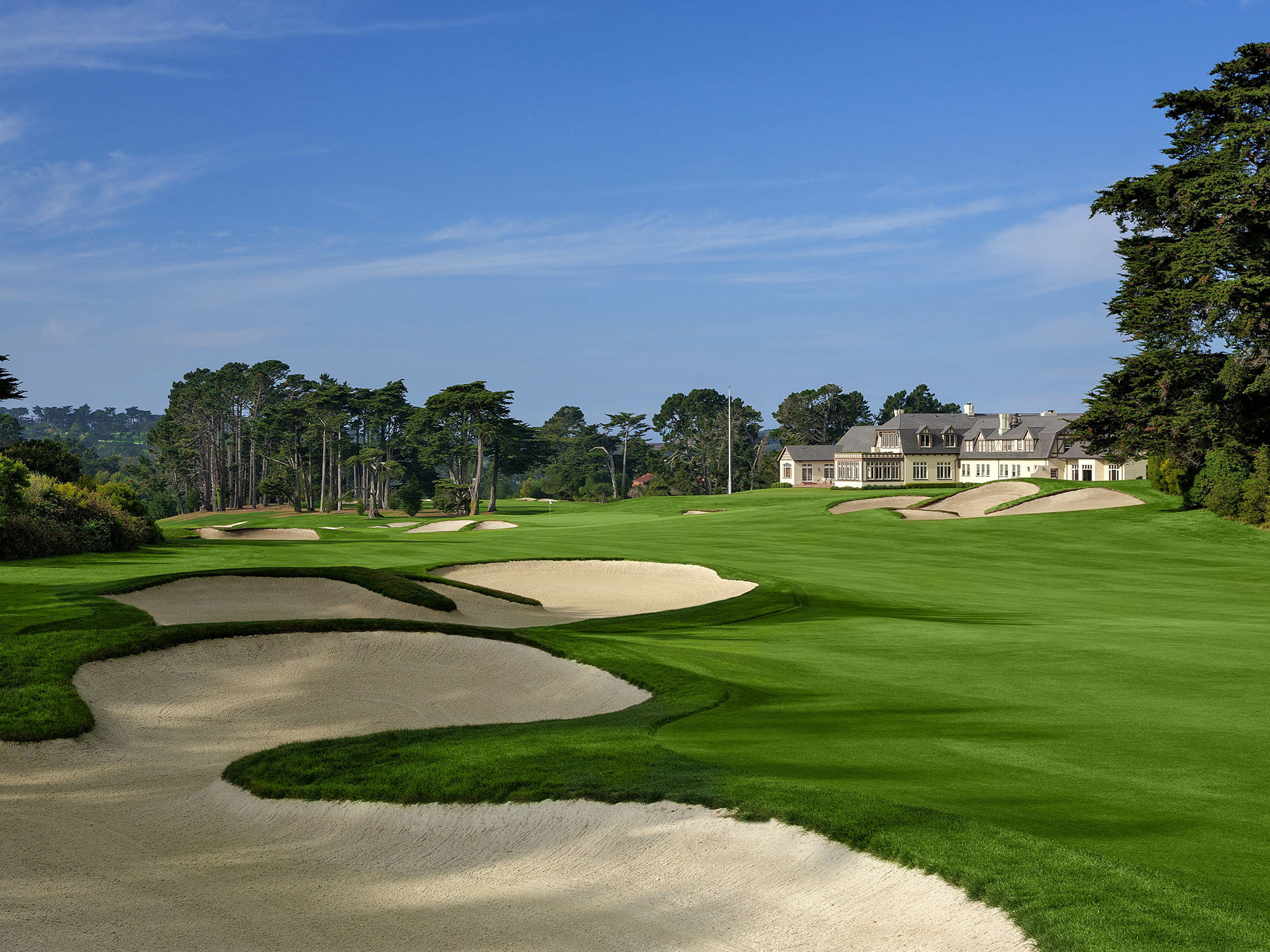
Golf came to Northern California in the 1890s, and a surprising number of the region's founding courses are still played today. From a country club dating to 1893 to the oldest course west of the Mississippi, these layouts are living history. Here are the oldest golf courses in the Bay Area, from the earliest onward.

Many are private clubs steeped in tradition, but a few — Del Monte, Lincoln Park and the Presidio among them — welcome the public onto fairways that have been in play for well over a century.

Burlingame Country Club — Founded in 1893, Burlingame is the oldest country club in the Bay Area, its course later touched by Robert Trent Jones Sr. and restored by Todd Eckenrode.

San Francisco Golf Club — Established in 1895, this ultra-private A.W. Tillinghast masterpiece is consistently ranked among the top courses in the United States.

Presidio Golf Course — Dating to 1895 as a private military club, the Presidio is now a public course winding through the national park — a rare chance to walk 19th-century fairways.

Del Monte Golf Course — Opened in 1897, Del Monte is the oldest golf course in continuous operation west of the Mississippi — and it's public, on the Monterey Peninsula.

San Jose Country Club — Founded in 1899, this hillside club is the South Bay's oldest, with commanding views over Silicon Valley.

Lincoln Park Golf Course — Laid out in 1902 on the cliffs above Lands End, this San Francisco muni offers Golden Gate Bridge views and more than a century of city golf history.

Claremont Country Club — An Oakland-Berkeley hills club dating to 1903, Claremont is famed for its short but severe, hilly layout.

Menlo Country Club — Founded in 1904 and later renovated by Kyle Phillips, Menlo is one of the Peninsula's oldest and most storied clubs.

The Peninsula Golf & Country Club — Established in 1911 in San Mateo, the Peninsula club blends a classic parkland course with a grand clubhouse and deep local history.

Sequoyah Country Club — A 1913 Oakland hills club with a compact, tree-lined course and one of the East Bay's oldest memberships.

Planning Your Round

The public options here are the way in for most golfers: Del Monte, Lincoln Park and the Presidio all let you play genuinely historic ground for a daily-fee price.

Curious how these classics have changed? See our guide to recently renovated Bay Area courses and the Alister MacKenzie designs of the region.

Want the full story of how these courses came to be — from the 1895 Presidio nine to Harding Park's championship rebirth? Read The History of Golf in San Francisco.

Map companion · 10 places

Courses named in this story

The linked ledger is the complete route. Map positions are contextual, not turn-by-turn directions.

ShareEmail story

Continue reading

  • Jul 6, 2026

    Recently Renovated Golf Courses in the Bay Area

    A wave of major course renovations has reshaped Bay Area golf — from Gil Hanse at Lake Merced to Rees Jones at Corica Park. Here are the courses reborn in the last decade.

  • Sep 16, 2023

    Alister Mackenzie Designed Courses in San Francisco Bay Area

    The Alister MacKenzie-designed courses in the San Francisco Bay Area, like Cypress Point, Meadow Club, and Pasatiempo, blend strategic brilliance with stunning landscapes, creating an unforgettable golfing experience.

  • Jul 6, 2026

    Best Public Golf Courses in San Francisco

    Every public golf course in San Francisco, ranked — from PGA Tour host TPC Harding Park to the MacKenzie muni at Sharp Park and the cliffside par-3s of Lincoln Park.

  • Aug 2, 2026

    The History of Golf in San Francisco

    From the Presidio's 1890s links to the 2020 PGA Championship at Harding Park: the history of golf in San Francisco — the munis, the majors, and the voices it produced.

From the course directory

Courses named in this story

  1. Course01

    Hillsborough, CA · Private

    Burlingame Country Club

    Holes
    18
    Par
    70
    Yards
    6305
    Architect
    Willie Watson (original); later work by Robert Trent Jones Sr. and Douglas Nickels; restored by Todd Eckenrode (2013)
  2. Course02

    San Francisco, CA · Private

    San Francisco Golf Club

    Holes
    18
    Par
    71
    Yards
    6716
    Architect
    A.W. Tillinghast
  3. Course03

    San Francisco, CA · Semi-private

    Presidio Golf & Concordia Club

    Holes
    18
    Par
    72
    Yards
    6481
    Architect
    John Lawson (original 9 holes, 1895); Robert Wood Johnstone & William McEwan (expansion to 18 holes, 1910)
  4. Course04

    Monterey, CA · Public

    Del Monte Golf Course

    Holes
    18
    Par
    72
    Yards
    6365
    Architect
    Charles Maud (original nine, 1897); expanded to a full 18 holes in the early 1900s
  5. Course05

    San Jose, CA · Private

    San Jose Country Club

    Holes
    18
    Par
    70
    Yards
    6,225
    Architect
    Tom Nicoll (1912); A.W. Tillinghast (1936); John Harbottle III (1997)
  6. Course06

    San Francisco, CA · Public

    Lincoln Park Golf Course

    Holes
    18
    Par
    68
    Yards
    5416
    Architect
    Tom Bendelow/Jack Fleming - 1914/1917
  7. Course07

    Oakland, CA · Private

    Claremont Country Club

    Holes
    18
    Par
    68
    Yards
    5467
    Architect
    Alister Mackenzie
  8. Course08

    Woodside, CA · Private

    Menlo Country Club

    Holes
    18
    Par
    71
    Yards
    6802
    Architect
    Tom Nicoll (original, 1912); Kyle Phillips (2014 renovation)
  9. Course09

    San Mateo, CA · Private

    The Peninsula Golf & Country Club

    Holes
    18
    Par
    71
    Yards
    6579
    Architect
    Donald Ross
  10. Course10

    Oakland, CA · Private

    Sequoyah Country Club

    Holes
    18
    Par
    70
    Yards
    6,100
    Architect
    Willie Lock (with later work by Seth Raynor, Chandler Egan, and Douglas Nickels)
Article ends