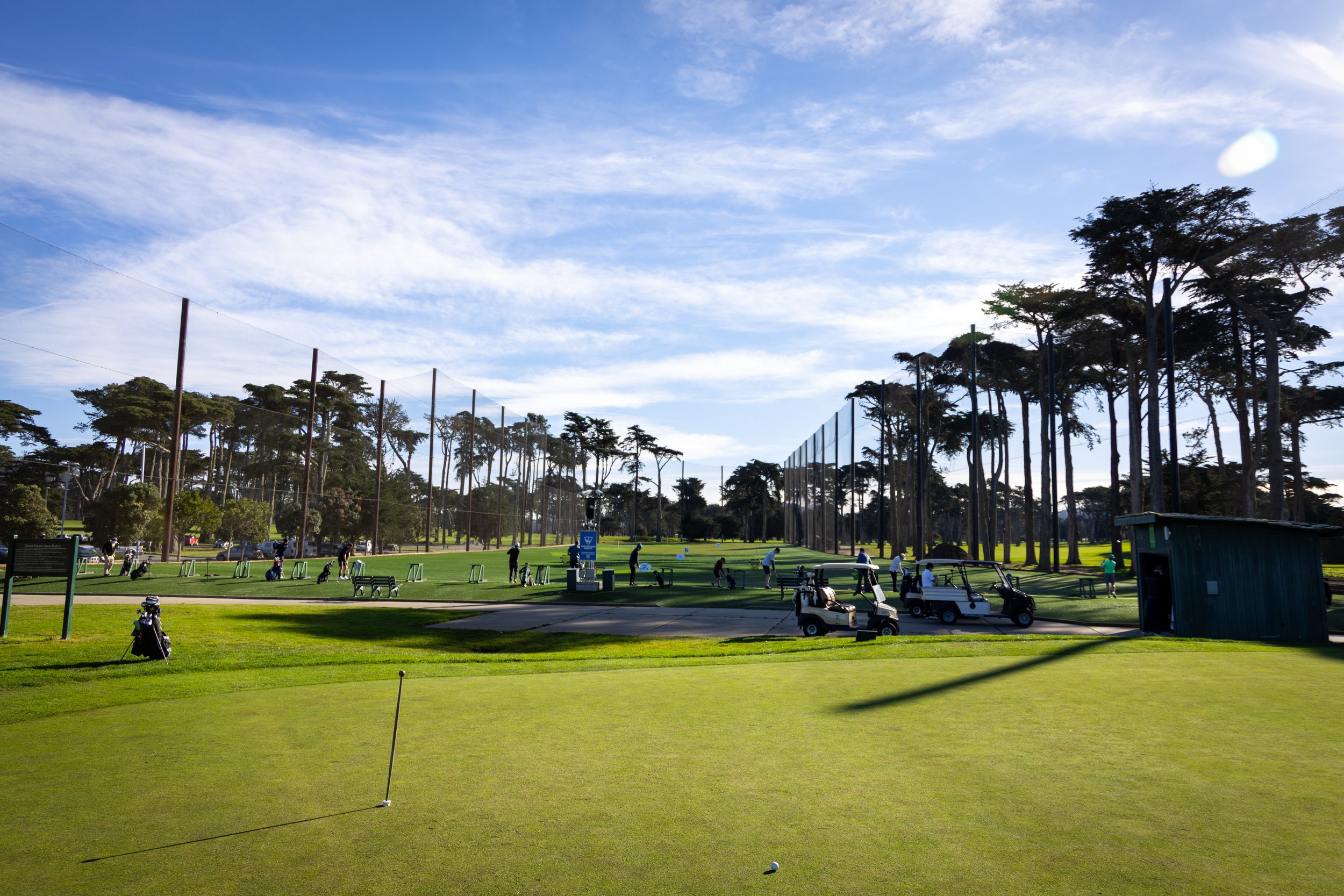
For a San Francisco driving range, start with Presidio or TPC Harding Park. For a short warm-up and par-3 round, Golden Gate Park has a driving cage and practice greens. If you want grass tees, an evening session, or a dedicated short-game area, nearby Bay Area facilities offer more choices.
The right practice facility depends on what you want to work on: full swings, putting, chipping, or bunker shots. The comparisons below use operators’ published facilities and access rules. Being open to the public does not mean every practice area is free or available all day.
Prices and access details checked September 22, 2026. Bucket sizes are not standardized, so compare both the price and ball count. Confirm weather closures, maintenance, and the final ball-sale time before making a special trip.
Compare San Francisco and nearby practice facilities
Facility | Area | Best reason to go | Published price or access detail |
|---|---|---|---|
Presidio | San Francisco | Range plus putting and chipping practice | $9 / 36 balls; Tuesday range opens at noon |
TPC Harding Park | San Francisco | Toptracer and short-game practice | $8.75 / 35 balls; short-game area closed Wednesdays |
Golden Gate Park | San Francisco | Cage warm-up and a par-3 round | $7 small cage bucket; check chipping access |
Mariners Point | Foster City | Evening practice and weekday grass tees | $11 / 40 balls cash price; grass surcharge $5 |
Corica Park | Alameda | Toptracer, grass area, and short game | $8 / 30 balls; short-game area $8 / 30 minutes |
Monarch Bay | San Leandro | Covered bays and evening range sessions | $10 / 30 balls; mat tees |
Peacock Gap | San Rafael | An all-grass range in the North Bay | Confirm current bucket price and availability |
Practice facilities in San Francisco
Presidio: range practice and a separate short-game area
For public-course directions and tee times, see Presidio Golf Course.
The public Presidio Golf Course has a driving range and a six-hole practice area used for putting and chipping. The operator rotates use of the practice greens and says one green is available from sunrise to sunset, weather permitting. This recommendation is for the public course’s facilities.
The range normally opens at dawn Wednesday–Monday, but at noon on Tuesdays after maintenance, and closes at dusk. Published buckets are $9 for 36 balls, $15 for 70, and $18 for 100. Check Presidio’s official driving-range page for current access; do not plan a Tuesday morning range session.
TPC Harding Park: check which green you can use
Harding Park’s range includes Toptracer at no additional charge beyond the balls. The city lists buckets including 35 balls for $8.75 and 50 for $12.50. It is a useful choice for a structured full-swing session, especially if you want measured targets and feedback.
The free short-game area is closed on Wednesdays for recovery. The main putting green is reserved for golfers playing that day, so a range visit alone does not grant access to it. The range normally opens at 6:30 a.m., or 7:30 a.m. on Mondays, and closes 45 minutes before sunset. Verify the operator’s practice policies and city’s range prices.
Golden Gate Park: a cage rather than a full range
Golden Gate Park works best when you want a warm-up before nine par-3 holes, or a focused short-game visit. Its driving cage does not provide the same full ball-flight view as an open range. The rates page lists a small bucket of approximately 35–40 balls for $7 and a large bucket of approximately 110–115 for $12.
Practice use is first come, first served; ask the clubhouse about chipping-area availability on the day. Use the current rate sheet for prices and the facility FAQ for access policies.
Nearby Bay Area driving ranges and short-game areas
Mariners Point: lights, Toptracer, and grass tees
Mariners Point in Foster City has 64 practice stalls, a natural-grass hitting area, and areas for chipping, pitching, and bunker practice. Toptracer is included with a ball purchase. Cash bucket prices are $11 for 40 balls, $17 for 85, and $22 for 140; prepaid range-card pricing differs. Short-game ball-tube rental costs $8 for the first 30 minutes or $10 for an hour.
Grass use adds $5 and has more restricted hours than the main range; the operator lists no weekend grass access. Confirm the last grass-bucket time before traveling. The main facility is open into the evening, but ball sales stop at 9 p.m., or 8 p.m. on Sundays. See practice facilities, prices, and hours.
Corica Park: combine full swings and short game
Corica Park’s Alameda practice facility has 47 Toptracer bays, a grass practice area, and separate chipping and putting areas. It is our East Bay option for a visit that includes several types of practice, with the Mif Albright par-3 course nearby if you want to finish on the course.
Published range buckets are $8 for 30 balls, $12 for 60, and $18 for 100. The short-game area is a separate $8 charge for 30 minutes; include that in your budget rather than assuming it comes with a bucket. Check Corica’s practice page for current hours and conditions.
Monarch Bay: covered bays in San Leandro
Monarch Bay’s two-level range has 60 stalls, covered hitting areas, and mat tees. The grass landing area does not mean you will be hitting from grass. It is a practical option when covered bays or evening availability matter more than turf practice.
Buckets are listed at $10 for 30 balls, $16 for 60, and $20 for 90. Published range hours are 7 a.m.–9 p.m., with lights off at 9 p.m.; the operator notes that winter weather can affect hours. Check the official driving-range page before a late visit.
Peacock Gap: grass practice in San Rafael
Peacock Gap advertises an all-grass driving range along with chipping and putting greens. It is our North Bay option for golfers who specifically want to practice from turf. Call the golf shop at 415-453-4940 to confirm bucket prices and grass availability for the day; the published site does not provide a dependable current bucket-price list.
Start with Peacock Gap’s official site for contact details and facility updates.
Where should you practice?
Full swings in San Francisco: compare Presidio and Harding Park. Golden Gate Park has a cage, so it serves a different purpose.
Putting or chipping in the city: check Presidio’s rotating practice-green access, Harding’s Wednesday closure, or the clubhouse at Golden Gate Park.
Grass tees: consider Corica Park, Peacock Gap, or Mariners Point during its permitted grass hours.
Evening practice: compare Mariners Point and Monarch Bay, checking ball-sale cutoffs as well as closing times.
A practice session plus nine holes: combine Mariners Point, Golden Gate Park, or Corica’s Mif Albright with a booked round.
Common practice questions
Can I use a putting green without a tee time?
It depends on the facility and the specific green. Harding’s main putting green is for that day’s players, while its short-game area has a separate access policy. Presidio describes rotating public practice-green use. Check with the golf shop before treating any green as open practice space.
Which range is best for a beginner?
Choose somewhere nearby with clear pricing and enough time to practice without rushing. Start with a smaller bucket and a simple plan—contact, direction, then distance. Once you want to take those shots onto a course, compare our Bay Area nine-hole courses and golf courses for beginners.