Hot Dog Bills: How the Burgerdog Became a San Francisco Golf Tradition
Walk into the clubhouse at Golden Gate Park Golf Course and you can order a distinctive San Francisco golf tradition without an Olympic Club membership. The Burgerdog from Hot Dog Bills is exactly what its name promises: a quarter-pound hamburger patty molded into a long, narrow shape, cooked on a griddle, tucked into a toasted hot dog bun and dressed with cheese, ketchup, mustard, relish, pickles and onions. The San Francisco Chronicle reported a $12 price there in September 2025; that is a dated price, not a guarantee of what it costs today.
For most of its life, the Burgerdog was harder to reach. It belonged to the private fairways around Lake Merced, where Hot Dog Bills became so closely tied to the Olympic Club's Lake Course that golfers began treating a stop at its shack as part of the round. The relationship was not a sponsorship invented in a boardroom. Golfers and caddies created it one order at a time, until their appetite started affecting pace of play. That small problem changed a family business and added an unlikely chapter to the history of golf in San Francisco.
Bill, Billie, and a Practical Invention
Bill and Billie Parrish founded Hot Dog Bills in 1950. The business began not in a clubhouse kitchen but in a mobile food trailer that the husband-and-wife team moved around the Bay Area while looking for the right place to park. Bill was a professional musician and trumpet player, and the trailer started as a side business to bring in more money. The family lived in Parkmerced, close enough to Lake Merced that the neighborhood's concentration of golf courses soon supplied an obvious audience.
The Burgerdog was an exercise in thrift and limited space. A long rectangular patty occupied less room on the griddle than a round burger, allowing Bill to cook more at once. It also meant the trailer could buy one kind of bun for two menu items. Hot dogs went into hot dog buns; the newly shaped hamburgers did, too. GOLF later described the patty as a quarter-pound blend of ground sirloin and chuck. The company's own instructions keep the formula simpler: good beef, cheese if wanted, a toasted bun and fresh condiments.
When Caddies Crossed the Flume
The Parrishes often stationed the trailer at Lake Merced, across from the Olympic Club. According to a 2025 interview with Candy Parrish and Max Thrush, the cart sat close to the 13th, 14th and 15th holes of the Lake Course. The smell and the convenience traveled across the boundary. Members sent caddies over the flume to collect burgers and hot dogs, and some golfers made the trip themselves. A food stand outside a private club had found customers inside it.
The arrangement was popular but inefficient. Players stopped during their rounds and waited while the Parrishes cooked each order. In the family's telling, those pauses became a pace of play issue. Olympic could have treated the trailer as a nuisance. Instead, the club solved the golf problem by bringing the cooks closer to the golfers. Hot Dog Bills was invited through the gates and given a permanent place on the property.
GOLF dates that move to 1954. The first stand served the Lake Course near its 10th green, where a Hot Dog Bills location remains. The timing was remarkable. One year later, Olympic hosted its first U.S. Open, and a local food-cart solution was suddenly operating on one of the biggest stages in golf. The business had started outside the fence, but golfers had effectively pulled it onto the course.
How the Burgerdog Became Part of Playing Olympic
The Burgerdog's shape made sense on a golf course for a reason Bill Parrish may not have needed to advertise: it could be eaten with one hand. A golfer could hold lunch in one hand and a drink, scorecard or club in the other. The toasted bun kept the toppings in a narrow line, and the standard order was familiar rather than fussy. It was substantial enough to replace lunch but quick enough to eat between shots.
Over time the stand became a ritual. Hot Dog Bills expanded to three Olympic locations: the original Lake Course stand, another serving the Ocean Course, and a third by the driving range and Cliffs Course. The business was still family-sized, but its physical map now followed the club's golf campus. Ordering a Burgerdog became one of those details members mentioned when describing a round to a guest—the edible equivalent of a particular view or a famous green complex.
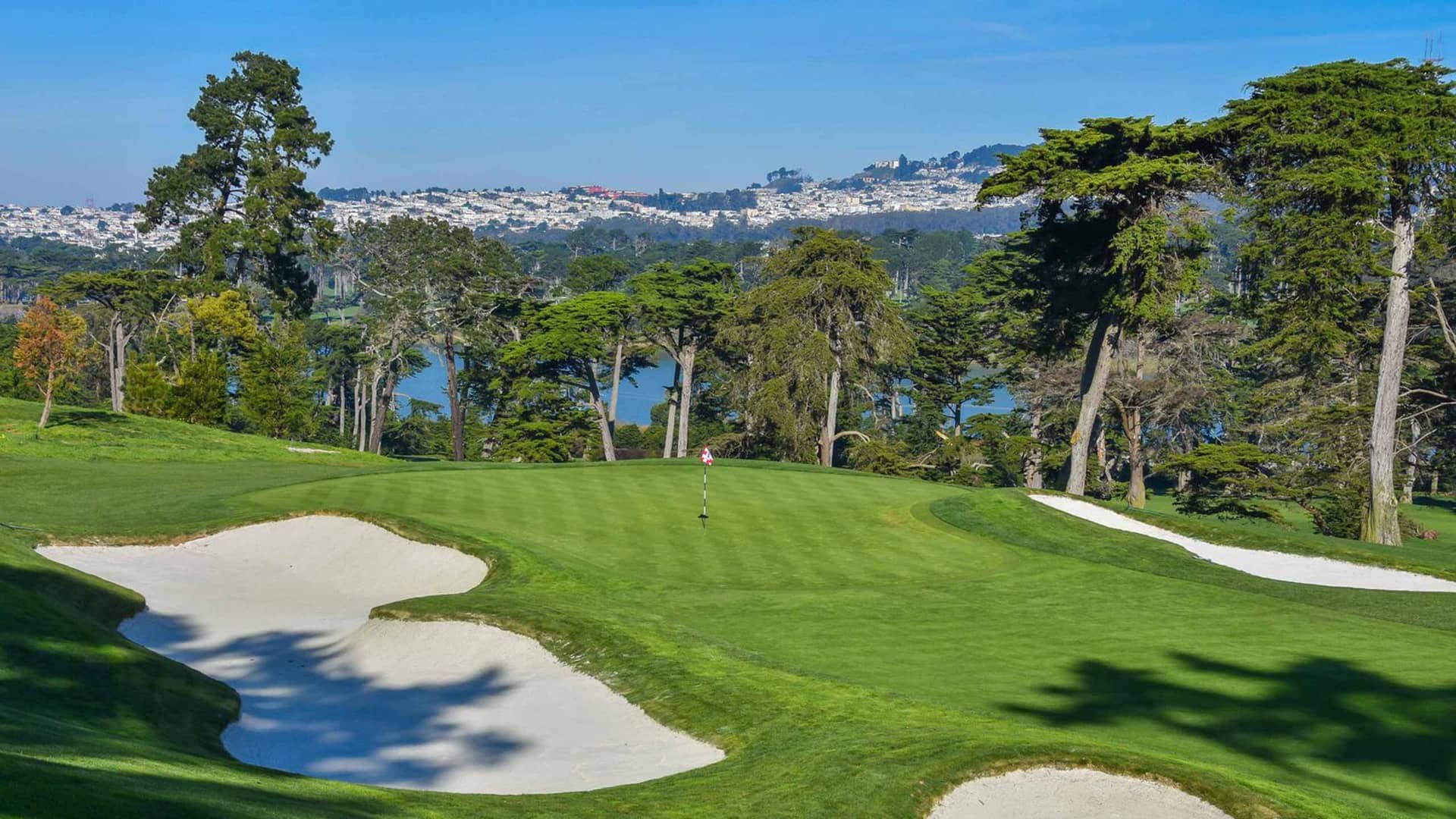
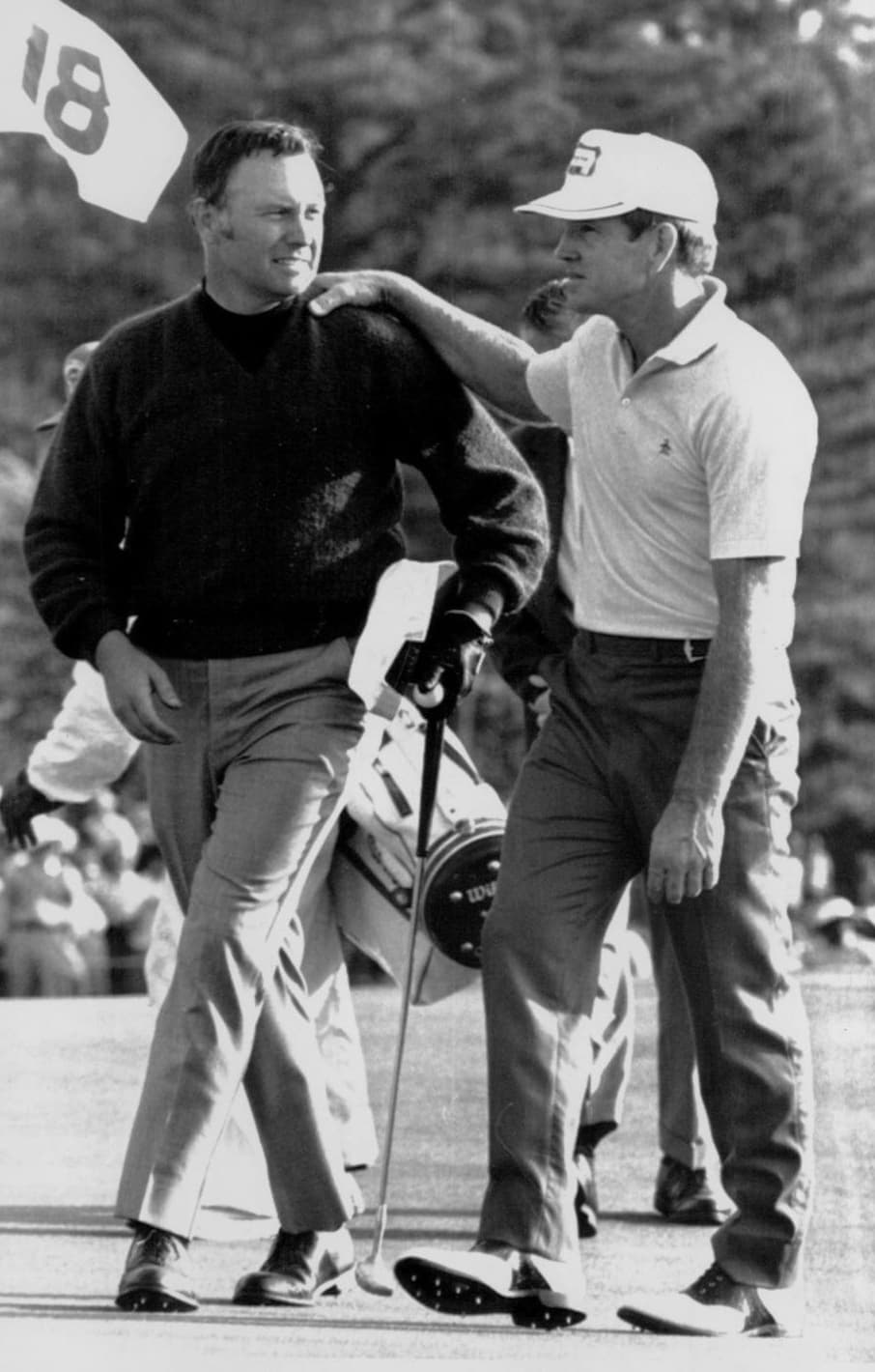
Championships carried the story beyond the membership. Hot Dog Bills was already inside Olympic for Jack Fleck's 1955 upset of Ben Hogan and remained when Billy Casper caught Arnold Palmer in 1966. Later U.S. Opens, the 2021 U.S. Women's Open and the 2025 U.S. Amateur repeatedly brought visitors who otherwise might never enter the club. They came for championship golf and discovered that one of Olympic's signatures came from a snack stand rather than a trophy case.
A Family Business Through Championship Weeks
When Bill and Billie retired around 1980, their daughter Candy Parrish returned to run Hot Dog Bills. The handoff preserved more than a recipe. Candy had grown up around the original stand, remembering a small, informal place where her father knew customers and sometimes played trumpet as golfers came down the fairway. She also remembered going home smelling like the griddle after helping her parents. What had been Bill's side job had become the family's main work.
Candy's first U.S. Open in charge came in 1987, when she was five months pregnant with her son Max. She later ran the stands through the 1998 and 2012 Opens. Max Thrush grew up to become the company's director of operations, creating a third generation whose family calendar could be measured partly in Olympic championships. At the 2025 U.S. Amateur, he estimated the three stands cooked at least 1,000 Burgerdogs during the event's opening days—an extraordinary volume for a product born on a cramped trailer grill.
That continuity matters because course food is easy to imitate. A long patty and a hot dog bun are not difficult ideas to copy, and variations have appeared elsewhere. What cannot be copied as easily is the setting: the same family, the same stretch of Lake Course, and decades of golfers building the stop into their idea of what a day at Olympic should include.
From an Exclusive Club to Public Golf
Hot Dog Bills eventually traveled beyond Olympic without abandoning golf. A location at Silverado Resort in Napa carried the Burgerdog to another course setting. In 2019, the company joined the opening food lineup at Chase Center, exposing Warriors fans and concert crowds to a sandwich that many San Franciscans had heard about but could not ordinarily buy. The private-club curiosity was becoming a city food, though arena access still depended on holding an event ticket.
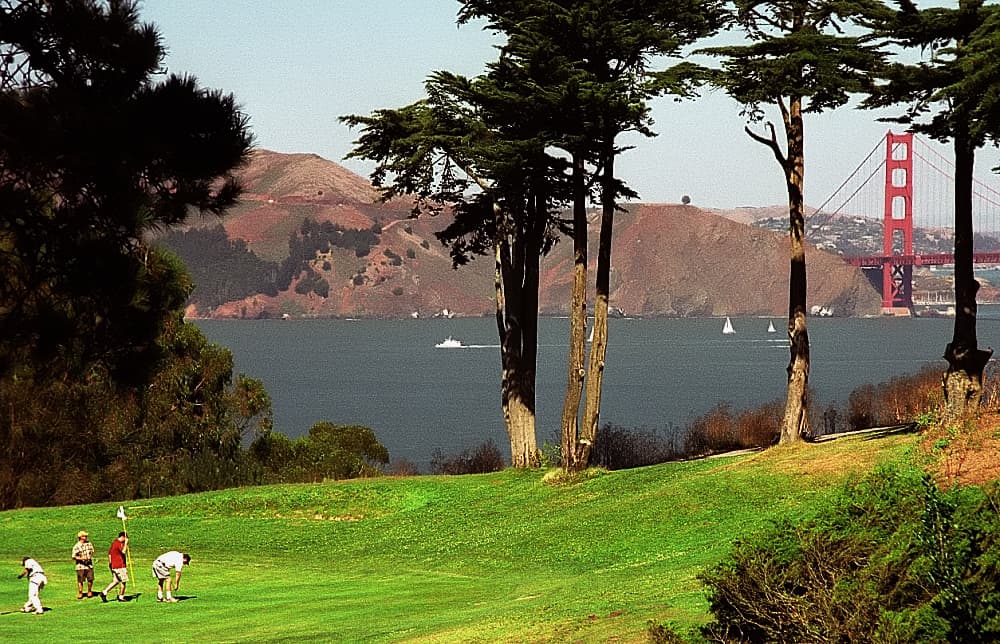
The Golden Gate Park location completed the circle. Hot Dog Bills began outside a private golf course, was invited inside because golfers kept leaving the property to find it, and then emerged decades later at a municipal course open to everyone. The setting is smaller and more democratic than Olympic's championship Lake Course, but the product still makes sense for the same reason: it is hot, portable food built around the rhythm of a round.
That public outpost also changes the meaning of the Burgerdog. For most of its history, trying the original required knowing an Olympic member or attending a championship. At Golden Gate Park, the appeal is not exclusivity but accessibility. A food tradition created by caddies crossing a boundary can now be enjoyed without crossing one.
Where to Try a Burgerdog in San Francisco
For the general public, the straightforward San Francisco option is Golden Gate Park Golf Course at 970 47th Avenue. The current Hot Dog Bills location page lists Golden Gate Park Golf Course as available to the public. It does not publish prices or hours for that outlet, so check with the course before making a special trip. The Olympic Club stands remain members-only in ordinary operation, with temporary access possible during ticketed public championships. The Chase Center location generally requires an event ticket; Silverado is the option outside San Francisco.
San Francisco golf history is usually told through famous courses, major champions and impossible final rounds. Hot Dog Bills belongs in that history for a humbler reason. It shows how the culture of a course is also built from habits: where players stop, what caddies carry back, and which small pleasures survive from one generation to the next. The Burgerdog did not become an Olympic Club tradition because somebody declared it one. Golfers kept walking over to buy it until the club moved it inside. Seventy-five years later, the rest of San Francisco can finally walk in, too.