The 1955 U.S. Open: Jack Fleck Stuns Ben Hogan at Olympic
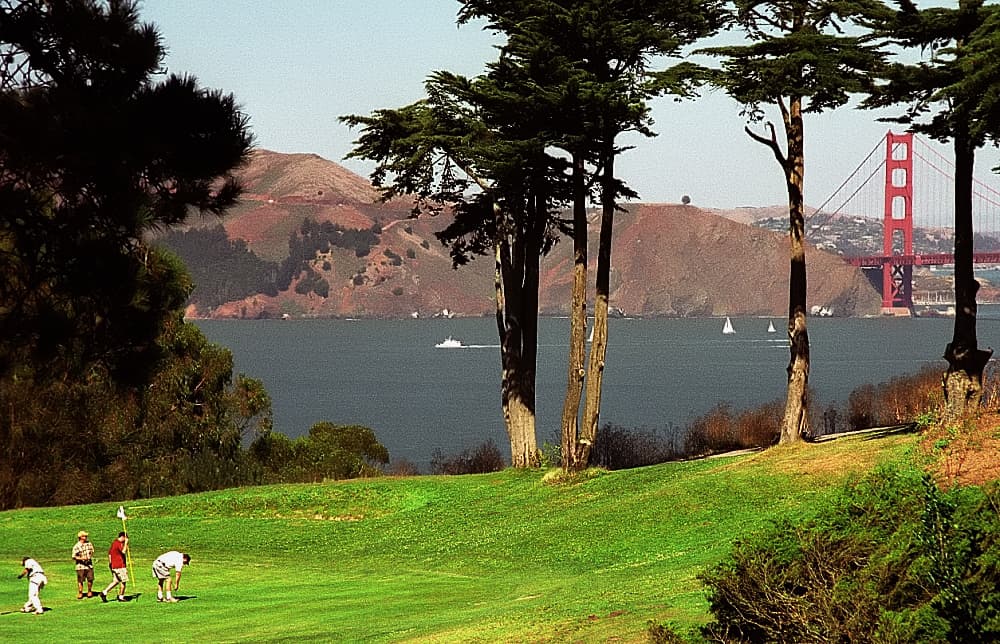
On a June Sunday in 1955, on a fog-cooled golf course wedged between Lake Merced and the Pacific in San Francisco's southwest corner, one of the greatest upsets in golf history reached its conclusion. Ben Hogan — four-time U.S. Open champion, widely regarded as the finest ball-striker of his era — stood on the Olympic Club's 18th tee needing to make up one stroke on the last hole of an 18-hole playoff. The man beating him was Jack Fleck, a municipal-course pro from Davenport, Iowa, playing his first full year on tour, whom almost nobody in the gallery had heard of four days earlier.
What happened over those four days — and the 18-hole playoff that followed — turned the Olympic Club's Lake Course into hallowed (and haunted) ground, and started the course's reputation as the place where legends go to lose.
The Stage: Olympic's Lake Course Hosts Its First Open
The Olympic Club is one of San Francisco's oldest institutions, founded on May 6, 1860 as an athletic club — decades before it had anything to do with golf. The club got into the golf business in 1918, when it took over the financially troubled Lakeside Golf Club near Lake Merced, and by 1922 it had purchased enough land for two full 18-hole courses. Willie Watson designed and Sam Whiting built the club's first two layouts — the original Ocean and Lake Courses — which opened in 1924. After winter storms battered the property, Whiting redesigned both, and the Lake and Ocean Courses as we know them opened in 1927.
That long history has a less flattering side, too: like many exclusive clubs of its era, Olympic restricted its membership to white men for most of its existence, and it opened its rolls to women and non-white members only in the early 1990s, amid litigation and public pressure tied to its lease of city-owned land along the Lake Course.
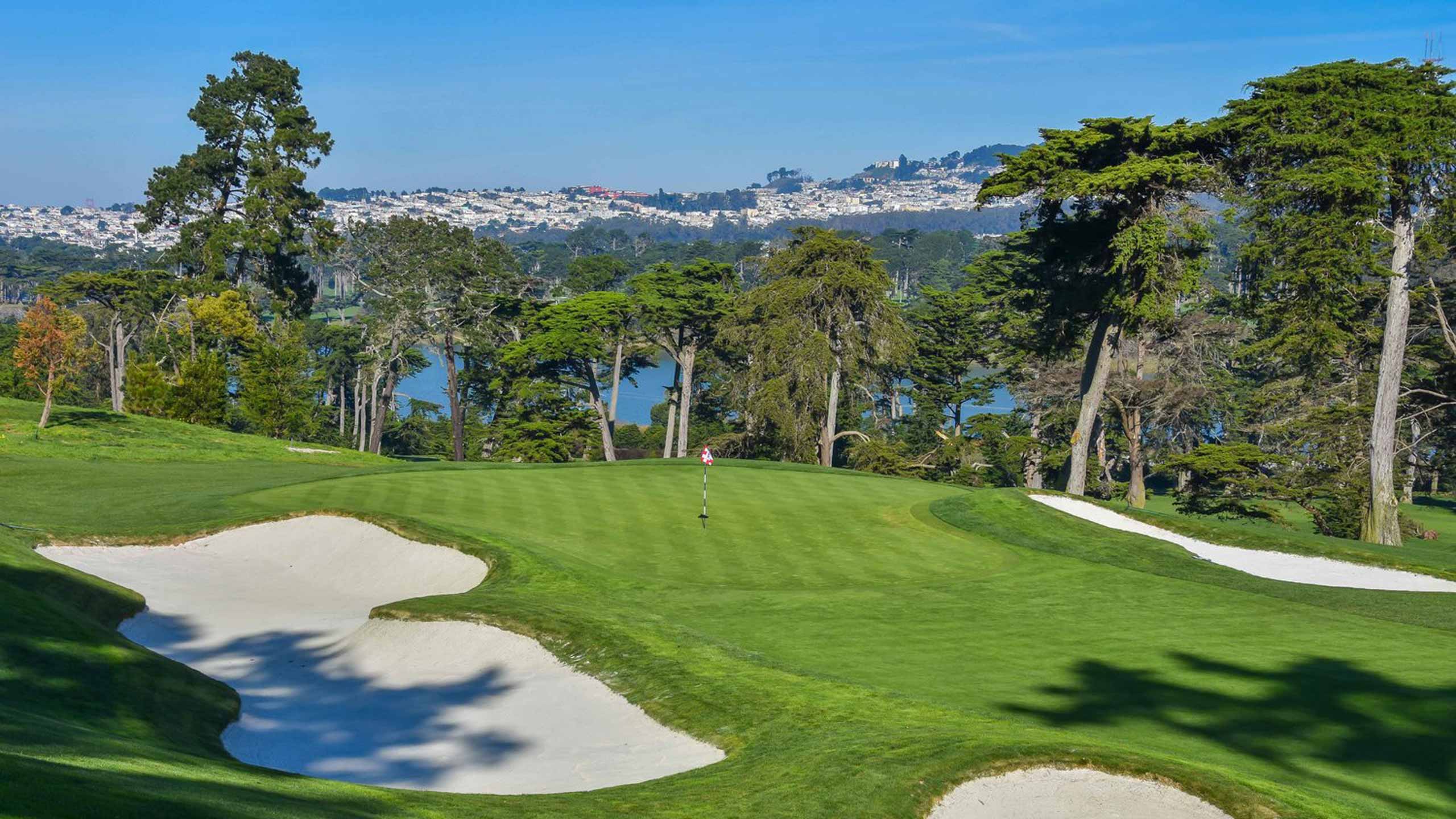
The 1955 U.S. Open was the Lake Course's national championship debut. The USGA presented a par-70 test of about 6,700 yards — modest on the scorecard, brutal in person. The Lake Course has no water hazards and only one fairway bunker; its defense is dense, punishing rough, tilted fairways lined with cypress and pine, and cool, heavy coastal air that deadens the ball's flight. A field of 158 players teed off on June 16, 1955, and the course chewed through them: the 36-hole cut fell at a staggering 15-over-par 155.
Tommy Bolt led the first round with a 67, and shared the 36-hole lead with San Francisco-based amateur star Harvie Ward at 144. But by Saturday — when the Open still finished with a 36-hole double round — the tournament belonged, seemingly inevitably, to Ben Hogan.
The Favorite and the Unknown
Hogan's chase for a record fifth Open
Hogan, then 42, had won the U.S. Open in 1948, 1950, 1951, and 1953 — the last three after a head-on collision with a Greyhound bus nearly killed him in 1949. A fifth title would break his tie with Willie Anderson and Bobby Jones and stand alone in the record books. When he posted a final-round 70 on Saturday afternoon for a 72-hole total of 287, seven over par, the coronation felt complete. On NBC's telecast, Gene Sarazen congratulated Hogan as the champion, and the broadcast went off the air proclaiming him the winner — while the golf tournament, inconveniently, was still going on.
The muni pro from Davenport
Jack Fleck was, by any reasonable measure, an improbable spoiler. Born in Bettendorf, Iowa in 1921, he grew up caddying, served in the Navy after joining the reserves in September 1942, and was aboard a gunboat off the Normandy coast on D-Day. After the war, the Davenport Park Board hired him as the professional at the city's Duck Creek and Credit Island municipal courses — about as far from country-club royalty as the profession gets. In 1955, at 33, he was attempting his first full season of tournament golf, and he got into the Open the hard way, shooting 73-72 at a sectional qualifier in Crete, Illinois to make it on the number.
Then there's the detail that turns the story from improbable to unbelievable: Fleck played the championship with clubs made by the Ben Hogan Golf Company. Fleck had asked Hogan for a set of his new irons earlier that year at the St. Petersburg Open, and Hogan obliged — personally hand-delivering the final pieces of the set, two wedges, to Fleck when both arrived at the Olympic Club. They were reportedly the only two players in the field using Hogan's clubs. Hogan armed the man who would beat him.
Four Rounds Along Lake Merced
Fleck opened with a 76, nine shots behind Bolt — the largest first-round deficit any U.S. Open champion has ever overcome. A second-round 69 vaulted him into contention, and after a 75 in Saturday morning's third round, he began the final 18 three shots behind Hogan, who had taken the 54-hole lead at 217.
While Hogan finished and the nation's sportswriters began drafting their fifth-Open stories, Fleck kept grinding through Olympic's cypress-lined corridors. A bogey at the 14th seemed to end it. Then came a birdie at the par-3 15th to give him hope. Pars at 16 and 17 left him one shot behind Hogan's clubhouse number with one hole to play — the short par-4 18th, an amphitheater hole tucked beneath the clubhouse hill.
Needing birdie to force a playoff, Fleck played his approach from the edge of the rough to close range and — with Hogan watching from the clubhouse — rolled in a putt of seven to eight feet (accounts differ on the exact length) for a 3. A final-round 67, three under par on a course that had allowed almost nothing all week, and a 72-hole tie at 287. The playoff was set for Sunday, June 19.
Further down the leaderboard, the week carried other footnotes San Francisco galleries would appreciate only in hindsight: Bolt and Sam Snead tied for third at 292, a 25-year-old Arnold Palmer made his first U.S. Open cut and finished 21st, and Byron Nelson played his final U.S. Open, finishing 28th.
The Playoff: June 19, 1955
Nearly everyone expected the club pro to wilt playing 18 holes head-to-head against the game's great intimidator. Instead, Fleck outplayed him. Putting beautifully and matching Hogan shot for shot from tee to green, Fleck carried a one-stroke lead to the 18th tee.
That's where the championship ended, in one swing. Hogan hooked his drive into the Lake Course's infamous deep rough. It took him three strokes just to get back to the fairway, and he wrote down a double-bogey 6. Fleck parred the hole for a 69 to Hogan's 72 — a three-shot playoff victory, and a $6,000 winner's check for a man who had been giving lessons at Iowa munis a few years before.
At the trophy presentation beside the clubhouse, photographs captured the scene: Fleck beaming with the trophy, USGA president Isaac Grainger presiding, and a glum-faced Hogan looking on. Hogan never did win a fifth U.S. Open.
The Graveyard of Champions Is Born
The 1955 Open didn't just crown an underdog; it established a pattern that has followed the Olympic Club ever since. The Lake Course hosted the U.S. Open again in 1966, when Billy Casper ran down Arnold Palmer — who led by seven shots with nine holes to play — and beat him in a playoff. In 1987, Scott Simpson edged Tom Watson. In 1998, Lee Janzen overtook Payne Stewart. In 2012, Webb Simpson came from behind to win at 1-over 281, and in 2021 the club added the U.S. Women's Open, where Yuka Saso beat Nasa Hataoka in a playoff.
Five men's Opens at Olympic, five wins by the less-famous man over the icon. The pattern earned the Lake Course its nickname — the "graveyard of champions" — and it comes with a grim statistical kicker: Hogan, Palmer, and Watson never won another major championship after losing a U.S. Open at Olympic.
What Became of Jack Fleck
Fleck was never a one-week fluke, even if history remembers him that way. He won twice more on tour — the 1960 Phoenix Open Invitational and the 1961 Bakersfield Open, both in playoffs — and captured the PGA Seniors' Championship in 1979. His home state inducted him into the Iowa Golf Hall of Fame in 1990.
He also never stopped being gracious — and quietly proud — about San Francisco. In 2012, when the U.S. Open returned to the Olympic Club, the 90-year-old Fleck came back to the Lake Course for a celebration of past champions. Reflecting on 1955, he offered the line that may sum up the week better than any other: "I was fortunate to do the playing at that time and I've read a lot about it, that I out-Hoganed Hogan."
Fleck died on March 21, 2014, in Fort Smith, Arkansas, at 92 — at the time, the oldest living U.S. Open champion. He was reportedly still hitting balls six weeks before his death.
Visiting the History Today
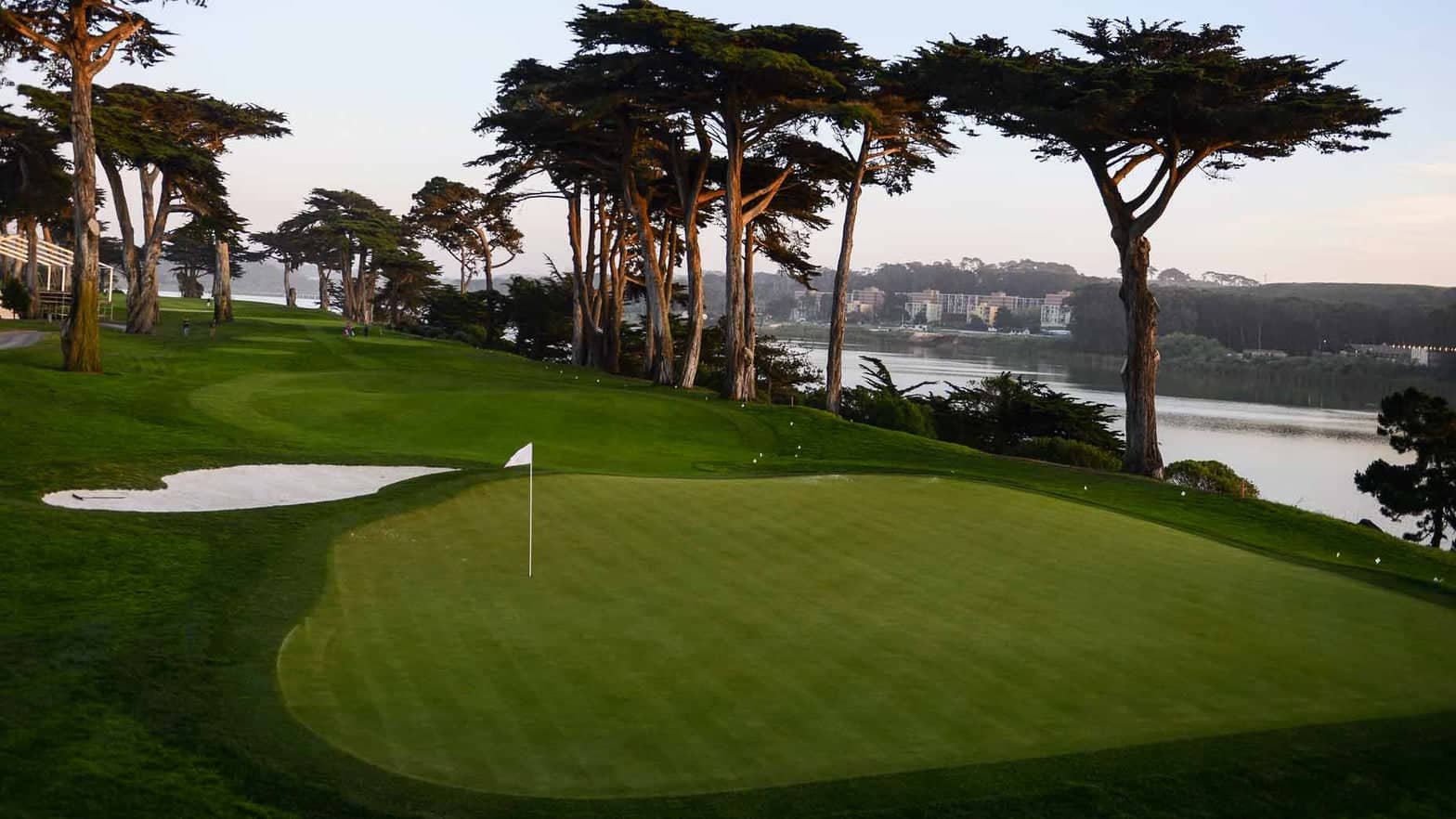
The Olympic Club remains private, but the Lake Course's championship pedigree is woven into public San Francisco golf. The course sits along Skyline Boulevard at Lake Merced, directly across the water from TPC Harding Park and next door to San Francisco Golf Club and Lake Merced Golf Club — a remarkable cluster of golf on the city's foggy southwestern edge. Play Harding Park and you're looking across the lake at the hillside where, seventy years ago, a muni pro from Iowa took down Ben Hogan and gave every underdog in golf a patron saint.
For the longer story of how the game took root on this corner of the peninsula — from the Presidio's first holes to Harding Park's revival — see our history of golf in San Francisco.