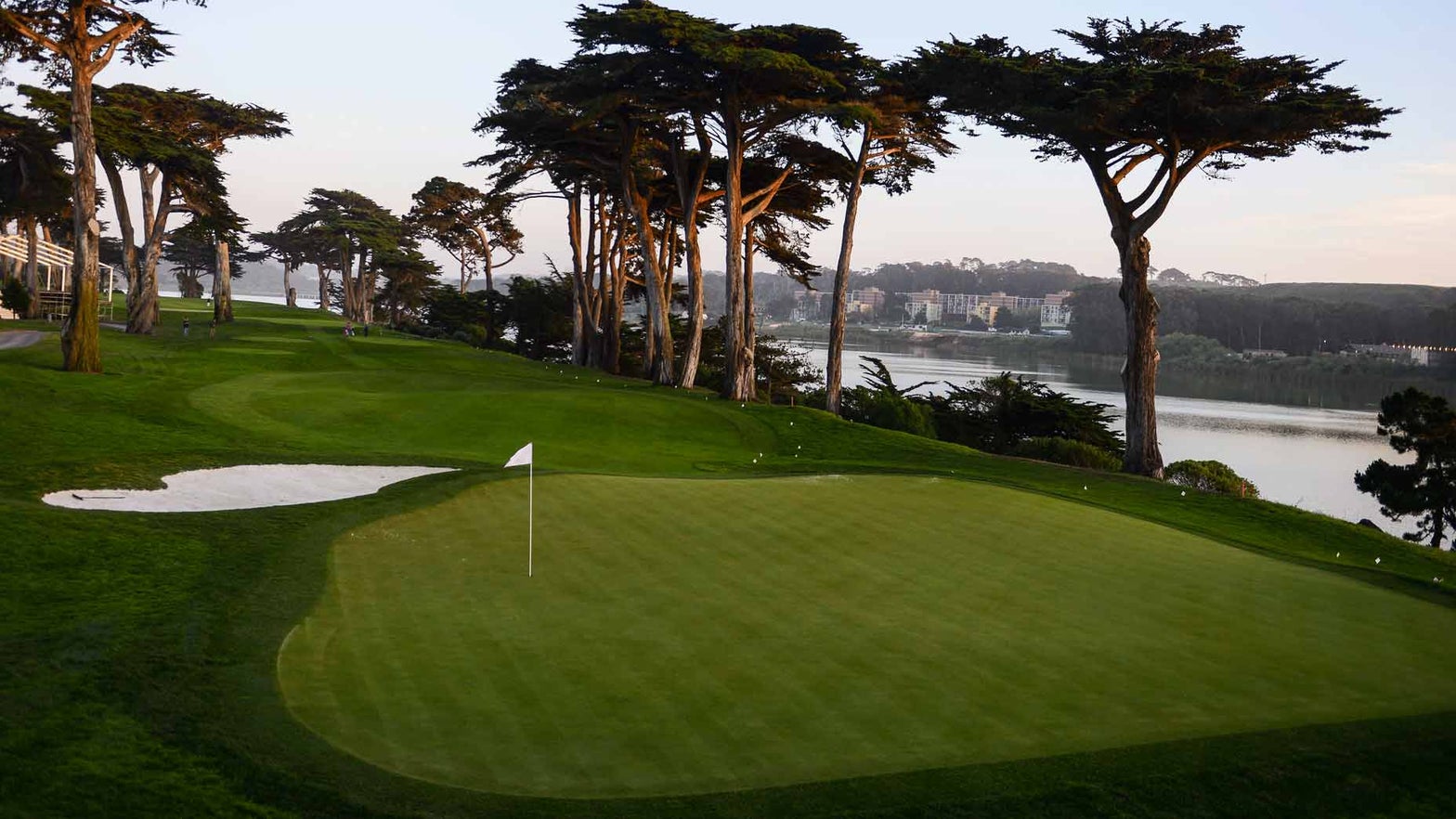
At the southern edge of San Francisco, nine holes climb a windy hillside above Visitacion Valley. The lies are rarely level. The greens are small. The clubhouse feels closer to a neighborhood bar than a resort lobby. Gleneagles Golf Course is exactly the sort of place that conventional golf tourism overlooks—and exactly where Tom Hsieh's bigger idea for the city begins.
Hsieh, a San Francisco native who has operated Gleneagles since 2004, wants the city to see its public courses as a single destination: Golf City USA. In a March 2026 feature, GOLF's Josh Sens framed the pitch as a kind of “Bandon Dunes for muni golf”—not an isolated resort on the Oregon coast, but a compact urban collection of public courses with real architecture, history and character.
The comparison is provocative, and it needs a little discipline. San Francisco is not Bandon. Its courses do not share one owner, one reservation system or one standard of conditioning. A visitor cannot land, check in and let a shuttle handle the rest. But the comparison identifies something real: few American cities offer this much distinctive, accessible golf across such a small map.
Bandon had to build a golf destination. San Francisco mostly has to recognize—and invest in—the one it already owns.
What Tom Hsieh Means by Golf City USA
The idea surfaced nationally in Sens's GOLF feature and in Hsieh's conversation on the Destination GOLF podcast. Hsieh's proposal is not to imitate Bandon's lodging model or manufacture an oceanside fantasy. It is to treat public golf as a reason to visit San Francisco, then make the experience coherent enough that golfers can actually plan the trip.
That distinction matters. “The Bandon Dunes of municipal golf” is Sens's description of the vision Hsieh lays out, not a slogan we should put in quotation marks and attribute directly to Hsieh without qualification. Hsieh's own proposed identity is simpler: Golf City USA.
The San Francisco Public Golf Alliance has embraced the case. Its point is partly promotional and partly civic: the city has extraordinary recreational assets that are easy to miss because they are managed as separate facilities instead of presented as a connected public-golf portfolio.
The Six Courses That Make the Case
San Francisco Recreation and Parks' municipal system includes six public layouts. Five sit within city limits; Sharp Park is city-owned but lies just south in Pacifica. The Presidio is another excellent public option inside San Francisco, but it is not one of the city's six municipal courses.
Course | Role in Golf City USA | Why it matters |
|---|---|---|
TPC Harding Park | Championship anchor | A restored major-championship venue beside Lake Merced with a public tee sheet. |
Fleming 9 | Accessible short course | A walkable nine with junior-golf roots and genuine architectural interest. |
Lincoln Park | Scenic historic course | City, ocean and Golden Gate views on one of San Francisco's oldest golf sites. |
Golden Gate Park | Social par-3 | A renovated, beginner-friendly park experience that broadens who a golf trip can include. |
Gleneagles | Local cult classic | Jack Fleming's hard, idiosyncratic nine and the community heart of Hsieh's argument. |
Sharp Park | MacKenzie seaside history | A public Alister MacKenzie course on coastal ground, owned by San Francisco and located in Pacifica. |
No individual course has to carry the whole claim. Harding supplies tournament stature. Sharp Park supplies architectural pedigree. Lincoln supplies place. The three nines supply speed, personality and a lower barrier to entry. Together they make a stronger destination than any one of them could make alone. Our guide to San Francisco's best public courses adds the Presidio and other public-access options to that municipal core.
Why the Bandon Comparison Is Not Ridiculous
The golf has range
A destination needs contrast. San Francisco can offer a major-championship course in the morning and a neighborhood nine that afternoon. One round is framed by cypress and Lake Merced; another by the Golden Gate Bridge; another by a windswept Pacifica landscape. That variety is not resort-polished, but it is memorable—and it is compressed into a region visitors are already traveling to see.
The history is unusually deep
The system connects Alister MacKenzie, Jack Fleming and Sandy Tatum to public land and public play. Sharp Park was designed during MacKenzie's extraordinary California period. Fleming helped shape and care for generations of Bay Area golf. Tatum helped rescue Harding Park from decline and return it to the national stage. Those are not decorative names. They explain why the courses look, play and matter the way they do. Start with our history of golf in San Francisco, then go deeper on Jack Fleming and Sandy Tatum's Harding Park legacy.
Investment has already changed the story
Harding Park is the clearest proof. Once badly neglected, it was restored and went on to host elite professional events, including the 2020 PGA Championship. Golden Gate Park's nine-hole course offers a smaller-scale example: renovation turned a modest neighborhood facility into a fresh model for sociable, low-pressure public golf. At Gleneagles, Hsieh and his partners have spent two decades repairing greens, irrigation, equipment and the clubhouse to keep an unwanted lease alive.
The lesson is not that every muni should become a tournament venue. It is that thoughtful investment can reveal value that neglect makes easy to dismiss. The official Gleneagles history documents how close the course came to closure and how community expertise helped rebuild it. Survival itself is part of the destination's character, but survival should not be the long-term operating plan.
Why San Francisco Is Not Bandon—Yet
A good slogan can expose the gap between what a place has and how it treats what it has. Today, a San Francisco municipal golf trip asks the visitor to assemble the experience independently. The courses have different identities and booking paths. Practical questions—when tee sheets open, where rental clubs are available, how a nonresident should travel between courses, what to pair in one day—are scattered across separate sites.
Conditions and facilities are uneven, too. Gleneagles still carries aging infrastructure. Lincoln Park and Sharp Park have long inspired arguments about unrealized architectural potential. Even when the golf is compelling, a destination promise is only as strong as the least clear reservation page, the missing rental-club answer or the unreliable irrigation line.
Hsieh told GOLF that San Francisco voters have approved roughly $1 billion in park bonds over three decades without earmarking money for golf. That is his cited assessment, not an independently audited figure here. The broader point does not depend on the exact total: a Golf City USA campaign without sustained capital work would be branding ahead of reality.
A Visitor Strategy Has to Work for Local Golfers
There is an obvious tension in turning municipal golf into a tourism product. More demand can produce more revenue and political attention, but it can also make tee times scarcer and prices harder for residents to absorb. A Golf City USA plan that treats local players as an inconvenience would betray the public system it is supposed to celebrate.
The better model is a reinforcing loop. Visitor play brings outside spending and a larger audience. That attention strengthens the case for irrigation, drainage, staffing and youth programs. Better fundamentals improve everyday golf for San Franciscans as well as the weekend traveler. Resident rates, junior access and room for regular local play should therefore be part of the destination promise, not fine print added after the marketing campaign.
That local-first test also clarifies what success means. The goal is not to make every course expensive, manicured and interchangeable. It is to give each one the resources to express its character reliably: firmer and healthier playing surfaces where the design calls for them, safe and welcoming facilities, clear booking information and a realistic path into the game. If visitors come because those public places are thriving, tourism supports the mission instead of replacing it.
What Golf City USA Could Actually Look Like
The first version does not require a resort developer. It requires the city and its golf partners to behave as though the six courses belong in the same conversation.
Create one visitor-facing municipal golf guide. Show all six courses on one map with booking windows, green-fee ranges, rental information, transit and drive times, walking difficulty and realistic pairings.
Make the itinerary legible. A Harding-and-Fleming day is obvious. Lincoln and Golden Gate Park make a natural west-side pairing. Gleneagles and Sharp Park can anchor a south-side day with entirely different personalities.
Fund the unglamorous work. Irrigation, drainage, turf health, restrooms, practice space and basic wayfinding do more for repeat visits than a campaign logo.
Tell each course's story. Interpretive signs and digital guides can connect visitors to MacKenzie, Fleming, Tatum, the San Francisco City Championship and the communities that kept these places public.
Market the collection, not only the flagship. Harding may attract the first click, but the destination becomes distinctive when a visitor understands why Gleneagles, Lincoln, Golden Gate Park, Fleming and Sharp belong on the same trip.
None of this requires pretending the courses are interchangeable. Their irregularity is the product. A unified identity should make their differences easier to discover, not sand them away.
The Verdict: A Great Golf City That Has Not Yet Built the Experience
San Francisco cannot honestly promise the frictionless immersion of Bandon Dunes. It can promise something Bandon cannot: championship, historic, seaside and neighborhood golf woven into one of the world's great cities. A traveler can play a public MacKenzie, walk through Golden Gate Park, eat in a different neighborhood every night and never mistake the trip for anywhere else.
That is the strength of Hsieh's idea. Golf City USA is not a claim that the work is finished. It is a way to name the opportunity—and to create a public standard against which the city can be measured. If San Francisco wants the title, it must make the courses easier to understand, easier to combine and better supported for the next generation.
The raw material is already here. The question is whether San Francisco will treat it like a destination before another generation of municipal golfers has to save it one course at a time.
Plan a San Francisco Public-Golf Trip
Use our 72-hour San Francisco public-golf itinerary to turn the idea into a weekend. For the deeper stories behind two of the most important courses, read about Alister MacKenzie's Sharp Park and the history of Lincoln Park.