Traveling to Monterey for Golf
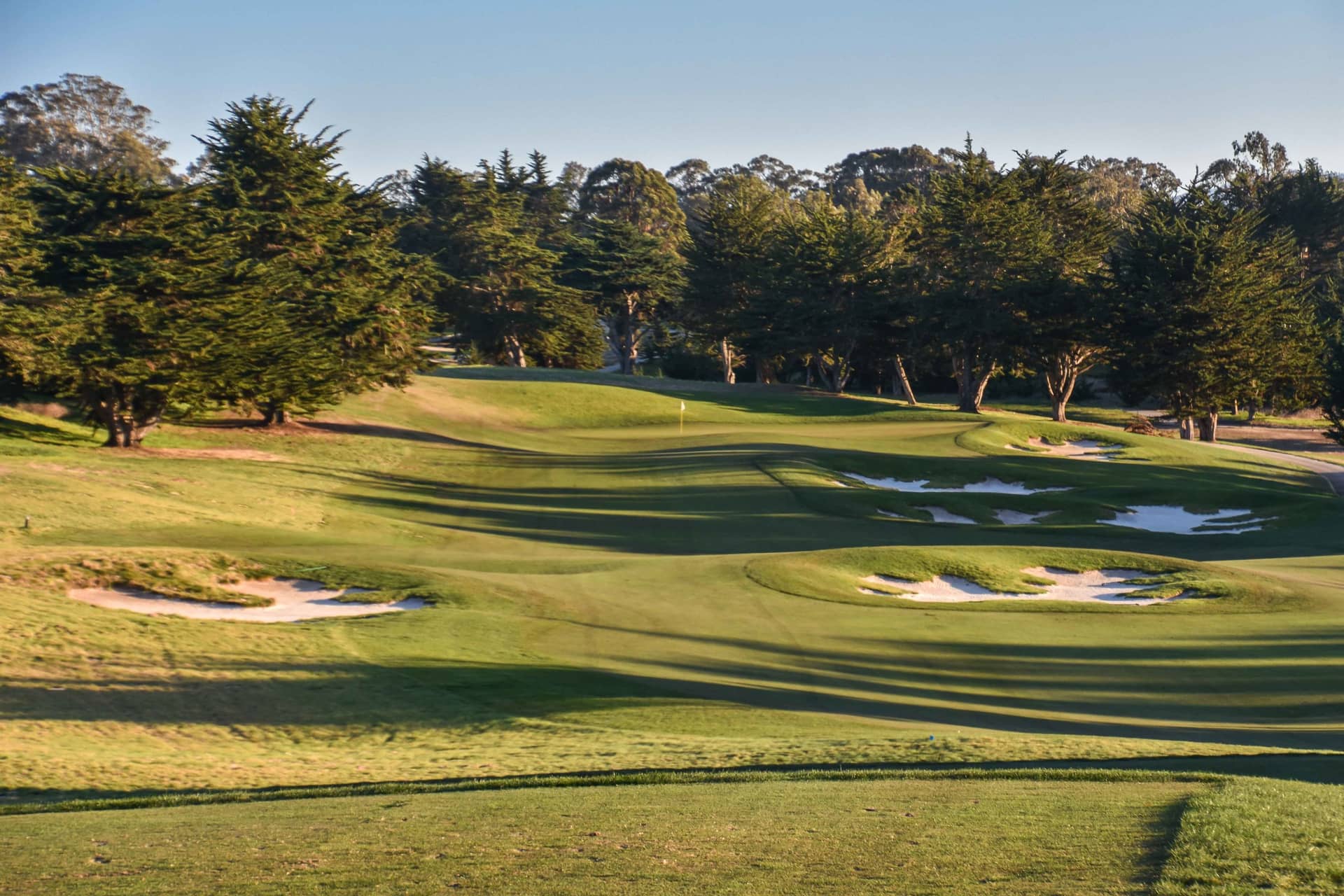
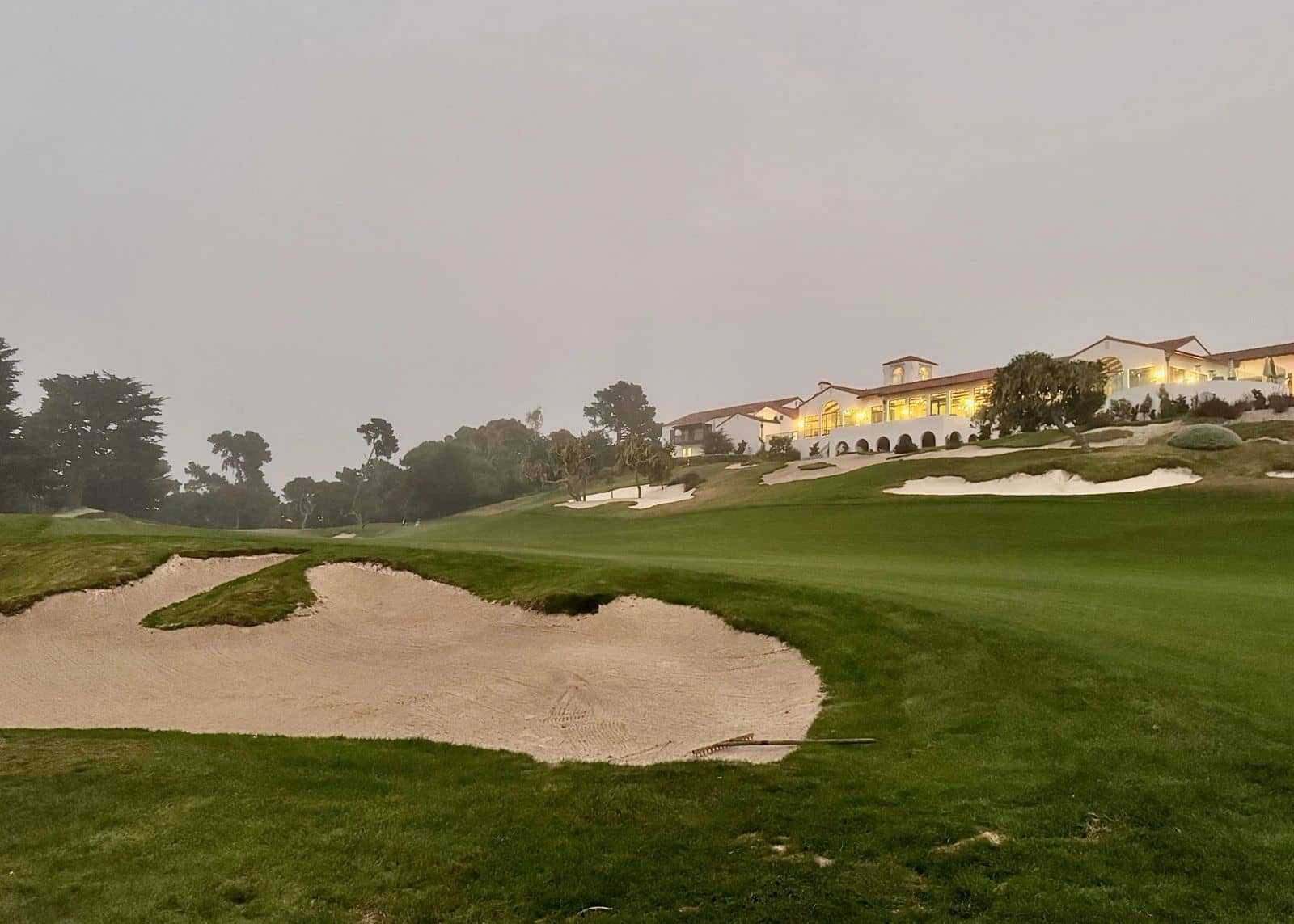
For golfers, few places on earth carry the mystique of the Monterey Peninsula. In just a handful of coastal miles along California's Central Coast, cypress-lined fairways tumble toward the crashing surf of the Pacific, and courses that have hosted U.S. Opens, PGA Tour events, and countless bucket-list rounds sit within a short drive of one another. It is, quite simply, one of the greatest concentrations of memorable golf anywhere in the world.
Best of all, many of the marquee courses here are open to the public, so with some planning you can walk the same holes as the pros. The peninsula is also refreshingly easy to reach: it sits roughly two hours south of San Francisco, making it an ideal long-weekend escape or the centerpiece of a longer California golf road trip. Below are the ten best courses on the Monterey Peninsula.
The 10 Best Courses
Pebble Beach Golf Links
The crown jewel of the peninsula and routinely ranked the No. 1 public course in America, Pebble Beach Golf Links delivers on every ounce of its reputation. Laid out in 1919 by amateurs Jack Neville and Douglas Grant, its ocean-hugging holes — especially the cliff-top 7th, 8th, and 18th — are among the most photographed in golf. It has hosted six U.S. Opens and remains the dream round for most visitors, so book far in advance.
Cypress Point Club
Often called the “Sistine Chapel of golf,” Cypress Point Club is Alister MacKenzie and Robert Hunter's 1928 masterpiece and one of the top-ranked courses in the world. Routed through forest, sand, and rugged coastline, it builds to the legendary par-3 16th, a heroic carry across a Pacific inlet. The club is extraordinarily private, but no list of the peninsula's greatest courses would be complete without it.
Spyglass Hill Golf Course
Designed by Robert Trent Jones Sr. and opened in 1966, Spyglass Hill is widely considered the toughest test on the peninsula. Its opening holes tumble through ocean dunes before the course turns inland into the Del Monte Forest, blending seaside drama with a demanding, tree-lined run home. A fixture of the AT&T Pebble Beach Pro-Am rotation, it rewards precise, patient golf.
Monterey Peninsula Country Club — Dunes Course
The Dunes Course at Monterey Peninsula Country Club began as a Seth Raynor design, completed by Robert Hunter after Raynor's death in 1926 and later restored by Rees Jones. This private, walkable layout winds through sandy, wind-swept terrain and hosted the Bing Crosby “Clambake” — forerunner of the AT&T Pro-Am — from 1947 to 1964.
Monterey Peninsula Country Club — Shore Course
The Shore Course is the club's oceanfront showpiece. Originally built by Bob Baldock in 1961, it was dramatically reimagined by the late Mike Strantz in 2004 — his final design — with holes routed hard against the Pacific. Since 2010 it has been part of the AT&T Pebble Beach Pro-Am rotation.
The Links at Spanish Bay
A collaboration between Robert Trent Jones Jr., Tom Watson, and former USGA president Sandy Tatum, The Links at Spanish Bay is a Scottish-style links laid out among restored coastal dunes. Firm, fescue-framed fairways and ocean breezes give it an authentic seaside feel, and a bagpiper who plays at sunset has become a beloved tradition.
Poppy Hills Golf Course
Owned and operated by the Northern California Golf Association, Poppy Hills was designed by Robert Trent Jones Jr. in 1986 and reborn in a 2013–14 renovation that rebuilt every green and restored the natural forest floor. Routed entirely through the pines of the Del Monte Forest, it is a strong, superbly conditioned test that offers real value beside its famous neighbors.
Bayonet Golf Course
Set on the former Fort Ord army base in Seaside, Bayonet — laid out in 1954 under Gen. Robert B. McClure and redesigned by Gene Bates in 2008 — is one of the sternest tests in the area, famous for the white-knuckle doglegs of “Combat Corner.” Together with its sister Black Horse course, it delivers big, burly golf and sweeping Monterey Bay views at public-friendly prices.
Del Monte Golf Course
Opened in 1897 and laid out by Charles Maud, Del Monte is the oldest course in continuous operation west of the Mississippi. Its classic, walkable layout features small, well-protected greens and rewards precision over power. Steeped in history and offering outstanding value, it is a wonderful complement to the peninsula's showier oceanfront courses.
Pacific Grove Golf Links
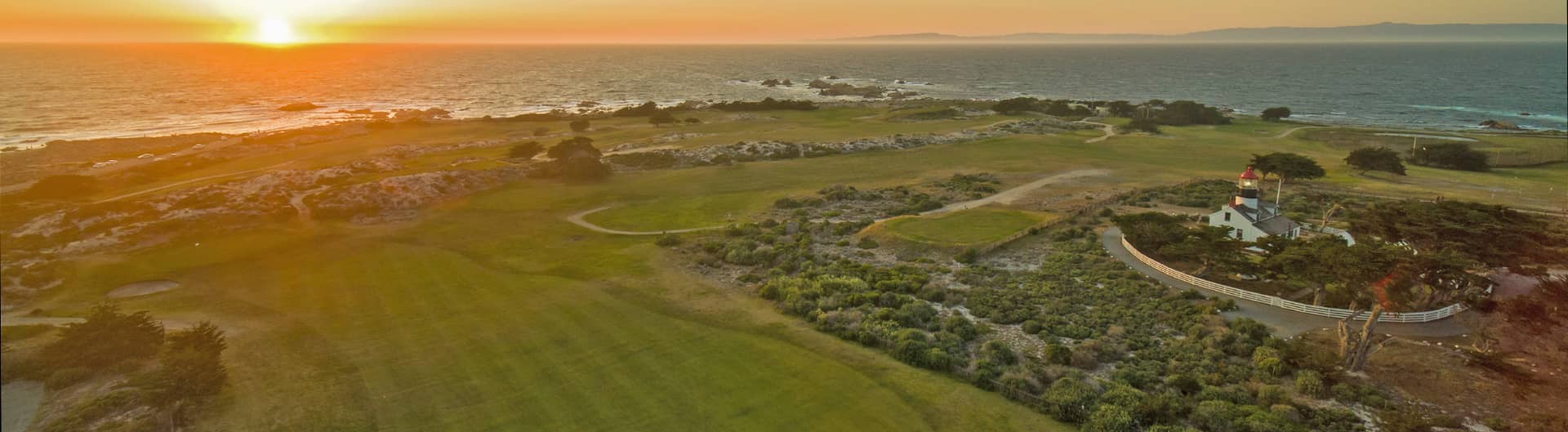
Affectionately known as the “poor man's Pebble Beach,” this city-owned muni pairs a forested front nine by H. Chandler Egan with a links-style back nine — added by Pebble Beach co-designer Jack Neville — that wraps around the Point Pinos Lighthouse where Monterey Bay meets the Pacific. It offers genuine oceanfront golf at a fraction of the marquee prices and is one of the best values on the coast.
Planning Your Trip
Getting there: The peninsula sits roughly two hours (about 120 miles) south of San Francisco via US-101 or the scenic Highway 1. Monterey Regional Airport handles regional flights, while San Jose is about 80 minutes away and offers more options.
When to go: Late spring through early fall (roughly May to September) brings the most reliable golf weather. Expect cool, foggy mornings that typically burn off to mild, pleasant afternoons, and pack layers year-round.
Where to stay: The Pebble Beach Resorts offer on-property lodging with priority access to their courses, while Monterey, Carmel-by-the-Sea, and Pacific Grove provide a wide range of hotels and inns at varying price points.
Booking the marquee courses: Guests of the Pebble Beach Resorts can reserve tee times at Pebble Beach, Spyglass Hill, Spanish Bay, and Del Monte further out and with greater certainty; non-guests face tighter availability, so plan several months ahead. Cypress Point and Monterey Peninsula Country Club are strictly private.
However you build your itinerary, the Monterey Peninsula rewards the effort. Whether you splurge on Pebble Beach, test yourself at Spyglass Hill and Bayonet, or soak up the ocean views at Pacific Grove, a golf trip here is the kind of experience you'll be talking about long after the final putt drops.