RANKED
The Best Golf Courses on the Monterey Peninsula, Ranked
The best golf courses in Monterey, ranked: Pebble Beach, Cypress Point, Spyglass Hill and more — our public-and-private verdicts on golf's greatest peninsula.
Aug 2, 2026
Pebble Beach, CA · Private
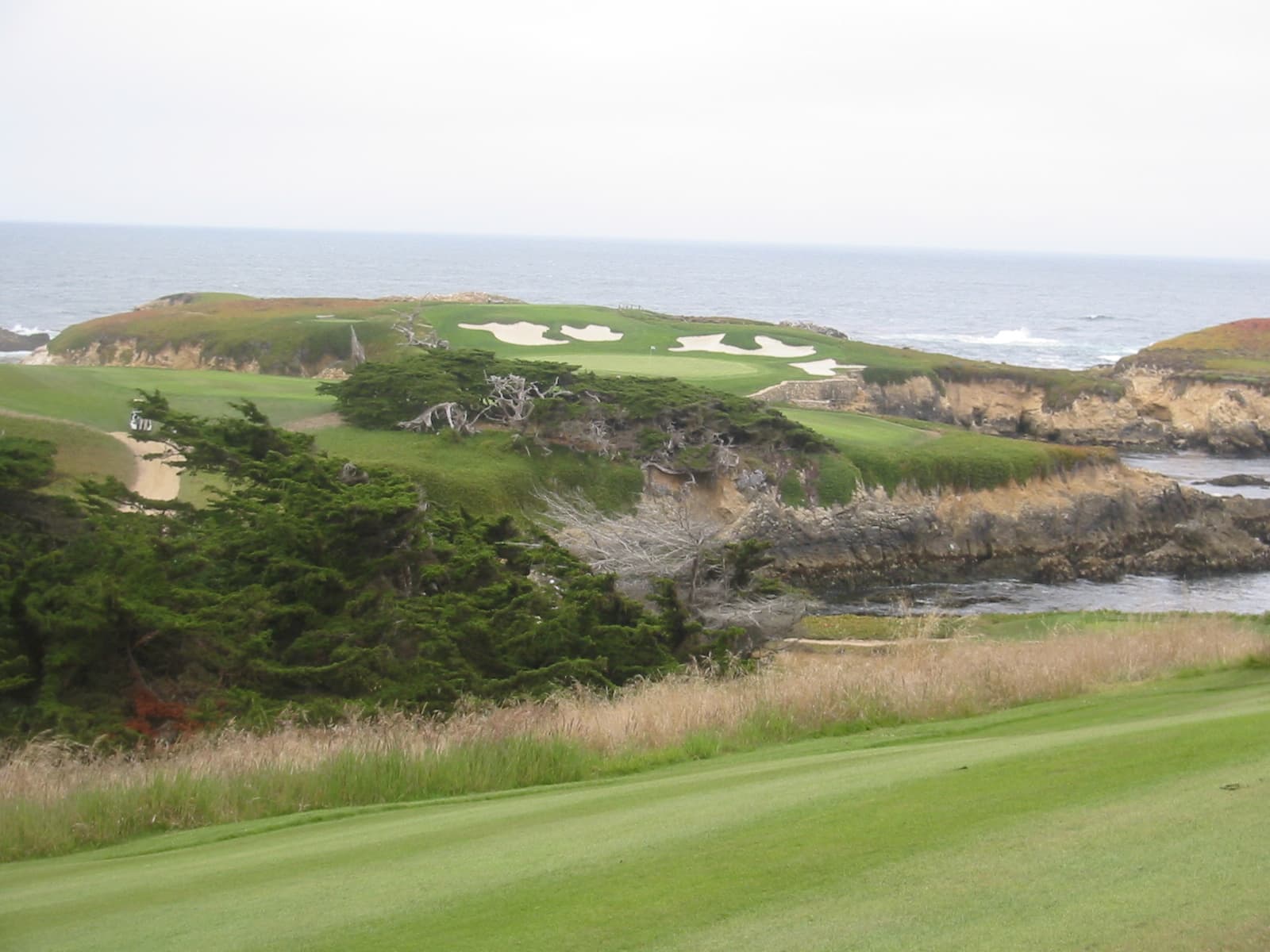
Set on a wild, cypress-studded headland where the Monterey Peninsula meets the Pacific Ocean, Cypress Point Club is widely regarded as one of the greatest golf courses ever built and is consistently ranked among the top three in the world.
Play the course
Private course. Public tee-time booking is not offered here.
Access is controlled by the club. Visit the course site for current club information.
Visit course site ↗Find the first tee
Use the course address, contact details, and map to plan your arrival.
Course guide
The maintained course record, presented separately from live booking and user reviews.
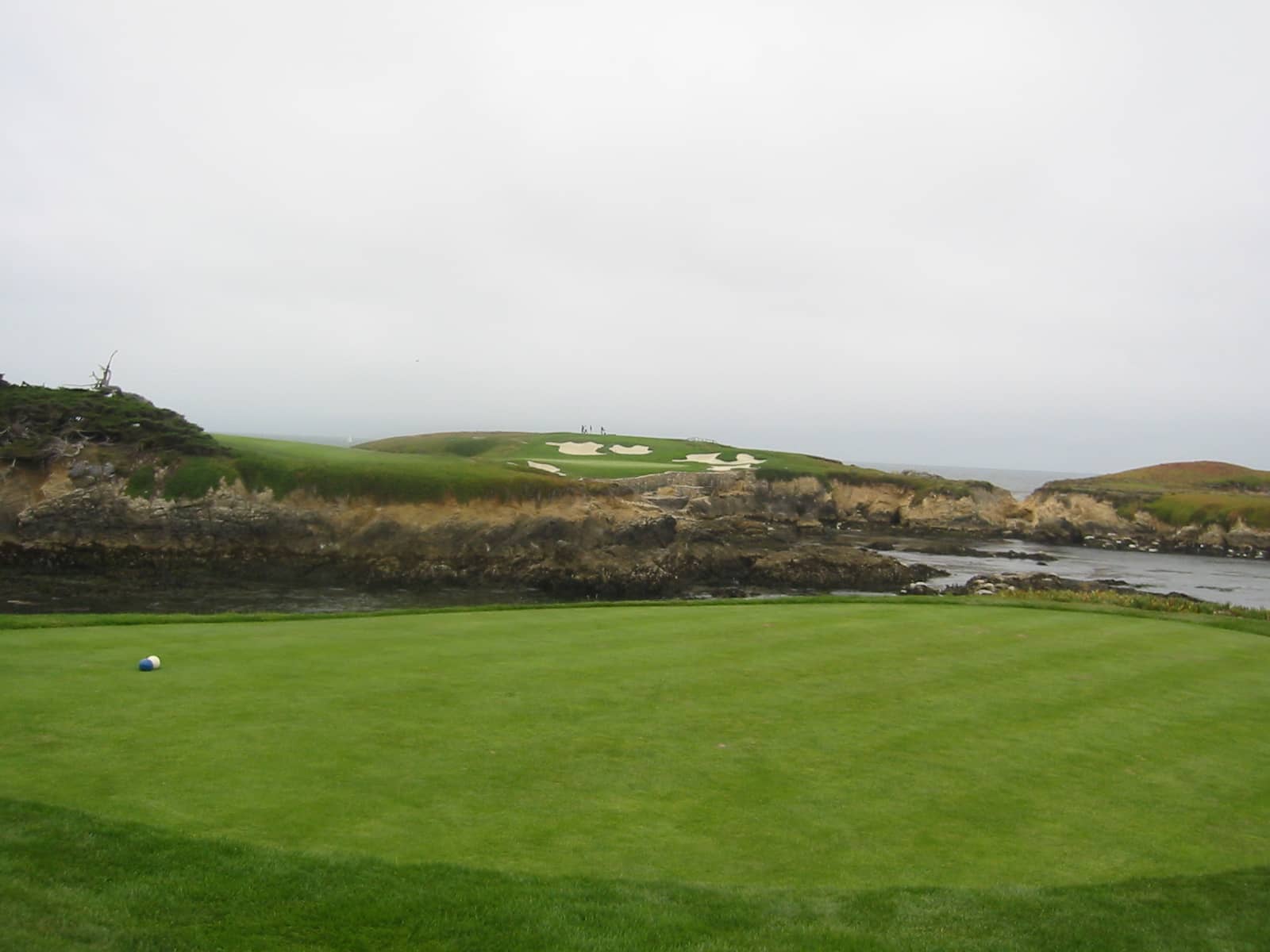
Opened in 1928 to a design by Alister MacKenzie and Robert Hunter, this ultra-exclusive private club routes 18 holes through forest, over sand dunes, and along a spectacular stretch of rocky coastline. It is famous above all for its par-3 16th, which asks players to carry roughly 230 yards of open ocean to a green perched on the cliffs.
Cypress Point grew out of the vision of Marion Hollins, a national amateur champion and pioneering golf developer who assembled the land on the tip of the Monterey Peninsula in the 1920s. The renowned architect Seth Raynor was originally engaged for the project, but after Raynor's death in early 1926 the commission passed to Alister MacKenzie, working with his American associate Robert Hunter. The course opened for play in 1928.
From the outset the club was intended to remain small and intensely private. Over the decades it hosted the Bing Crosby National Pro-Am (the "Clambake") as one of the tournament's rotating courses, and it staged the 1981 Walker Cup. Today Cypress Point keeps a very low profile, with a modest membership and no public access, which has only heightened its mystique among golfers worldwide.
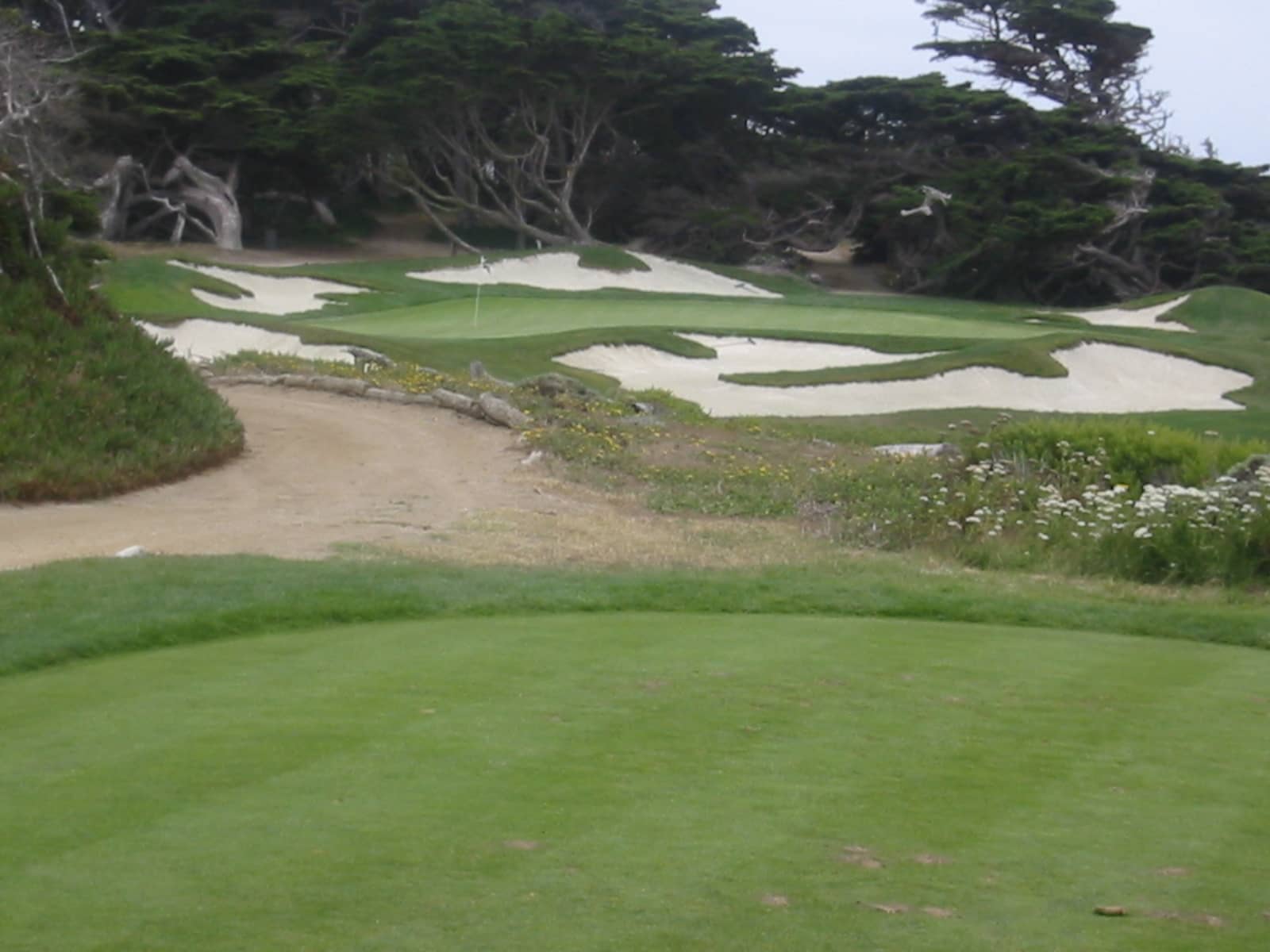
Cypress Point is often called Alister MacKenzie's masterpiece. The routing moves through three distinct landscapes, beginning in stands of Monterey cypress and pine, crossing rumpled sand dunes in the middle of the round, and then breaking out onto the dramatic Pacific shoreline for a stretch of coastal holes. MacKenzie's genius for natural, camouflaged bunkering and greens that reward angles and imagination is on display throughout, and the course famously packs enormous variety into a relatively short 6,524-yard, par-72 layout.
The signature hole is the par-3 16th, one of the most photographed holes in golf. It demands a carry of roughly 230 yards across an inlet of the open Pacific to a green set on a rocky promontory guarded by bunkers and gnarled cypress. MacKenzie initially questioned whether such a long forced carry was fair, but Marion Hollins is credited with insisting the shot was possible and shaping the concept of the hole. It is immediately followed by the shorter, cliff-edge par-3 15th and the heroic par-4 17th, giving Cypress Point one of the most celebrated closing sequences anywhere.
Despite its modest yardage, Cypress Point is no pushover: it carries a course rating of 73.1 and a stout slope of 141, reflecting the demands of the coastal wind, firm turf, and small, subtly contoured greens. Scoring is less about raw length and more about placement, trajectory control, and the nerve to take on MacKenzie's strategic hazards. The par-72 layout is walkable and intimate, and the round builds toward its unforgettable oceanfront finish.
Because access is limited to members and their guests, the course sees very little traffic and is maintained in pristine, natural condition. For the fortunate few who play it, the experience is defined by solitude, dramatic scenery, and a routing that many consider the finest expression of golf-course architecture in the world.
Access: Cypress Point is an ultra-exclusive private club, open to members and their invited guests only. There is no public play, and the club does not offer tee times or published green fees.
Location: 3150 17 Mile Drive, Pebble Beach, CA 93953, on the tip of the Monterey Peninsula between Pebble Beach and the Del Monte Forest.
Tip: The stretch from the short par-3 15th through the ocean-carry 16th is the course's signature moment, so savor the coastal holes and be ready for Pacific wind that can change club selection dramatically from one shot to the next.
Community record
Approved submissions are shown with their publication date. New reviews are held for moderation.
No approved reviews yet.
From the field desk
Reported context linked directly to this course record.
The best golf courses in Monterey, ranked: Pebble Beach, Cypress Point, Spyglass Hill and more — our public-and-private verdicts on golf's greatest peninsula.
Around the course
A short geographic continuation from the maintained location record.