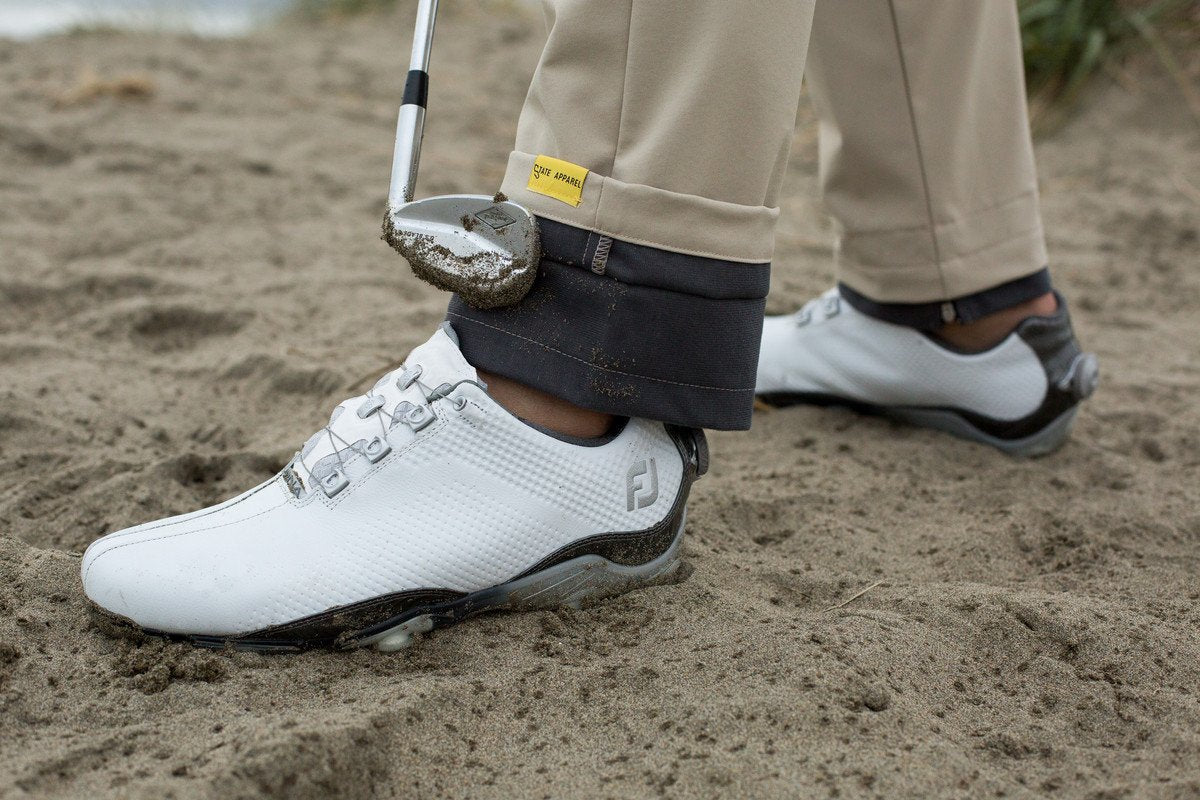
State Apparel's signature idea is easiest to understand in a bunker. Turn up the cuff of its Competition Pant and the inside becomes a wide wiping surface for a sandy wedge. Similar material sits inside the pockets for a wet ball or damp hands. The towel is not hanging from the bag; it is built into the clothes.
That small intervention captures the best of San Francisco product design: watch what people already do, identify the awkward step and remove it. Founder Jason Yip applied that logic to golf in 2013, building State Apparel around clothing that acts a little more like equipment.
The behavior hiding in plain sight
Yip's path into apparel was indirect. In interviews, he has described graduating from UCLA, moving to San Francisco, working at Olympic Club during his first year in the city and spending 13 years in business development and sales at technology startups. He wanted to apply what he had learned to golf, but not by making another polo with a different logo.
The founding observation was almost comically ordinary: tour players and weekend golfers already wiped moisture, grass and dirt on their trousers and shirts. San Francisco made the need more obvious. A round can begin in cold fog, move through wet rough and finish in wind or sun. Towels get left on the bag precisely when a player needs one near the green.
State Apparel formalized the habit. Competition Pants placed towel-like panels in the cuffs and front and rear pockets. Competition Shirts used wiping material along the sides. The point was not to turn a golfer into a full cleaning station; independent reviewers found the panels best for light moisture, sand and grass. It was to make the quickest, most common cleanup intuitive.
Made in San Francisco
Local manufacturing became the second pillar. Contemporary coverage from 2014 through 2018 documented State Apparel producing in San Francisco, and the brand's current about page still says its products are made in the city. That present-tense statement is the company's claim rather than a new factory audit, but the historical record is unusually strong for a small apparel label.
For Yip, local sewing offered both quality control and participation in a neighborhood manufacturing economy. The choice also tied the clothes to the conditions that inspired them. State Apparel was not simply placing San Francisco on a label; it was designing for Bay Area weather and then having the garments sewn nearby.
That weather remains the best argument for the product. Our guide to the best walking golf courses in the Bay Area includes exactly the kind of exposed, changeable rounds where warm layers and quick access to a dry surface matter.
The Urban Clubhouse experiment
In September 2017, State Apparel moved into 3108 Fillmore Street and opened its first physical store. Yip called it the Urban Clubhouse, a golfer's home away from the course. The shop paired the full clothing line with an indoor hitting bay and launch monitor, drinks, old Masters broadcasts and a calendar of talks and events.
The idea was more ambitious than retail. GolfThreads documented architecture talks, wedge-stamping sessions and casual simulator use there in 2018. State Apparel also supported the San Francisco Public Golf Alliance, including a run of Save Sharp Park headcovers whose gross sales went to the organization. In a city where tee times and travel can keep golfers apart, the Clubhouse tried to create community without waiting for the first tee.
Treat that chapter as history, not a current recommendation. State Apparel's undated Clubhouse page still uses present tense, but another business now lists the Fillmore address. The brand's blog ends in 2019 and its press page in 2018. Do not make a special trip without direct confirmation from State Apparel.
Why State Apparel still matters
State Apparel belongs in San Francisco golf history because the original product could have come only from close observation of the game. It made weather, mud and small on-course rituals part of the garment itself, then backed that function with local production and a physical experiment in community.
The contrast with SLOAT, San Francisco's newer natural-fiber golf label, is useful. SLOAT starts with layers that can leave the course and disappear into the city. State Apparel started with the stubborn details of the shot in front of you. Both reject the idea that Bay Area golf needs a generic tour uniform; they simply begin from different parts of the same foggy round.
Sources and further reading
GolfThreads, 8 Questions with State Apparel's Jason Yip (September 16, 2014)
Hoodline, Urban Clubhouse: Cow Hollow's State Apparel Sells SF-Made Golfwear (November 13, 2017)
GolfWRX, An Interview with State Apparel's Founder Jason Yip (December 7, 2018)
State Apparel, Welcome to Our New Store & Urban Clubhouse (October 9, 2017)