The San Francisco City Championship: Golf's Greatest Municipal Tournament
Every winter, while most of American golf hibernates, a few hundred San Franciscans pull on rain gear, mark their golf balls with numb fingers, and tee off in one of the longest consecutively contested amateur tournaments in America — a competition whose own official history goes further and calls it the oldest consecutively played golf competition in the world. The San Francisco City Championship — everyone here just calls it "The City" — has crowned a champion every year since 1917, through two world wars and the Depression. Few tournaments of any kind can match that history, and in 1956 its final drew a gallery that newspapers estimated at more than 10,000 to watch two amateurs settle a match on a public fairway.
This is the story of that tournament: why it matters, who it made famous, and why it remains the purest expression of golf in San Francisco.
Older Than the Golden Gate Bridge
The tournament's own history dates its inauguration to 1916 at Lincoln Park, the municipal course perched above Land's End in the Richmond District — though its champions roll, like independent accounts of the event, begins in 1917. Either way, The City is two decades older than the Golden Gate Bridge, and a champion has been crowned every year since 1917. As Bo Links, credited on the tournament's history page as "Golf Historian and Artist," wrote there, players have "trudged through rain and mud" year after year, "even while American troops were engaged on foreign battlefields." When other championships paused for war, The City played on.
How singular is that streak? The official history — a promotional essay, it should be said — claims the oldest consecutively played golf competition in the world. Independent chroniclers are more careful, describing it as one of the longest consecutively contested amateur tournaments in America and one of the last large municipal tournaments in the country. However you rank it, the champions roll runs unbroken into the 2020s, with winners listed for 2020 and 2021.
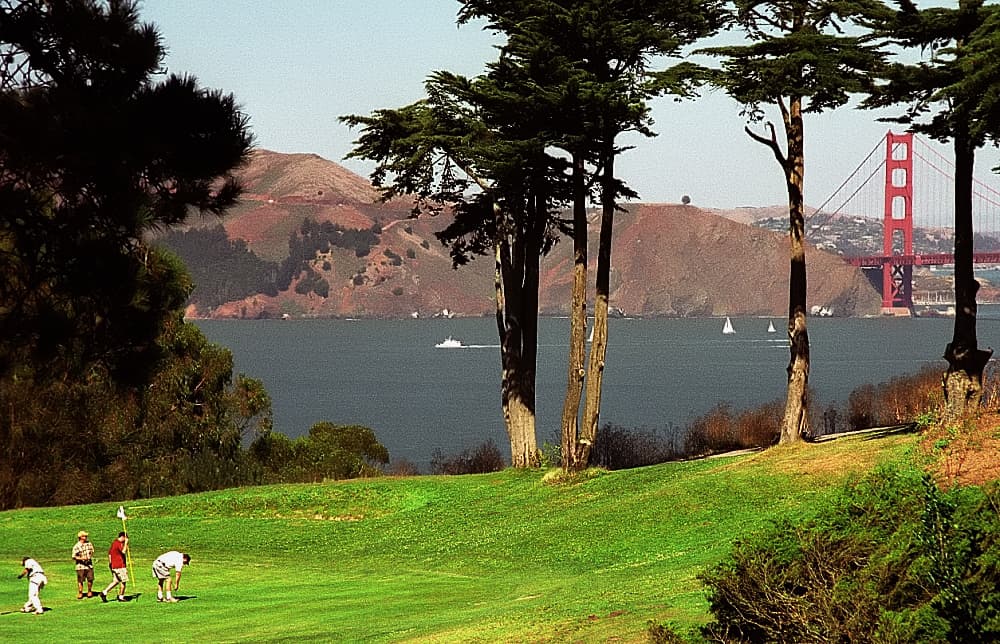
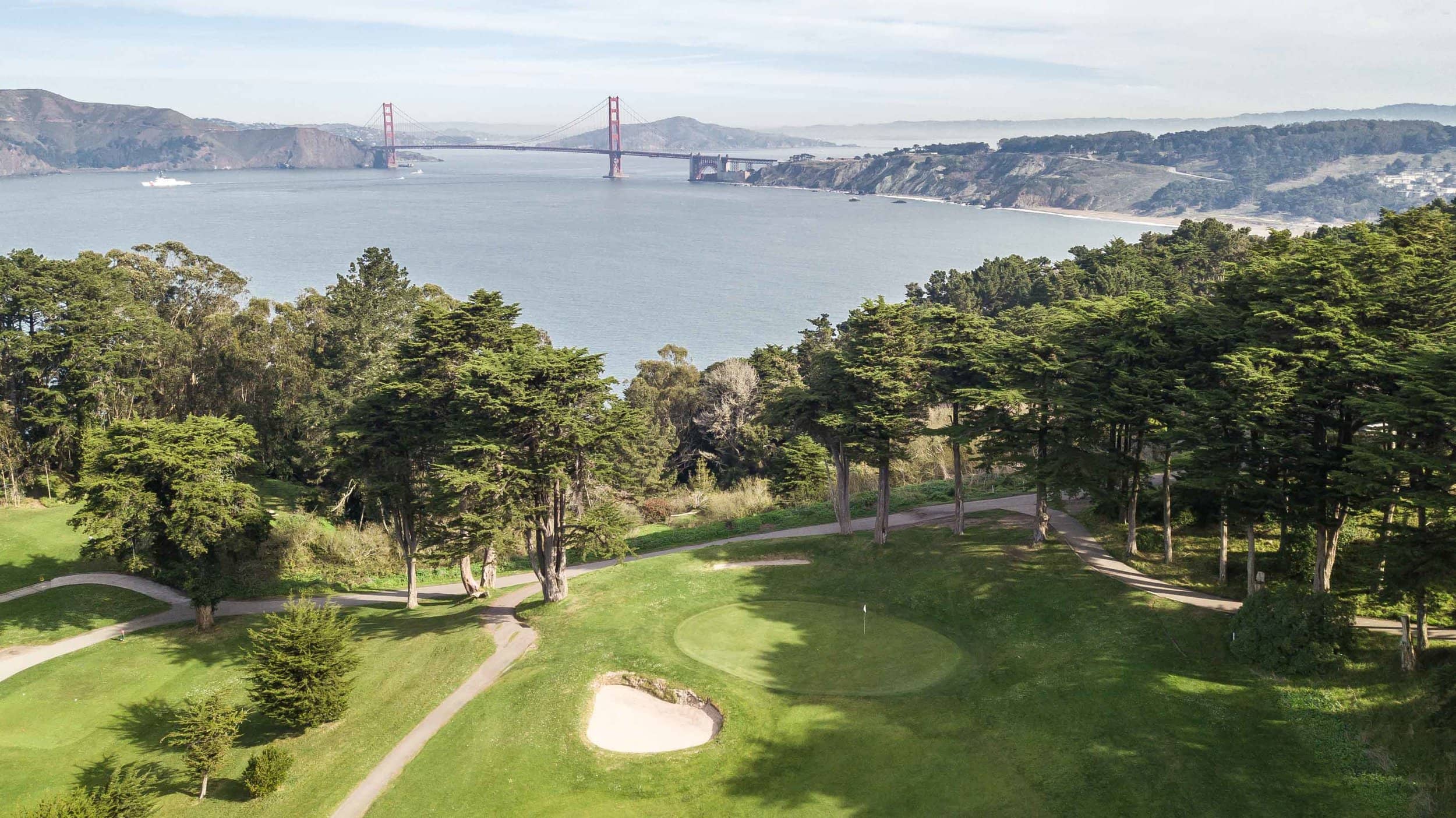
Lincoln Park remains part of the tournament's soul. At 5,146 yards and par 68, it's short, quirky, and impossibly scenic — the view of the Golden Gate Bridge from the 17th hole is among the most photographed in golf.
Harding Park Becomes Home
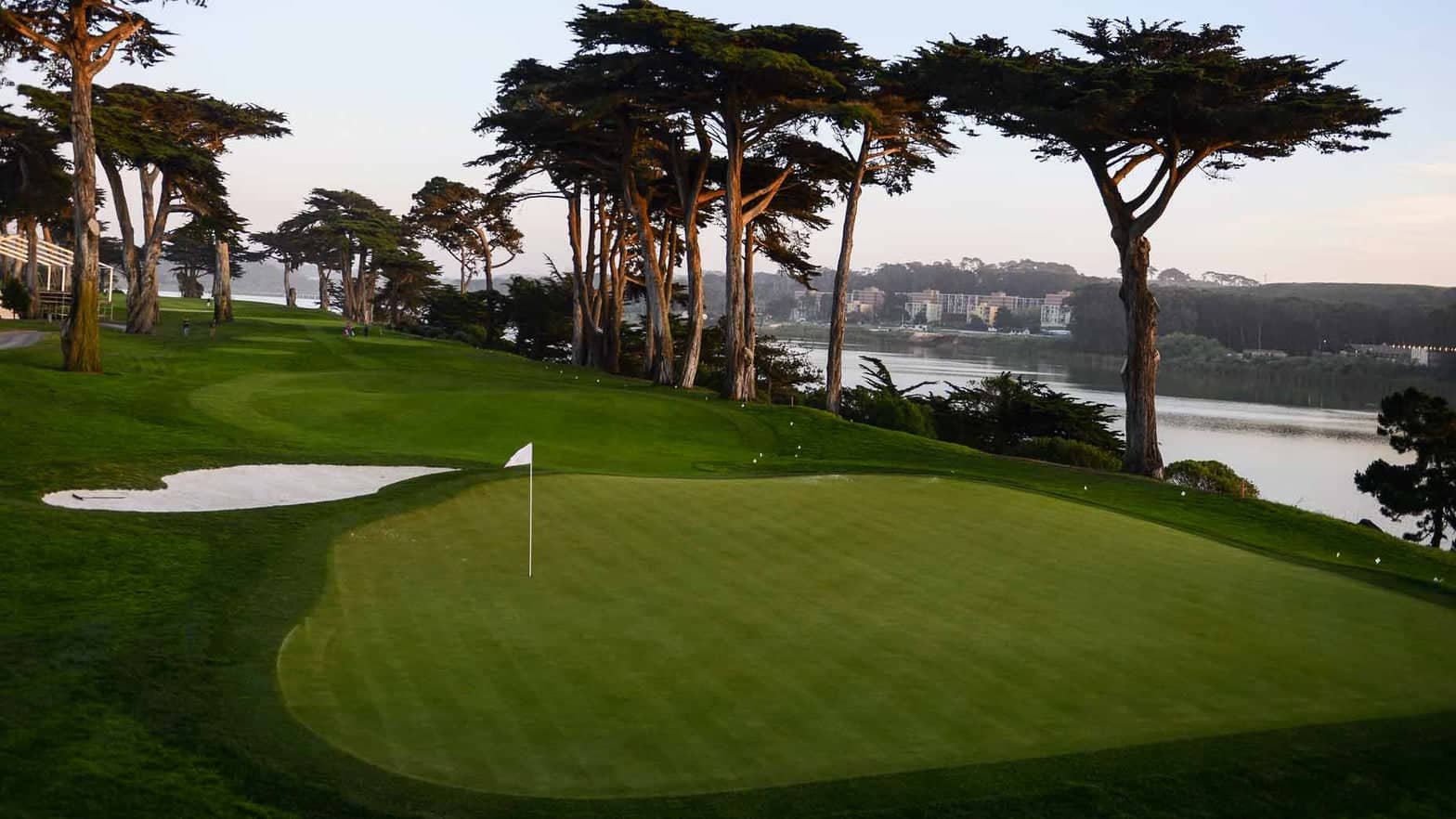
In 1925, San Francisco opened a second municipal course beside Lake Merced: Harding Park, named for President Warren G. Harding, an avid golfer who had died in office while visiting San Francisco two years earlier. The design came from Willie Watson and Sam Whiting — the same duo behind the Olympic Club's Lake Course across the street — who drew up the plan for a fee of $300.
Harding Park quickly became The City's marquee venue, and the tournament became the proving ground for a remarkable generation of San Francisco golfers. The course hosted the U.S. Amateur Public Links in 1937 and 1956, and in the 1960s became a regular PGA Tour stop at the Lucky International Open. But it was the winter municipal championship, not the professional events, that gave Harding its identity.
The 1956 Final: Venturi, Ward, and a Gallery for the Ages
The high-water mark of municipal golf in America arrived at Harding Park in 1956.
On one side: Ken Venturi, the San Francisco kid who grew up playing Harding Park and the city's public courses, already a two-time City champion (1950 and 1953). On the other: E. Harvie Ward, the reigning U.S. Amateur champion and one of the finest amateurs of his era. Two of the best amateur golfers on earth, meeting in the final of a municipal tournament.
Newspapers estimated that more than 10,000 spectators ringed Harding Park's fairways to watch. Venturi won decisively, 5 and 4, taking his third and final City Championship — and the result ran on the front page of every daily newspaper in San Francisco. In an era before the Giants or 49ers dynasties, The City final was the biggest sporting event in town.
Venturi's story only grew from there. Weeks later he nearly won the Masters as an amateur, leading by four entering the final round before a closing 80 left him one shot behind Jack Burke Jr. In 1964 he won the U.S. Open at Congressional, famously staggering through near-100-degree heat over a 36-hole final day, and was named Sports Illustrated's Sportsman of the Year. He then spent 35 years as CBS's lead golf analyst and was inducted into the World Golf Hall of Fame in 2013, the year he died. It all started with The City — read the full Ken Venturi story here.
A Tournament for Everybody
What makes The City great isn't just its champions — it's its field. This has always been a tournament where country-club players tee it up against bartenders, cops, roofers, taxi drivers, doctors, lawyers, and airport baggage handlers. One of those baggage handlers, Frank Mazion, won the whole thing twice, in 1979 and 1983. Another competitor became a local legend playing in overalls, a flannel shirt, and a straw hat — they called him "Scarecrow."
Even the game's aristocracy queued up like everyone else. Sandy Tatum — the prominent San Francisco attorney and former USGA president — was once spotted carrying his own bag through heavy rain just to qualify. In the old days, players signed up at a downtown department store that sponsored the event, some sleeping outside overnight to secure a spot in the field.
The format rewards grinders. Roughly 600 players enter each year across championship flights for men, women, and seniors plus handicap flights for everyone else. Two rounds of stroke play cut the championship field to 64 for match play, contested on weekends so working people can compete. The quarterfinals and semifinals fall on a single day, followed by a 36-hole final. And because it's played in the teeth of a Northern California winter, the ball is played down — rain, mud, and waterlogged lies included.
The list of players who chased the title and came up short is its own honor roll: Johnny Miller and Tom Watson — who entered while a psychology student at Stanford — both competed in The City without ever winning it. San Francisco-born Bob Rosburg, the 1959 PGA champion, came up through the same city golf scene. George Archer did win, in 1963, six years before he won the Masters.
The Women's Championship
The City's women's division has produced champions every bit as accomplished. Juli Inkster won it twice — in 1979 and 1981, under her maiden name Juli Simpson — before going on to win two U.S. Women's Opens among her seven major titles. Jan Ferraris won four City titles and Shelley Hamlin three before their LPGA careers, and Curtis Cup player Pat Cornett-Iker took three.
And no name appears on the women's champions roll more often than Sally Krueger's: ten women's City Championships between 1978 and 2005, including the 1982 title she won as Sally Voss. No other woman is close.
Decline, Rebirth, and a Major Championship
Harding Park's story bottomed out before it soared. After the PGA Tour left following 1969, citing deteriorating conditions, decades of municipal budget cuts let the course decay — until 1998, when Harding was literally used as a parking lot for the U.S. Open being played next door at the Olympic Club.
Sandy Tatum — the same man who once hauled his own bag through the rain to qualify for The City — spearheaded the restoration. A 15-month renovation beginning in spring 2002 stretched the course to nearly 7,200 yards, and Harding Park reopened in August 2003. In 2010 it joined the PGA Tour's TPC network, and in 2020 it hosted the PGA Championship — a major championship on the same public fairways where City Championship contestants slog through February mud.
Through all of it, The City kept crowning champions. The tournament's modern rota has included TPC Harding Park, Lincoln Park, and the historic Presidio Golf Course, which dates to 1895. In 2026, Joey Hayden and Gianna Singh added their names to a champions roll that begins in 1917.
Why The City Still Matters
Plenty of tournaments have bigger purses, better weather, and manicured venues. Few can match The City's combination: more than a century of history, a genuinely open field, major-championship grounds, and a trophy once contested before a gallery newspapers put at more than 10,000 — on a muni.
If you want to understand golf in San Francisco — why Harding Park's cypress-lined fairways feel sacred, why Lincoln Park's battered greens still draw pilgrims, why the best players this city ever produced all point back to the same tournament — start with The City. Better yet, some winter weekend, pull on a rain jacket and go walk a few holes of match play. Admission is free. The history is everywhere. And for the broader story of the game here, from the 1890s to today, see our history of golf in San Francisco.