Juli Inkster: The Bay Area's Hall of Famer
San Francisco golf lore tends to run through the city's municipal courses — Ken Venturi learning the game at Harding Park, Bob Rosburg growing up a native son. But one of the most decorated champions the region has ever claimed came from over the hill in Santa Cruz County, roughly seventy-five miles south of the city. Her Bay Area ties came later — a San Jose State scholarship, a home in Los Altos, a Bay Area Sports Hall of Fame plaque — and her origin story is even better: she didn't grow up near a golf course. She grew up on one.
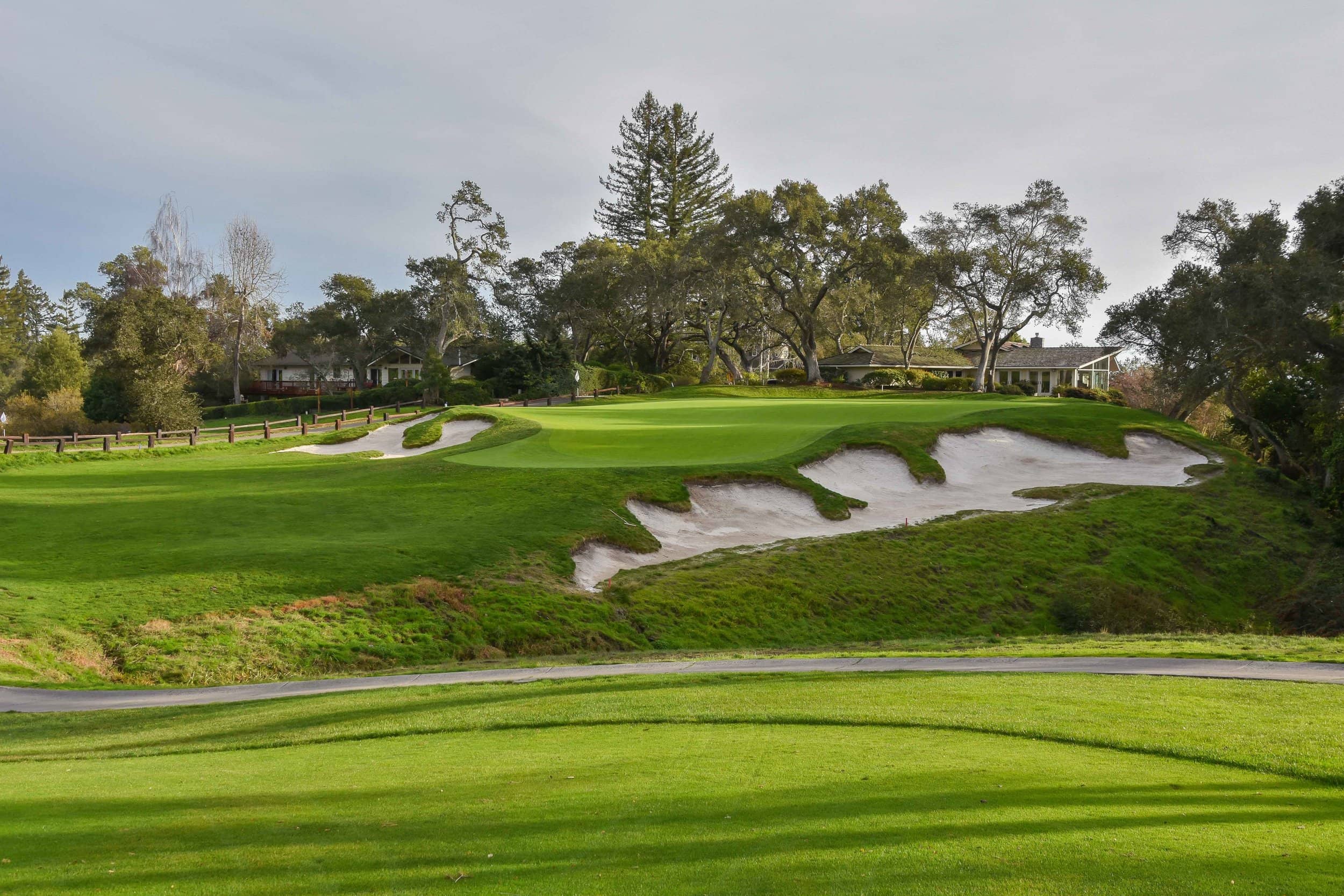
Juli Inkster was born in Santa Cruz on June 24, 1960, and when she was three years old her parents moved into a house along the 14th fairway of Pasatiempo Golf Club — the Alister MacKenzie masterpiece that opened in 1929, and the course MacKenzie himself loved enough to build his American home beside its sixth fairway. The architect of Augusta National lived on six. The future Hall of Famer grew up on fourteen.
The Kid from the 14th Fairway
For all that proximity, Inkster came to the game late. Her first jobs at Pasatiempo had nothing to do with playing: she worked in the cart barn, picked the driving range, and staffed Hattie's Snack Shack at the 10th tee. She didn't take up golf seriously until she was 15 — a late start by Hall of Fame standards.
What followed was a remarkably steep learning curve. With no girls' team available, she played on Harbor High School's boys' golf team and won tournaments on its traveling squad. By 1978, her senior year, she was named Pasatiempo's Most Improved Golfer, with her scores consistently closing in on the seventies. Barely three years after picking up a club, she left for San Jose State University on a golf scholarship — the first of the Bay Area ties she would keep for the rest of her life.
San Jose State and Three Straight Amateurs
At San Jose State, Inkster became a three-time All-American (1979, 1981 and 1982) and the school's Athlete of the Year in 1981. She won the California Amateur in 1981 and was ranked the No. 1 women's amateur in the country by Golf Digest in both 1981 and 1982.
Then came the run that made her a national name. In 1980 — three weeks after marrying Brian Inkster, the man credited with teaching her the game — she won the U.S. Women's Amateur. She won it again in 1981. And again in 1982, becoming the first player since 1934 to capture three consecutive U.S. Women's Amateur titles. She added a Curtis Cup victory with the U.S. team in 1982 and helped win the Espirito Santo Trophy, the world amateur team championship, in 1980 and 1982.
Three straight national amateur championships, from a player who had been working the snack shack at the 10th tee less than a decade earlier. Bay Area golf has produced great amateurs before — Harvie Ward won back-to-back U.S. Amateurs in the 1950s out of San Francisco — but few champions anywhere have compressed the trip from beginner to national titleholder into so few years.
A Rookie Like No Other
Inkster turned professional in 1983 and immediately rewrote the LPGA's rookie record book. She won in just her fifth start, took the 1984 Nabisco Dinah Shore in a playoff over Pat Bradley, then added the du Maurier Classic that summer — becoming the first rookie in LPGA history to win two major championships in a single season. She was, inevitably, the 1984 LPGA Rookie of the Year.
A second Dinah Shore followed in 1989, won by five strokes. From her 1983 debut through the end of the decade she piled up 13 tour victories while starting a family — daughters Hayley and Cori were born in 1990 and 1994 — and openly juggling the two full-time jobs of tour professional and mother.
1999: The Season of Her Life
What elevates Inkster from very good to all-time great is what happened in her late 30s and 40s, an age when most tour careers are winding down.
In 1999, at age 38, she won the U.S. Women's Open at Old Waverly Golf Club in Mississippi by five strokes, shooting 272 (−16) and breaking the championship's under-par scoring record. She was the oldest Women's Open champion since 1955, and she became the first American since JoAnne Carner to win both the U.S. Women's Amateur and the U.S. Women's Open.
Three weeks later she won the McDonald's LPGA Championship by four shots — completing the LPGA career Grand Slam, an achievement shared at the time by only a handful of players in the tour's history. The five-win season carried her to second on the money list, Sportswoman of the Year honors from the Women's Sports Foundation, the Golf Writers Association of America's Female Player of the Year award, and enough Hall of Fame points to punch her ticket: in 2000, Inkster was inducted into both the LPGA Tour Hall of Fame and the World Golf Hall of Fame.
She celebrated the induction year like a champion, too — successfully defending her LPGA Championship title in 2000 in a playoff over Stefania Croce.
Prairie Dunes at 42
Inkster saved one of her greatest performances for 2002. At Prairie Dunes Country Club in Kansas, she shot 276 (−4) to win her second U.S. Women's Open by two strokes — over Annika Sörenstam, the most dominant player of the era, at the peak of Sörenstam's powers. At 42, Inkster was the second-oldest champion in the history of the championship, and she joined Babe Zaharias as one of the only women ever to win two major titles after turning 40.
It was her seventh and final major, and it sealed a distinction all her own: Inkster is the only player in LPGA Tour history to win multiple major championships in each of three consecutive decades, with three in the 1980s, two in the 1990s and two in the 2000s. She finished her career with 31 LPGA Tour victories and more than $14 million in earnings.
Captain America
Inkster's Solheim Cup record is its own monument. She played on nine U.S. teams between 1992 and 2011, compiling 18.5 points — an American record that stood until Cristie Kerr surpassed it in 2017. In 2011, at 51, she was the oldest player in Solheim Cup history and the event's first playing assistant captain.
Then she took the reins. As U.S. captain in 2015, she presided over the largest comeback in American Solheim Cup history, a 14.5–13.5 win. She captained again in 2017, a 16.5–11.5 rout, before Europe edged her side 14.5–13.5 in 2019. Two wins in three captaincies, and a reputation as the emotional center of American women's team golf for a generation.
Still a Bay Area Life
Through all of it, Inkster never really left. She lives in Los Altos with her family, a short drive over the hill from the Pasatiempo fairway where the whole story began. She spent years as Pasatiempo's LPGA touring professional, and the club has celebrated her career with a display of her memorabilia — a tribute to the kid from the snack shack, a few hundred yards from where she grew up. In 2011, the Bay Area Sports Hall of Fame formally claimed her as one of the region's own.
She even joined the great Bay Area golf broadcasting tradition. The region that sent Ken Venturi to CBS, Johnny Miller to NBC and Bob Rosburg to ABC added Inkster to the booth as well: she began television commentary with Golf Channel in 2014 and joined Fox Sports' USGA championship coverage in 2015.
The honors have kept arriving. In 2022 the USGA presented her with the Bob Jones Award, its highest honor, recognizing sportsmanship and respect for the game. In 2024 she was named the Memorial Tournament Honoree — Jack Nicklaus's tribute to the game's greats — and received the Francis Ouimet Award for Lifelong Contributions to Golf. On the Legends Tour, she has kept winning into her 60s.
The Bay Area's Standard
Measure any Bay Area golfer against Juli Inkster and the comparison gets uncomfortable fast. Three straight U.S. Women's Amateurs. Seven majors across three decades. A career Grand Slam. Thirty-one tour wins. An American Solheim Cup points record that stood for years. Two Halls of Fame.
And she did it all from a starting point that sounds like fiction: a teenager on a MacKenzie fairway in Santa Cruz who picked up the game at 15, learned it from the man she'd marry, and never stopped outworking everyone. The greats of San Francisco's golden age — Venturi out of Harding Park, Rosburg, Johnny Miller honing his game as a junior at the Olympic Club, Tony Lema across the Bay, George Archer down in Gilroy — defined the region's game in the 1950s and '60s. Juli Inkster, from just over the hill in Santa Cruz, extended it into the 21st century, and set the standard the whole Bay Area still plays toward.